How to Run Your Own Delivery Fleet in 2026 (Without Marketplace Fees)
A practical guide to running in-house deliveries: the people, vehicles, and software you need, how to set it up, and the mistakes that cost fleets money.
Delivery marketplaces are convenient, but the convenience is expensive. They commonly take 15–30% of every order, hold the customer relationship, and give you almost no control over how the delivery actually goes. For any business doing steady local volume, running your own drivers is usually cheaper per drop and far better for the customer experience — once you have the right system around it.
This guide walks through what it actually takes to run an in-house delivery fleet in 2026: the people and vehicles, the workflow, the software, and the mistakes that quietly cost new fleets money.
Should you run deliveries in-house?
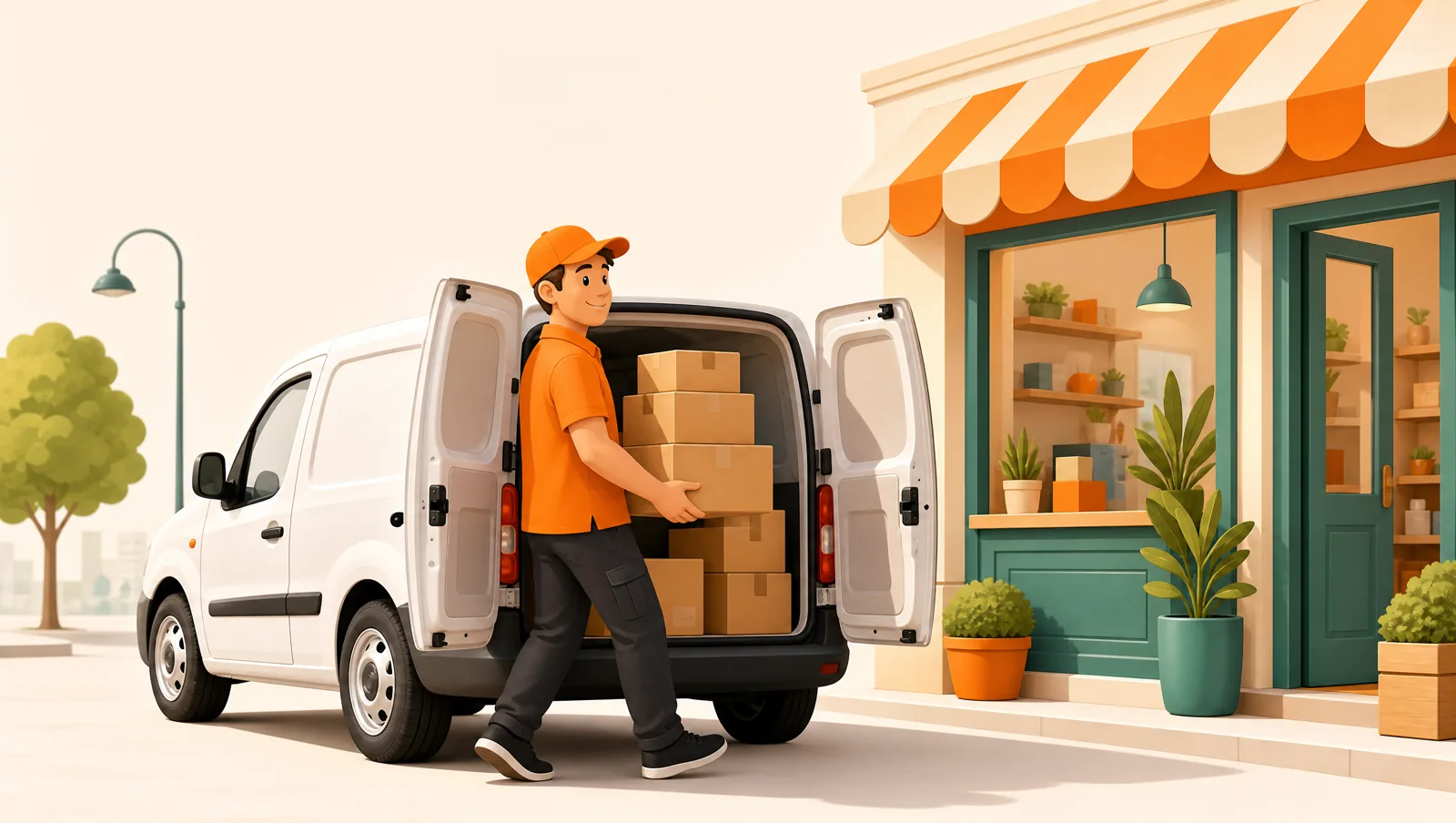
In-house delivery makes sense when you have enough local order density to keep a driver busy, when delivery quality is part of your brand (florists, food, pharmacy, specialty retail), or when marketplace commissions are eating your margin. It is a poor fit when your orders are sparse and spread across a huge area, or when you ship nationally by carrier. If you are still choosing between the two models, our breakdown of in-house vs outsourced delivery works through the cost crossover and when each one wins.
What do you need to run your own fleet?
Five things, in order of importance:
- Drivers — employees or contractors. Start with one or two and a clear pay model (per hour, per stop, or per route).
- Vehicles — yours, leased, or the drivers’ own with a mileage stipend. Match vehicle size to your typical order.
- A way to plan routes — the single biggest lever on cost. Manually ordering 12 stops on a map wastes 30–60 minutes per route and still produces worse routes than software.
- A driver workflow — drivers need their stops, navigation, and a way to capture proof of delivery from their phone.
- Customer communication — an order-confirmation, an on-the-way message, and a live tracking link cut “where is my order?” calls dramatically.
Notice that four of the five are about information flow, not vehicles. That is why delivery software — not the van — is what makes or breaks a small fleet.
How do you set up in-house delivery, step by step?
1. Get your orders into one place
Every order you need to deliver — whether it came from your online store, a phone call, or a spreadsheet — has to land in one dispatch view. If you sell online, connect your store so orders import automatically. Routella pulls orders from Shopify, WooCommerce, Wix and 10 more platforms, and also lets you type in manual orders, so a florist taking phone orders and an online store can run from the same board.
2. Group stops into routes and optimize them
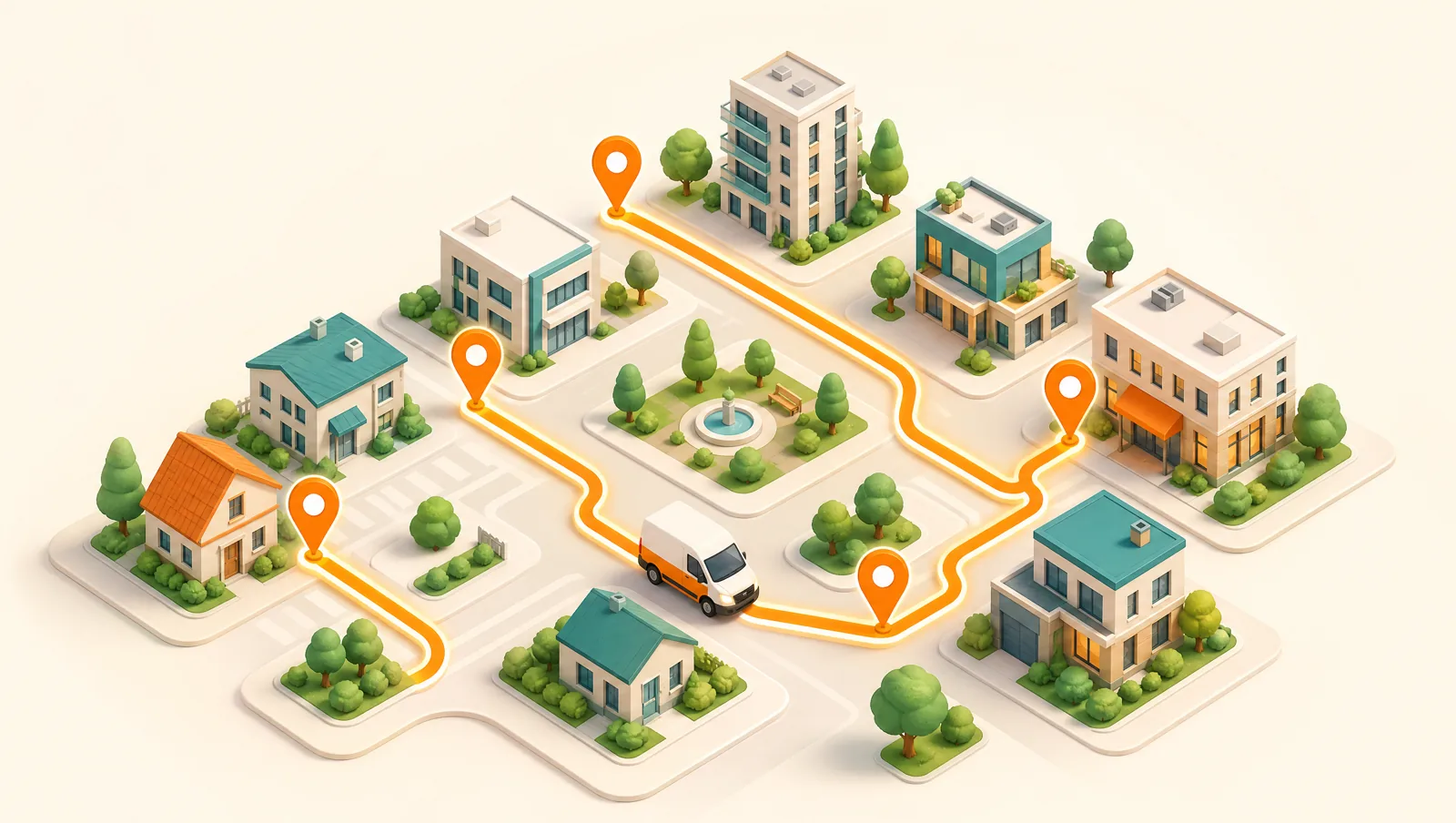
Batch the day’s deliveries into rounds, then let the software reorder each round into the shortest, fastest sequence. Good route planning software does in seconds what takes a dispatcher an hour by hand — and accounts for traffic and delivery time windows.
3. Dispatch to drivers
Assign each route to a driver. The driver should get their stops on their phone with turn-by-turn navigation — not a printed list. A good delivery driver app puts the whole door workflow — navigate, capture proof, mark delivered — on the driver’s phone with nothing to install. That alone removes a whole category of “I couldn’t find the address” problems.
4. Capture proof of delivery
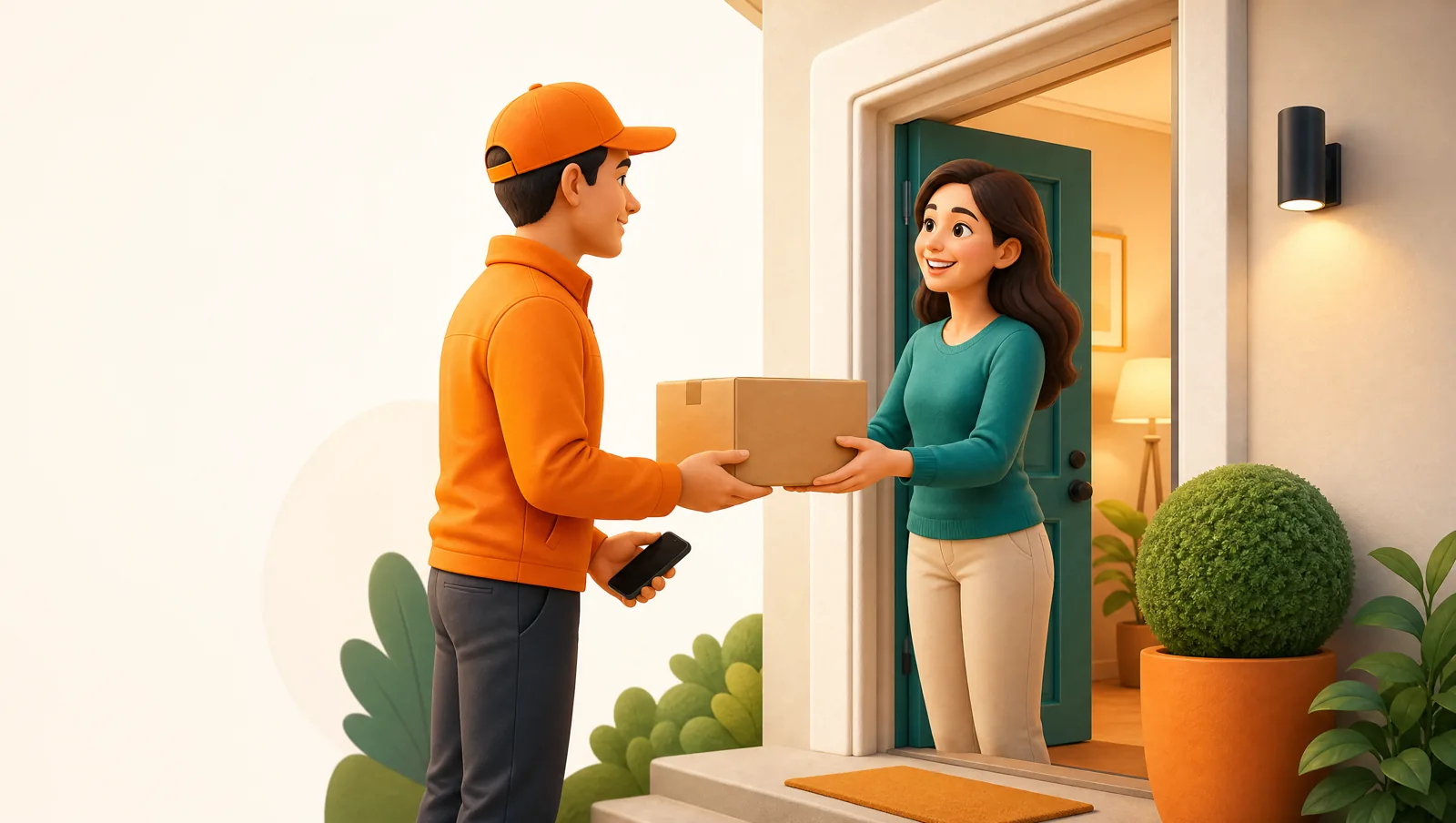
At each stop the driver captures a signature, a photo, or a barcode scan. This is your defense against “it never arrived” disputes and, for medical or high-value goods, your chain-of-custody record.
5. Keep the customer informed
Send an automatic “on the way” message with a live tracking link showing the driver’s location and ETA. This is the single highest-impact thing you can do for delivery satisfaction, and it cuts inbound “where is my order?” calls.
How much does an in-house delivery fleet cost?
The big costs are labor and vehicles — both of which you scale with volume. Software is the small cost that makes the big costs efficient. A route planner that saves each driver 30–60 minutes a day and one extra stop per route pays for itself almost immediately. Routella has a free plan (1 driver, 50 orders/month) so you can run real deliveries before paying anything, then $29/month as you grow.
What mistakes do new fleets make?
- Planning routes by hand. It feels free, but it is the most expensive habit a small fleet has — in driver time and fuel.
- No proof of delivery. Without a photo or signature, every dispute is your word against the customer’s.
- No customer tracking. Silent deliveries generate support calls and bad reviews even when the delivery itself was fine.
- Ignoring fulfillment write-back. If your store doesn’t get marked “fulfilled” automatically, you’ll double-handle orders and confuse customers.
- Buying enterprise software too early. You don’t need a logistics suite to run two drivers. Start lean and grow.
The bottom line
Running your own fleet is mostly an information problem: get orders in one place, plan smart routes, give drivers a mobile workflow, and keep customers informed. Solve those and in-house delivery beats marketplace fees on both cost and experience. If you want a single tool that covers all of it, see how Routella works or start on the free plan.
Frequently asked questions
Is it cheaper to run my own delivery fleet than to use a marketplace?
For steady local volume, almost always. Marketplaces typically take 15–30% per order. If you can group 8–15 deliveries into one optimized route, your cost per drop with in-house drivers is usually well below the per-order commission — and you keep the customer relationship.
What software do I need to run in-house deliveries?
At minimum: a way to import orders, a route optimizer, a mobile driver app with navigation and proof of delivery, and automated customer tracking notifications. Routella covers all four in one platform, with a free plan for small fleets.
How many drivers do I need to start?
One is enough to start. Run real routes, measure stops-per-hour and cost-per-drop, and add drivers only when a single driver’s routes are consistently full.
Run your own deliveries with Routella
Route optimization, a driver app, proof of delivery, and live customer tracking — in one platform. Free plan, no credit card.