On-demand delivery service: when should your business use it?
Decide when an urgent local delivery is worth a separate trip. Use a readiness checklist, a worked deadline and a fallback plan before promising arrival.
An on-demand delivery service lets a business request a local trip when an order needs to move, instead of waiting for its next planned dispatch. It can suit a time-sensitive order or unexpected overflow. It does not automatically mean instant pickup, a direct journey, or a guaranteed arrival time.
Use it when three things line up: the goods can be ready, the recipient has a real deadline, and a suitable driver can accept a workable plan. If one is missing, paying for urgency may not solve the problem. This guide helps a store team make that decision, including businesses arranging local deliveries in Jacksonville and Tampa.

On-demand, same-day and scheduled are different promises
On-demand describes how the request starts. Same-day describes the intended day of arrival. Scheduled describes an agreed future time or window. A service can offer more than one: you might request a job now for collection later today. None of those labels alone says whether another delivery stop comes before yours.
Providers also use the words differently. Stuart describes both on-demand and scheduled business deliveries. DHL’s On-Demand Delivery explanation focuses on recipient preferences, such as a different delivery date or address. Confirm the actual service rather than assuming the name means “send a driver immediately.”
For a business already running its own daily routes, our same-day local delivery guide covers cutoffs and batching. The question here is narrower: should this particular order move separately from that plan?
Which orders deserve a separate trip?
Ask what changes if the order waits. A forgotten display item needed before a shop event has a real deadline. An ordinary parcel described as urgent because the customer has not heard an update may need a clearer message, not a faster vehicle. Start with the consequence and the receiving window.
| Order situation | Useful next step | Check before committing |
|---|---|---|
| Ready goods needed before a genuine deadline | Explore an on-demand trip | Can a suitable driver accept and complete the actual window? |
| Several nearby orders ready for the normal round | Keep the planned dispatch if it meets the promise | Would separating one order help enough to justify another trip? |
| The order is still waiting for an item | Confirm a new ready time first | Will the remaining time still allow safe collection and handoff? |
| The recipient cannot receive it yet | Agree a receiving window or authorized alternative | Do the recipient and delivery provider both accept that plan? |
Do not convert every customer request for speed into the most urgent option. Equally, do not squeeze a deadline-sensitive order into a full route simply because the vehicle is already paid for. Your existing customer commitments count too: pulling a driver away may make several other orders late.
Work backwards from the receiving deadline
The relevant clock starts before the vehicle leaves. Include finishing the order, finding an accepted driver, loading, travel, access and handoff. Keep some room for uncertainty. An estimated drive time is not the entire delivery time, and it is not a service guarantee.
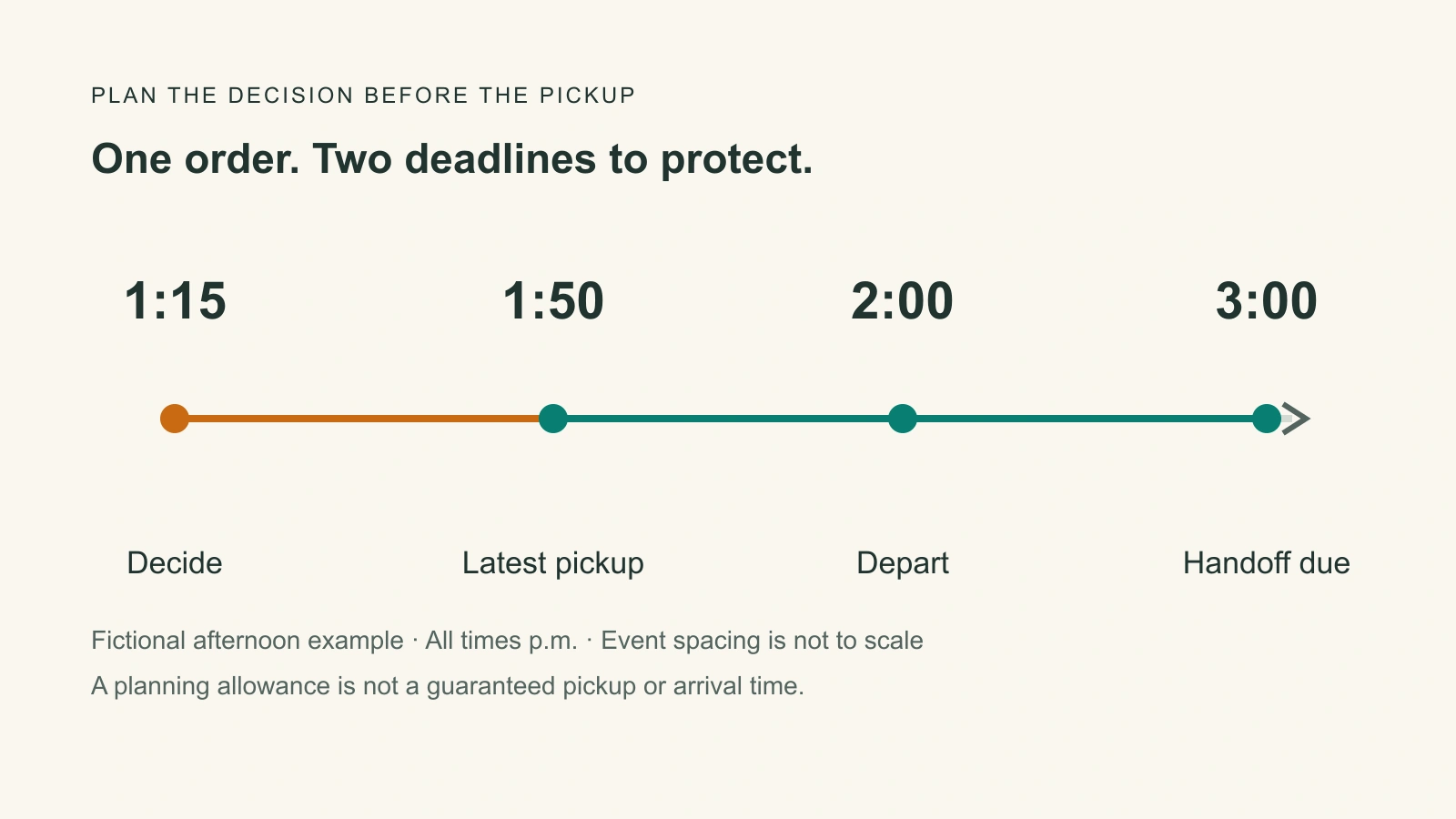
The shop still has to confirm that its chosen provider can support those times. If the quote arrives after 1:50, or packing slips past the plan, it should not keep the 3:00 promise unchanged. Agree a different arrangement with the customer. No clock calculation can create driver availability or make unsafe driving acceptable.
Six checks before you request collection
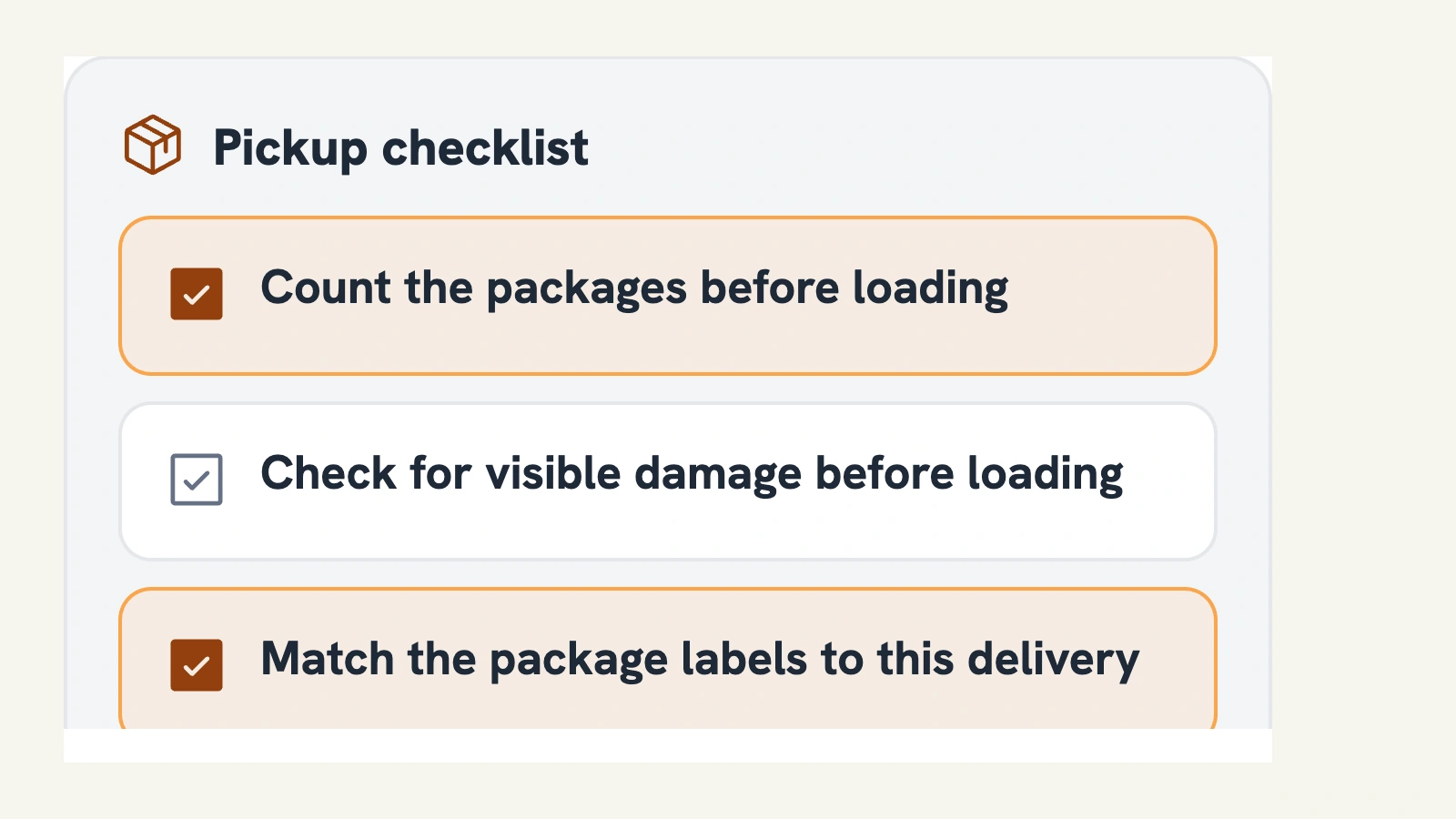
Keep one small dispatch note beside the order. It should answer the questions a driver or recipient would otherwise have to ask while everyone is in a hurry. Use facts from this order, not the dimensions or instructions from the last one.
- Goods: confirm contents, packed quantity, dimensions, weight and any restrictions. Say if handling, temperature control or another person is needed; never assume it is included.
- Ready time: say when every package can actually leave. Reserve the goods so they are not sold or moved while a driver is being arranged.
- Pickup access: give the correct entrance and a reachable staff contact. Explain loading arrangements without asking anyone to park or work unsafely.
- Recipient: confirm the complete address, receiving window, entrance and permitted handoff. A customer’s deadline and their availability are not always the same.
- Completion: agree the supported photo, signature or other record needed. See our proof of delivery guide for what different records can establish.
- Fallback: name the person who can decide what happens if no driver accepts or the recipient cannot be reached. Record when that decision must happen.
Share private access details only through the appropriate delivery channel with the people who need them. Do not put a recipient’s phone number, entry code or live tracking link on a public label example or in general marketing material.
Is the extra trip worth its complete cost?
Compare workable options, not an urgent quote against the fuel for a journey your driver cannot actually make. Include staff coordination, loading, any agreed waiting or return charges, and the effect on other customer orders. Read the terms for the specific service before approving the amount.
Sometimes the right answer is to absorb a delivery cost to keep a promise you already made. Sometimes it is to offer a later window or collection with the customer’s agreement. Record why you chose it. Over several orders, your own completed costs and exceptions will tell you more than a universal “urgent delivery is worth it” rule.
Roadie’s rollout guide considers factors such as infrastructure, location and order volume. Those are useful program-level questions. For the order on your counter, add the ready time, deadline and accepted capacity. If you still need to compare providers, use our local delivery company checklist.
How to apply the plan in Routella Partners
Routella Partners is a marketplace connecting businesses with independent drivers. Routella is not the business’s or driver’s employer. After eligible business setup, prepare a New delivery request with the real addresses, goods, timing, vehicle and supported handoff requirements. Follow the confirmation steps shown for your location; a draft or suggested amount is not an accepted driver.
Where offered, the timing choices include Flexible, Same day and Urgent now. Choose the option that reflects the actual need, and review the request’s accepted or assigned status. An estimated match time is not guaranteed. Marking all packages ready records readiness; it is separate from collection and does not by itself charge waiting time.
For Florida deliveries, including requests around Jacksonville and Tampa, check every exact pickup, drop-off and stop against the eligible incorporated-city boundaries. A postal city name or ZIP code does not settle eligibility. Account, identity, goods, vehicle, payment and local requirements still apply, and driver availability varies.
Make the fallback part of the decision
At your decision time, act on what is confirmed. If the request remains unaccepted, check another approved option, agree a later delivery or offer suitable collection. Do not tell the customer a driver is on the way just because the request exists. If a booking already exists, review its cancellation terms before arranging a replacement so two drivers are not sent for one order.
Start with a few ordinary, suitable deliveries. Record ready time, acceptance, collection, completion and staff interventions. Review where time was lost: unfinished packing, late acceptance, unclear access or the wrong receiving window. Improve that step before expanding the promise. The aim is a repeatable customer experience, not simply selecting the fastest-looking option.
Frequently asked questions
Does on-demand delivery mean immediate pickup?
No. It usually means a delivery can be requested when needed. Pickup still depends on the service, goods, location, timing and accepted capacity. Ask for the actual collection and arrival plan, and separate an estimate from a confirmed commitment before promising a time to your customer.
What is the difference between on-demand and same-day delivery?
On-demand describes requesting the work when you need it. Same-day describes the intended day of arrival. A scheduled service can also arrive today. None of these labels alone establishes a direct journey, a specific pickup time or guaranteed delivery before a particular hour.
When should a small business use a scheduled delivery instead?
A scheduled option may fit when goods can wait, the recipient needs a later window, or several orders can share a workable planned run. Choose it only if that plan meets the real customer promise. Compare the complete cost and effect on other orders, not speed labels alone.
What happens if no driver accepts my urgent request?
An open request is not a booked driver. Set a decision time that leaves room for another approved option, an agreed later window or customer collection. If a delivery has already been accepted, check cancellation and change rules before replacing it. Availability cannot be assumed.
Can a Jacksonville or Tampa business use Routella Partners?
Eligible Florida businesses can start setup and check their exact operation. Every pickup, drop-off and stop must meet the supported incorporated-city boundary rules, alongside account, goods, vehicle, payment and local requirements. A city name alone does not approve a route, and signup does not guarantee driver acceptance.
Have a ready order that needs local delivery?
Start Florida business setup, then check your exact addresses, goods, timing and eligible driver options. Setup is not a booking, and driver acceptance or arrival time is not guaranteed.