Delivery Driver Management: Pay, Tracking & Performance
How to manage your own delivery drivers: pay models that fit your routes, fair location tracking without micromanaging, and the performance metrics that matter.
Managing delivery drivers is mostly a clarity problem. Drivers do better work when they know exactly what they are paid for, can see their stops and navigation on their phone instead of a printed list, and trust that the metrics you judge them on are fair. Get those three things right — a pay model that fits your routes, lightweight tracking that respects them, and a small set of honest performance numbers — and most "driver problems" disappear.
This guide covers the three pillars of running your own drivers: how to pay them, how to track them without micromanaging, and how to measure performance in a way that improves the operation instead of just punishing people.
Which driver pay model should you use?
There is no single right answer — the best model depends on whether your routes are predictable and how dense your stops are. The three common models:
- Per hour. Simple and fair when routes vary a lot or stops are unpredictable. The risk is that there is no built-in incentive to finish faster, so it relies on good routing and supervision.
- Per stop (per drop). Pays for output, which motivates drivers to complete more deliveries. Works well with dense routes, but can push drivers to rush or cherry-pick easy stops if you are not careful.
- Per route. A flat amount for completing a defined route. Predictable for budgeting and rewards efficiency, but only fair if routes are balanced so nobody gets stuck with a brutal one.
Many operations blend models — an hourly base plus a per-stop bonus, for example. Whatever you choose, the model only works if you can actually count the thing you pay for. If you pay per stop, you need a reliable count of completed stops per driver, which means each delivery has to be logged with proof of delivery, not just assumed.
How do you track drivers without micromanaging?
Tracking has a bad reputation because it gets confused with surveillance. The goal is not to watch a dot on a map all day — it is to know whether the route is on schedule and to give customers an accurate ETA. The driver gets navigation and a clear stop list; the dispatcher gets progress; the customer gets a tracking link. Everyone wins, and nobody is being spied on.
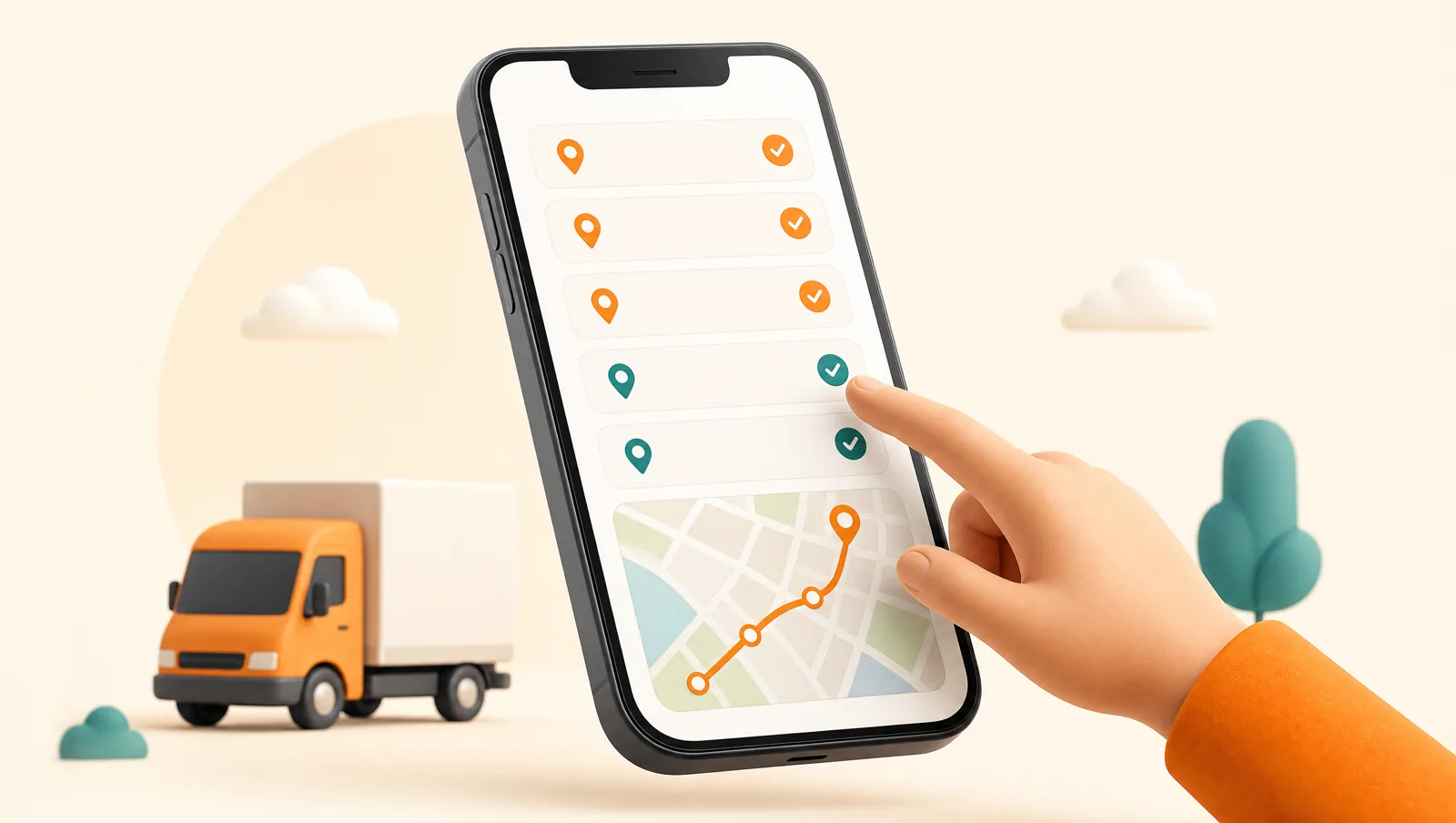
In practice this means giving each driver a mobile app with their stops in optimized order, turn-by-turn navigation, and a one-tap way to mark each stop done. Routella's driver app is offline-capable, so a driver in a parking garage or a rural dead zone can still complete stops and capture proof, which syncs when signal returns. As stops are completed, the customer's live tracking page updates the ETA automatically — no extra work from the driver.
What about location tracking specifically?
Location data is most useful for the customer-facing ETA and for spotting a route that has stalled. Be transparent with drivers about what is tracked and why, and tie it to a concrete benefit — fewer "where are you?" calls interrupting their drive. Tracking framed as "this is how customers stop pestering you" lands very differently than tracking framed as "we are watching you."
Which driver performance metrics actually matter?
Pick a few metrics that reflect the things you actually care about — completed deliveries, reliability, and customer experience — and ignore vanity numbers. The useful ones:
- Stops completed per route / per hour. The core productivity number, and the basis for per-stop pay.
- On-time rate. Did stops happen within their time window? This is what customers feel.
- Failed-delivery rate. A high rate flags either a driver issue or a process issue (bad addresses, no customer contact). See reducing failed deliveries.
- Proof-of-delivery completion. What share of stops have a signature, photo, or scan. Low completion means disputes you cannot win.
- COD accuracy. For cash operations, how cleanly a driver's collected cash reconciles. See COD management.
The trap to avoid is judging a driver on a metric the route made impossible. If you optimize routes badly and hand someone an unrealistic sequence, their on-time rate is your fault, not theirs. Good routing is a prerequisite for fair performance measurement — which is why route planning and driver management are really one system, not two.
How do you onboard and scale a driver team?
Start small and standardize early. With one or two drivers you can get away with informal habits, but those habits become the template when you grow. Set the pay model, the proof-of-delivery requirement, and the daily reconciliation routine while the team is small, so adding driver number five is just "follow what we already do."
Routella's free plan covers one driver and 50 orders a month — enough to build the routine. The Growth plan ($29/month) handles up to five drivers, and Pro ($79/month) is unlimited drivers and orders with WhatsApp notifications included. The software is the same at every tier, so the workflow your first driver learns is the one your tenth driver inherits.
How do you keep good drivers?
Retention is cheaper than recruiting, and the things that keep drivers are mostly operational, not just pay. Drivers leave when their day feels chaotic: missing addresses, customers who are never home, routes that double back on themselves, and disputes they have no way to defend. Each of those is fixable with the same system you use to dispatch.
- Give them realistic routes. Balanced, optimized routes mean a predictable shift instead of a scramble.
- Reduce wasted trips. Customer notifications and a live ETA cut the not-home stops that frustrate drivers most.
- Protect them with proof. A signature or photo at each stop means a disputed delivery is settled by a record, not a he-said-she-said that lands on the driver.
- Pay on time and on clear numbers. If a driver can see the stop count their pay is based on, trust holds.
Treat the driver app as a tool that makes their day easier, not a leash, and most of the friction in driver management quietly goes away.
Frequently asked questions
What is the best pay model for delivery drivers?
It depends on your routes. Per-hour is fairest when stops are unpredictable; per-stop rewards output on dense routes but can encourage rushing; per-route is predictable for budgeting if routes are balanced. Many operations use an hourly base with a per-stop bonus. The key is paying for something the system reliably counts, like completed stops.
Does tracking drivers mean watching their location all day?
No, and it should not. Useful tracking gives customers an accurate ETA and shows the dispatcher whether a route is on schedule. Drivers get navigation and a stop list. Be transparent about what is tracked and tie it to a benefit drivers feel, such as fewer interruption calls asking where they are.
How many drivers can I manage on Routella?
The free plan covers one driver and 50 orders per month. Growth at $29 per month supports up to five drivers and 1,000 orders. Pro at $79 per month is unlimited drivers and orders and includes WhatsApp notifications. The driver workflow is identical across tiers, so the routine scales as you add people.
Run your own deliveries with Routella
Route optimization, a driver app, proof of delivery, and live customer tracking — in one platform. Free plan, no credit card.