Laundry & Dry Cleaning Delivery Software (2026): Pickups, Routes & Notifications
How laundry and dry cleaning delivery works: planning pickup and return runs, time windows customers pick, driver tracking, proof of handover, and COD.
A laundry or dry cleaning delivery service is not a normal delivery business — it runs in two legs. You collect a bag of clothes from the customer, you process it, and a day or two later you return it. Every order touches the road twice, and both touches are tied to a window the customer picked. That doubles the routing work and it doubles the number of times a driver has to be at the right door at the right time — which is exactly where a general "shortest path" planner falls down.
This guide is about running that two-leg operation well: how to plan the collection and return runs, how to use delivery windows without wrecking your routes, how to keep drivers efficient across a spread-out residential round, and how to keep customers home for the slot so a bag is not left sitting on a doorstep. It sits alongside our guide to same-day local delivery and applies the same four levers — cutoff, batching, optimized routing, and tracking — to the specific shape of a laundry round.
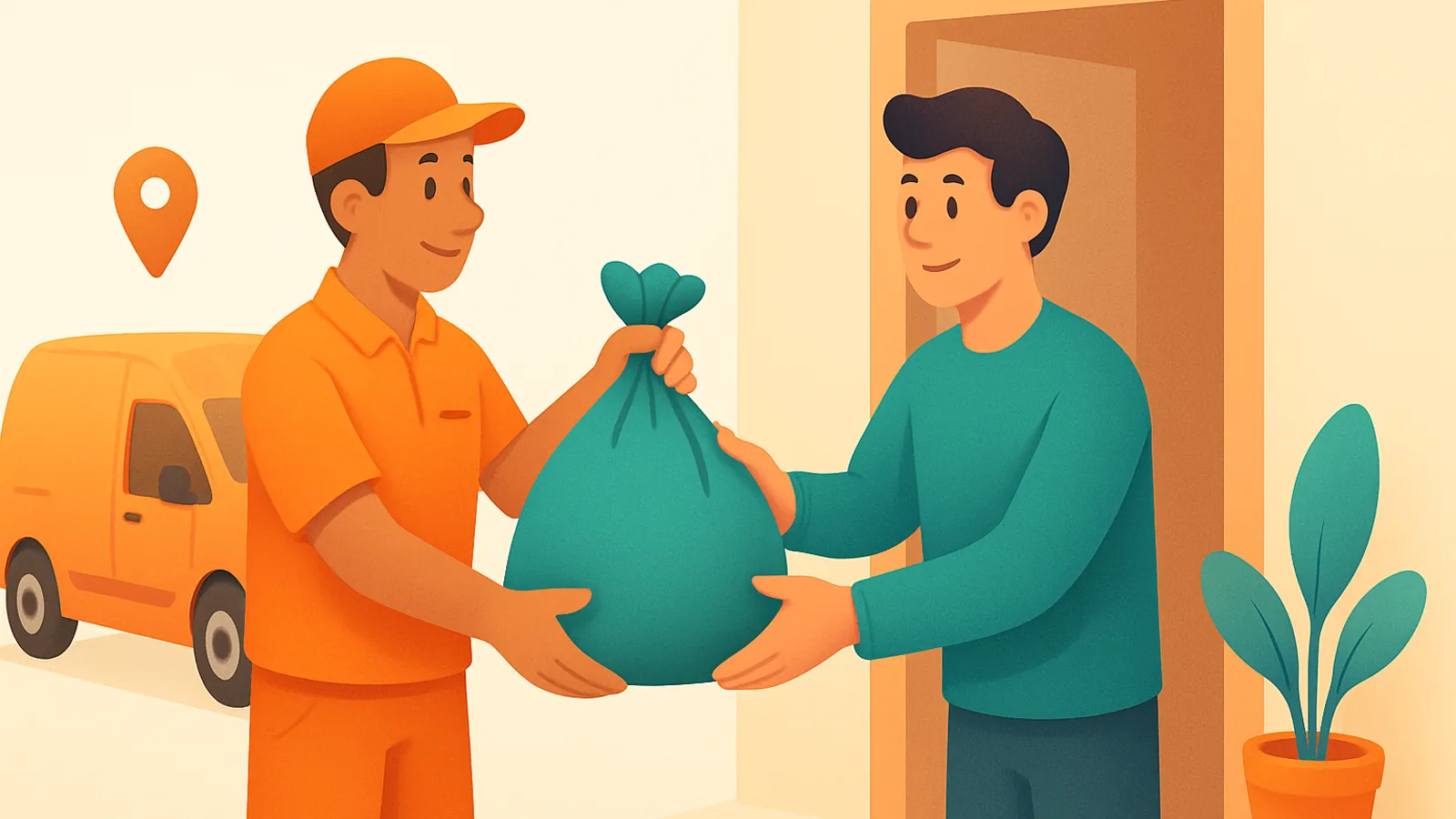
Why laundry delivery is harder than it looks
On paper it is simple: pick up, wash, return. In practice, four things make laundry and dry cleaning routes unusually fiddly, and a tool that ignores any of them will cost you drops and drivers.
- Every order is two stops, not one. A collection today becomes a return in two days — on a different run, possibly with a different driver. You are always juggling two overlapping schedules: what to pick up today and what to bring back today.
- Windows are the whole promise. Customers book a pickup slot and a return slot. Miss the window and the bag is not out yet, or nobody is home to receive it. Time windows are not a nicety in laundry — they are the product.
- Stops are residential and spread out. Unlike a restaurant sending drivers from one kitchen, a laundry round threads dozens of homes across a wide area. Small routing inefficiencies compound fast into wasted fuel and a driver who finishes late.
- Recurring customers dominate. A big share of laundry demand is weekly or fortnightly regulars. The same addresses, the same slots, week after week — which is a gift for planning if your software lets you reuse the round as a recurring route, and a chore if you rebuild every round from scratch.
Step one: take bookings into one board, with a window on each
The root of most laundry-round chaos is orders scattered across a booking form, a POS, WhatsApp messages, and a notebook. Before you can plan anything, every pickup and every return for the day needs to land in one place, each carrying the address and the slot the customer chose. If you already run a laundry POS or booking system, the job is to get those orders out of it and onto a dispatch board where you can route and assign them — Routella imports orders from 32 platforms plus a custom API, so the booking stays where your customers made it and the routing happens on top.
Attach a real time window to each stop. A collection at "9–11am" and a return at "5–7pm" are constraints the router has to respect, not suggestions. Our guide to delivery time windows covers how to offer slots customers actually pick without boxing your routes into an impossible sequence — the short version is to keep windows wide enough to batch and narrow enough to be worth booking.
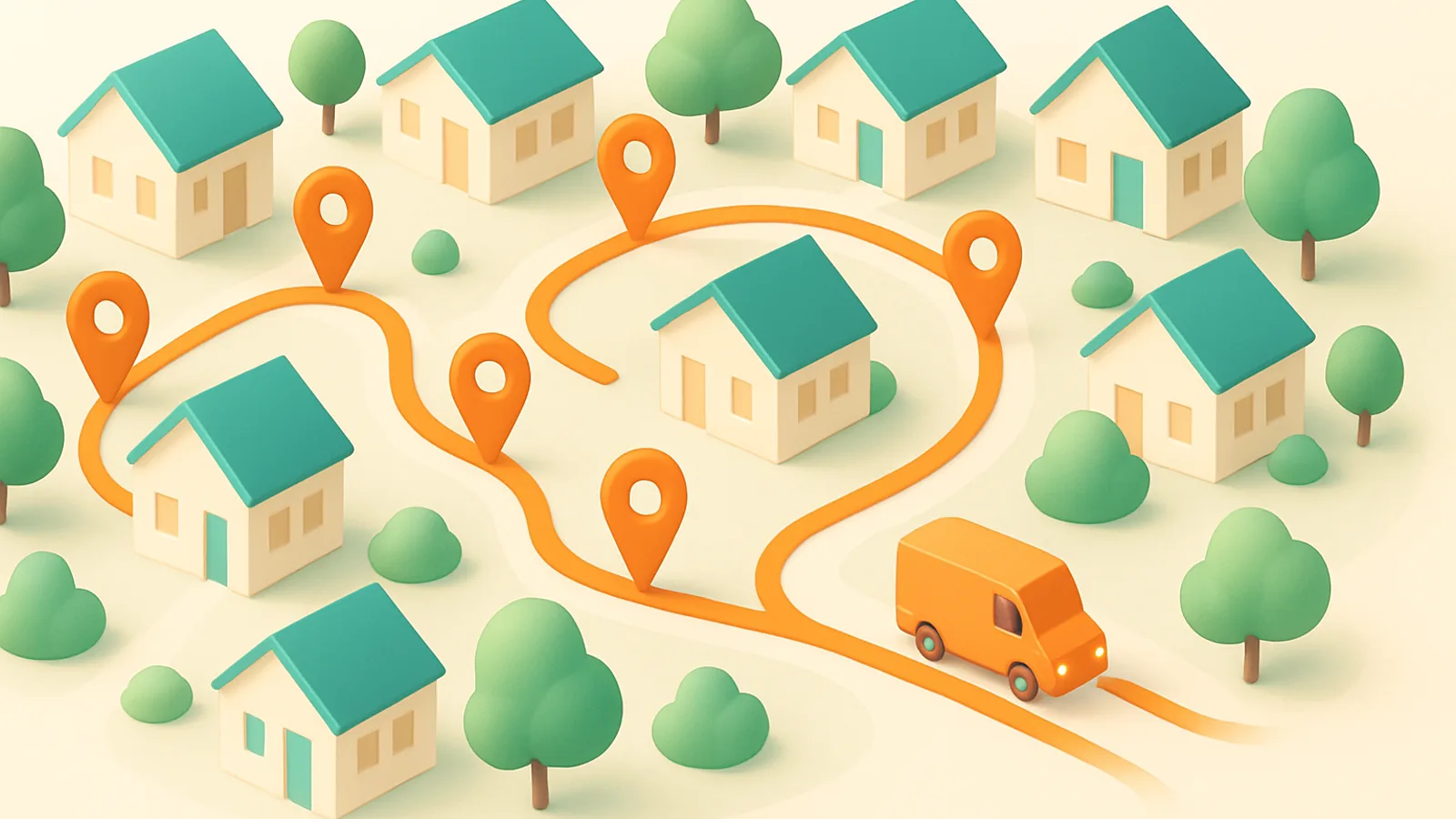
Step two: batch by neighbourhood and window, then optimize each run
With every stop on the board, group the ones that share a window and a part of town into a run, then let the software sequence each run for the least driving. This is ordinary multi-stop route optimization — the twist is that you are doing it twice a day, once for today’s collections and once for today’s returns, and the two runs cover different addresses even though many customers appear on both over the week.
Two habits keep a laundry operation profitable here. First, draw tight service zones so a driver stays in a compact patch instead of criss-crossing the city — see how to set up delivery zones by drive time, not distance. Second, plan by van capacity: a return run carries bulky finished orders, and a route the map calls "optimal" is useless if the load does not fit. Sequence for distance, but cap each run at what the vehicle and the shift can actually hold.
Step three: get customers home for the slot
A perfectly sequenced run still fails if the customer is not there — the bag does not go out, or a finished order is left in the rain. The fix is the same one that works for every last-mile business: tell the customer when the driver is actually coming. An automatic "your driver is on the way" message with a live tracking link, sent when the driver starts the run rather than the night before, gets people to the door for both the pickup and the return.
Routella sends those updates by WhatsApp, SMS, or email and gives every customer a live tracking page with a real ETA in 195 languages, so a regular can glance at their phone instead of calling to ask when the van arrives. Fewer missed handovers means fewer re-attempts — and in a two-leg business a missed pickup does not just cost a re-drive, it delays the whole order.
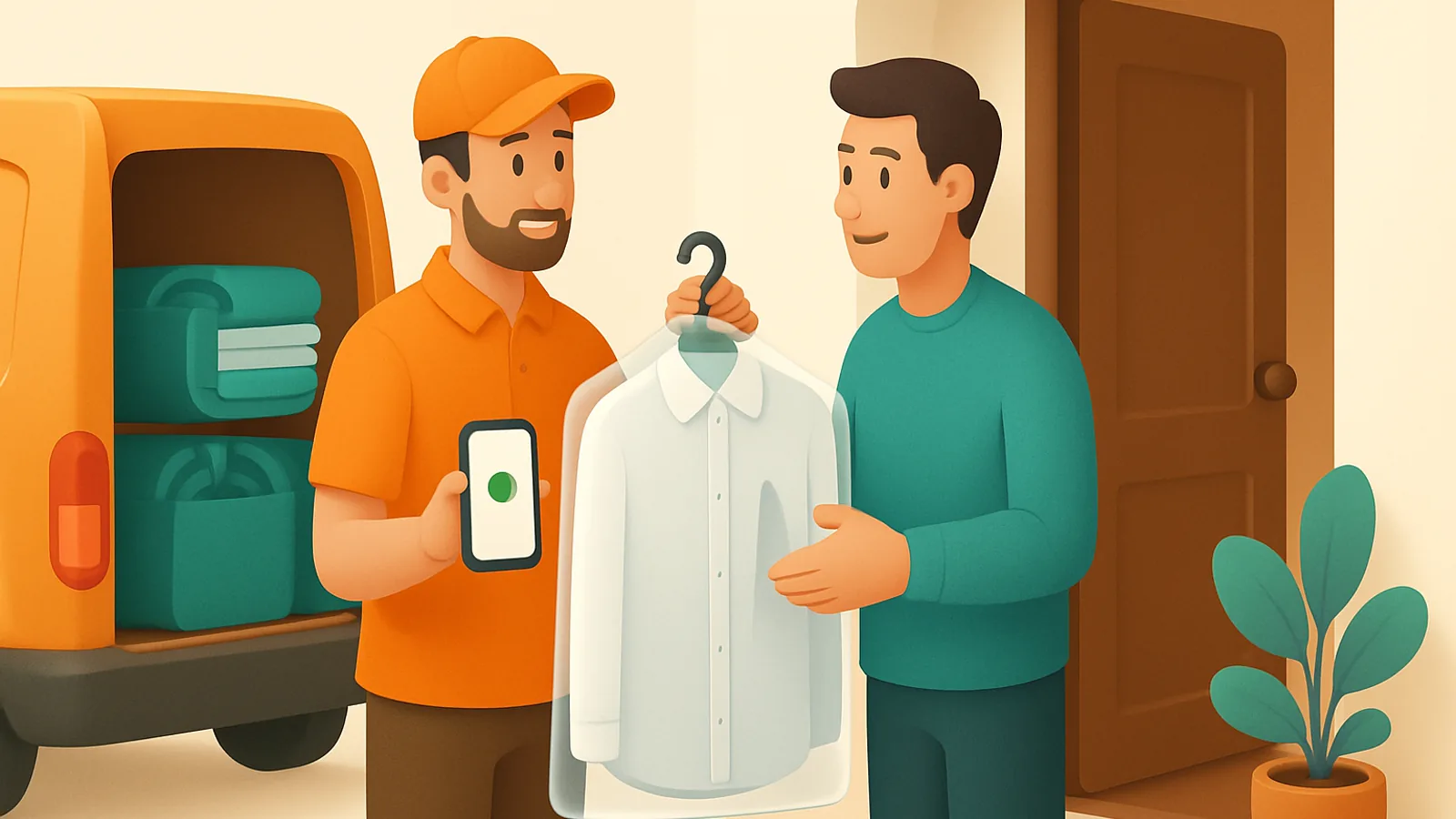
Step four: capture proof, and handle cash cleanly
Laundry is a high-trust handover — you are taking someone’s clothes and, later, handing back items that matter to them. Capturing a photo or a signature at each stop settles the two disputes this business actually generates: "I never got my order back" and "that damage was already there." Routella’s proof of delivery attaches a timestamped, geotagged photo or signature to the exact order, so a query is answered by pulling the record instead of arguing.
If drivers collect payment on return, treat it as its own workflow, not a shoebox of notes. Routella’s cash on delivery flow shows each driver the exact amount to collect per stop and reconciles what came back against what was owed at the end of the run, so cash does not quietly go missing between the doorstep and the till.
Do you need laundry-specific software?
There are two layers to a laundry delivery business, and it is worth being clear about which you are shopping for. The first is the shop layer — your POS, garment tagging, cleaning workflow, and customer bookings. Dedicated laundry platforms own that layer and do it well. The second is the road layer — turning the day’s pickups and returns into efficient runs, tracking drivers, notifying customers, and proving handover. That layer is ordinary last-mile delivery, and a focused delivery tool does it better than a bolt-on route feature inside a POS.
Routella is the road layer. It takes your orders in from whatever booking system you already use, optimizes each run, gives drivers a mobile route, keeps customers informed with live tracking, and captures proof and cash at the door — with a free plan and no credit card to start. If a route planner is all you need, you can run the free optimizer without connecting anything; if you want the notifications, tracking, and driver app, the paid plans start at $29/month.
A repeatable daily laundry-round workflow
- Consolidate. Pull today’s pickups and today’s returns onto one board, each with its address and window.
- Batch. Group stops that share a window and a neighbourhood into runs — a collection round, a return round, or a mixed run per driver.
- Optimize. Sequence each run for least driving, capped at van capacity and shift length.
- Assign. Hand each run to a driver on their phone, balancing the day so no one finishes at 4 while another finishes at 8.
- Notify. Fire an "on the way" message with a tracking link when each driver starts, so customers are home for the slot.
- Prove and reconcile. Capture a photo or signature at every handover, collect any COD, and reconcile the run at the end.
Run that loop every day and the two-leg problem stops being a scramble. The regulars fall into predictable slots, the runs stay dense, and the windows you promise are windows you keep — which, in a business built on repeat customers, is the whole game.
Frequently asked questions
What is the best software for laundry and dry cleaning delivery?
It depends on which layer you mean. A laundry POS (garment tagging, bookings, cleaning workflow) is one thing; planning and tracking the pickup and return runs on the road is another. For the road layer — optimizing runs, a mobile driver app, live customer tracking, proof of handover, and COD — Routella is a strong all-in-one, imports orders from Shopify, WooCommerce, Wix and more, and has a free plan with no credit card. It sits on top of whatever booking system you already use.
How do I plan a laundry pickup and delivery route?
Get every pickup and return for the day onto one board with its address and time window, group stops that share a window and a neighbourhood into runs, then optimize each run for the least driving within van capacity. Laundry is a two-leg business, so you typically plan two rounds a day — today’s collections and today’s returns — even though many customers appear on both across the week.
Can a route planner handle both pickups and returns?
Yes — a run is just an ordered list of stops, so a driver’s route can be all collections, all returns, or a mix of both on the same side of town. The important part is that each stop carries its own time window, because in laundry the slot the customer booked is the promise, and the router has to respect it rather than only chasing the shortest path.
How do I stop customers missing their laundry pickup or return?
Send an automatic "your driver is on the way" message with a live tracking link when the driver actually starts the run, not the night before. Routella sends these by WhatsApp, SMS, or email and gives each customer a live tracking page with a real ETA in 195 languages, so people are at the door for both the collection and the return — which matters double in laundry, since a missed pickup delays the whole order.
Does laundry delivery software capture proof of delivery?
It should — laundry is a high-trust handover of someone’s clothes. Routella captures a timestamped, geotagged photo or signature at each stop and attaches it to the exact order, which settles "I never got my order back" and pre-existing-damage disputes by pulling the record instead of arguing over it.
How do I keep a laundry delivery route profitable?
Density. The more pickups and returns you fit into the same stretch of road, the lower your cost per stop. Draw tight zones so drivers stay in a compact patch, offer windows wide enough to cluster regulars who live near each other, plan by van capacity so a dense return run still fits, and reuse recurring customers’ slots and locations instead of rebuilding every round from scratch.
Run your own deliveries with Routella
Route optimization, a driver app, proof of delivery, and live customer tracking — in one platform. Free plan, no credit card.