Auto Parts Delivery Software (2026): Hotshot Runs, Routes & Proof
How auto parts stores run their own delivery: scheduled runs, hotshot rush orders, core returns, driver routing, proof of delivery, and the software behind it.
Auto parts is a speed business. When a repair shop orders a part, there is usually a car on the lift and a customer in the waiting room — the shop is not buying a widget, it is buying the next twenty minutes of its bay. A parts store that delivers its own orders runs several scheduled routes a day and drops rush "hotshot" orders in between, and the gap between a store that wins that work and one that loses it is almost entirely the software around the driver.
This guide covers what auto parts delivery software actually has to do, how an independent jobber or store sets up in-house parts delivery step by step, and how to weave a hotshot rush order into a live run without wrecking the rest of it. It sits alongside our guides to running your own delivery operation and offering same-day local delivery — this one is specifically about auto parts.
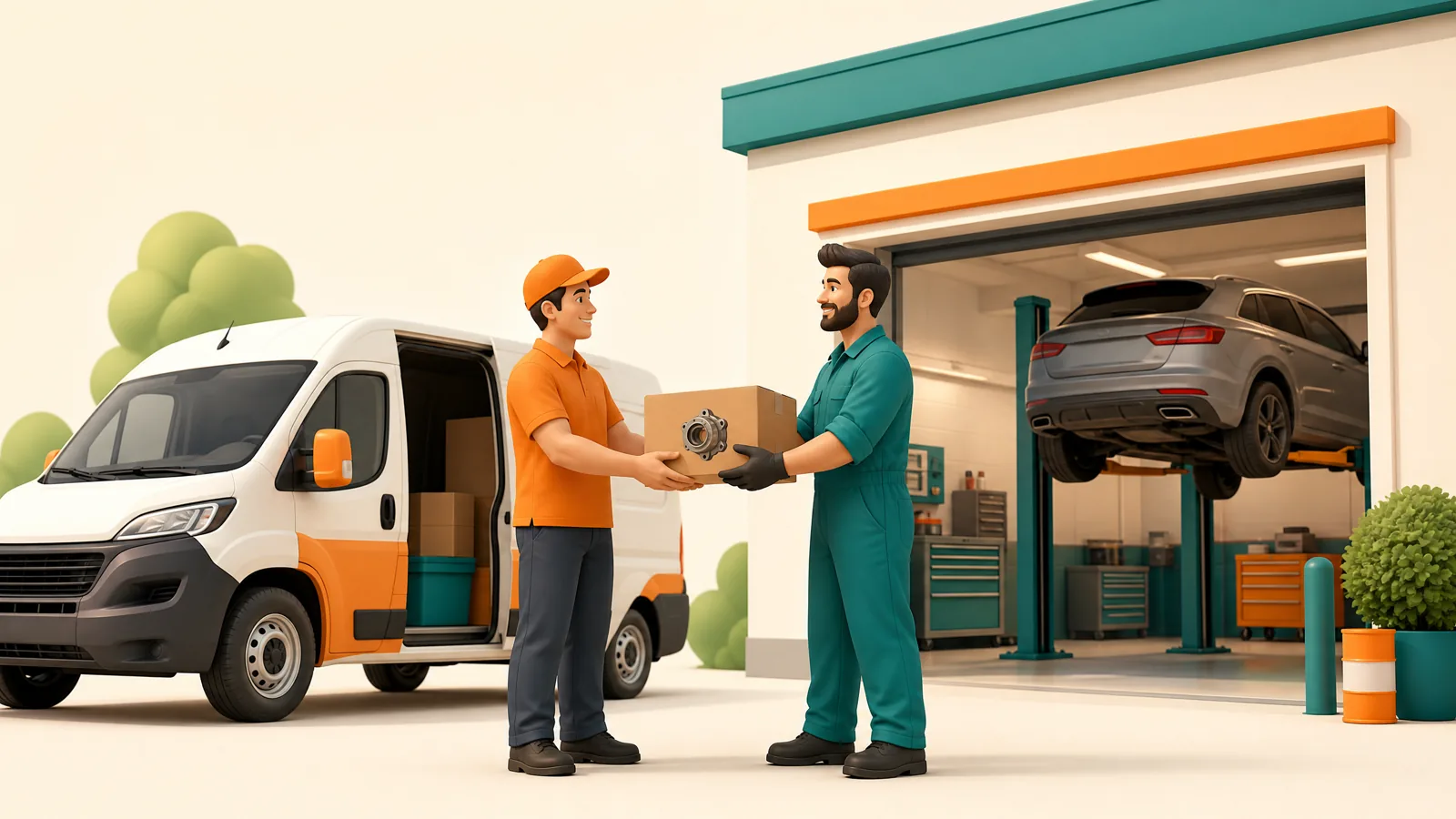
What makes auto parts delivery different?
Parts delivery looks like any other local route until you watch a real day. Five things set it apart, and a general route planner tends to miss all five.
- Several scheduled runs a day, not one. Most stores run a route every hour or two — a morning run, a mid-morning run, an afternoon run — so shops know roughly when the truck comes. The software has to plan a fresh optimized route many times a day, fast, not once each morning.
- Hotshot rush orders on top. Between scheduled runs, a shop calls with a part it needs now. That order has to slot onto whichever driver is nearest without derailing the drops already on their route — this is the single hardest part of parts dispatch.
- Tight, visible SLAs. "Thirty minutes" is a promise a competitor down the road will beat you on. Shops track which supplier is fastest, so a live ETA the counter can quote is a real sales tool, not a nicety.
- Core and warranty returns. Parts delivery is two-way: the driver drops the new part and picks up the old core or a warranty return on the same stop. A tool that only models one-way drops leaves reverse logistics on paper.
- Mixed billing — accounts and COD. Trade accounts get billed monthly, but walk-in and cash customers pay the driver at the door. The workflow has to handle both cleanly, including cash collected on delivery.
What auto parts delivery software actually needs to do
Strip away the marketing and a parts operation needs seven things working together:
- Fast, repeated route optimization — sequence each scheduled run into the shortest, quickest path, and re-plan on demand many times a day rather than once.
- Rush-order insertion — add a hotshot order to the nearest active driver’s route and re-sequence, so the counter can promise a time and mean it.
- Multi-driver dispatch — split the map across drivers and balance the load so no truck is slammed while another idles between runs.
- A mobile driver workflow — the stop list, turn-by-turn navigation, and one-tap completion on the driver’s phone, working offline through concrete-shop dead zones.
- Two-way stops — a note or task for the core or warranty part to collect, so returns come back with the driver instead of being forgotten.
- Proof of delivery — a photo or signature at the counter, so "we never got that alternator" is settled by the record, not an argument.
- Live tracking + notifications — an ETA the shop can see and an "on the way" message, so the counter stops calling to ask where the driver is.
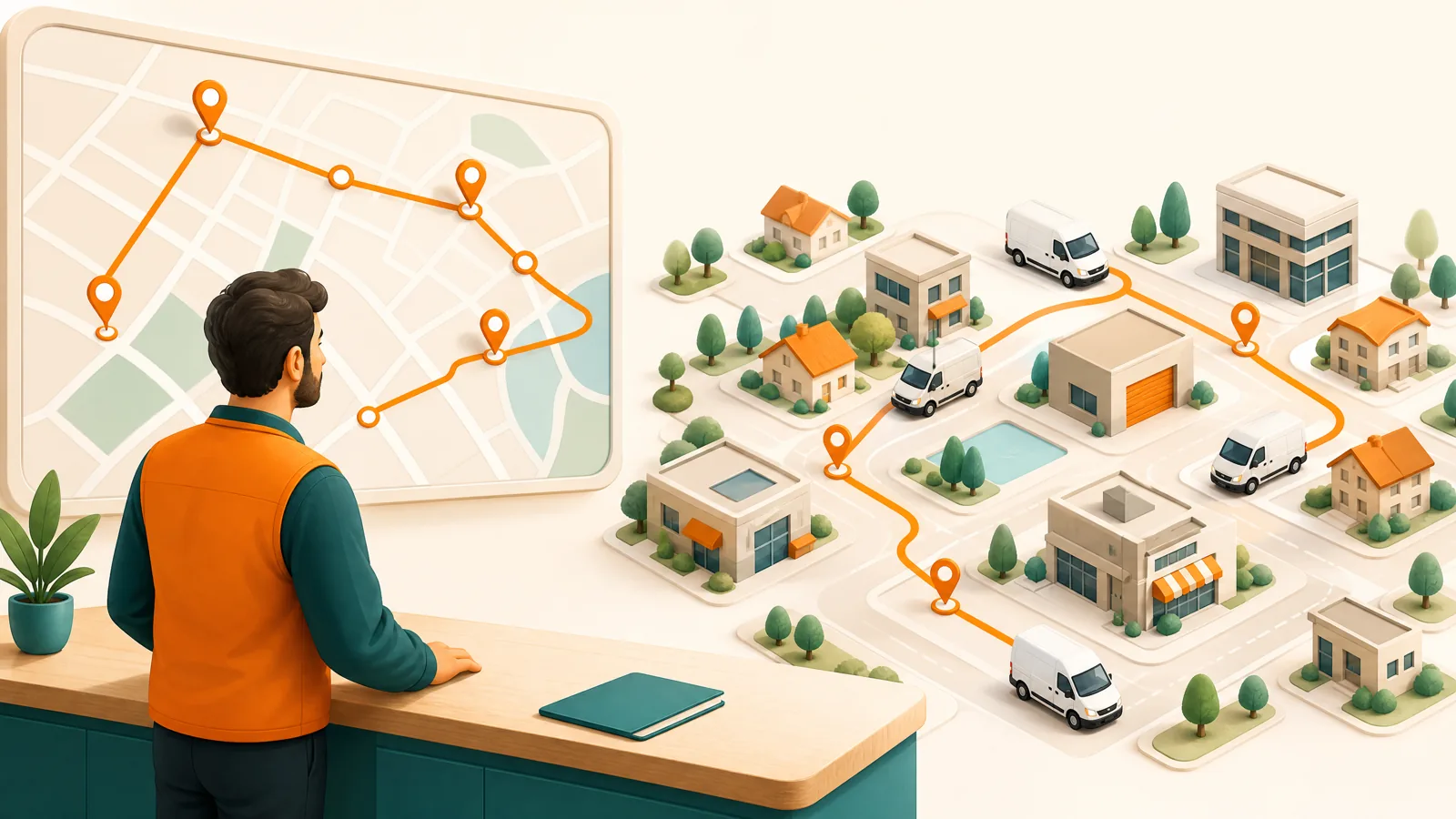
How to set up in-house auto parts delivery, step by step
The stores that deliver parts calmly are not doing anything clever — they run the same loop all day instead of improvising every time the phone rings. A workflow that holds from one truck to a small fleet:
Weaving a hotshot rush into a live run
The hotshot order is where parts delivery is won or lost. A shop calls at 2:10 needing a sensor for a car on the lift; you have three drivers already out on their afternoon runs. The wrong move is to send a fourth trip from the store — that is a whole van for one part. The right move is to find the driver already closest to that shop, add the stop to their route, and let the software re-sequence the rest so the rush lands fast and the drops already on board barely move.
Two things make that possible in practice: knowing where every driver is against their remaining stops, and being able to re-optimize a route in seconds rather than rebuilding it by hand. Get those right and a hotshot becomes a five-minute detour for one driver instead of a panic that pulls someone off another job. Balancing that load across drivers is the same discipline as any multi-driver dispatch — the rush order just tests it in real time.
- Parts delivery is many short runs a day plus rush orders on top — not one morning route.
- The hotshot is the hard part: slot it onto the nearest driver and re-sequence, don’t send a fresh trip.
- A live ETA the counter can quote is a sales tool — shops buy from whoever is provably fastest.
- Model the core/warranty return as a two-way stop, or reverse logistics quietly leaks money.
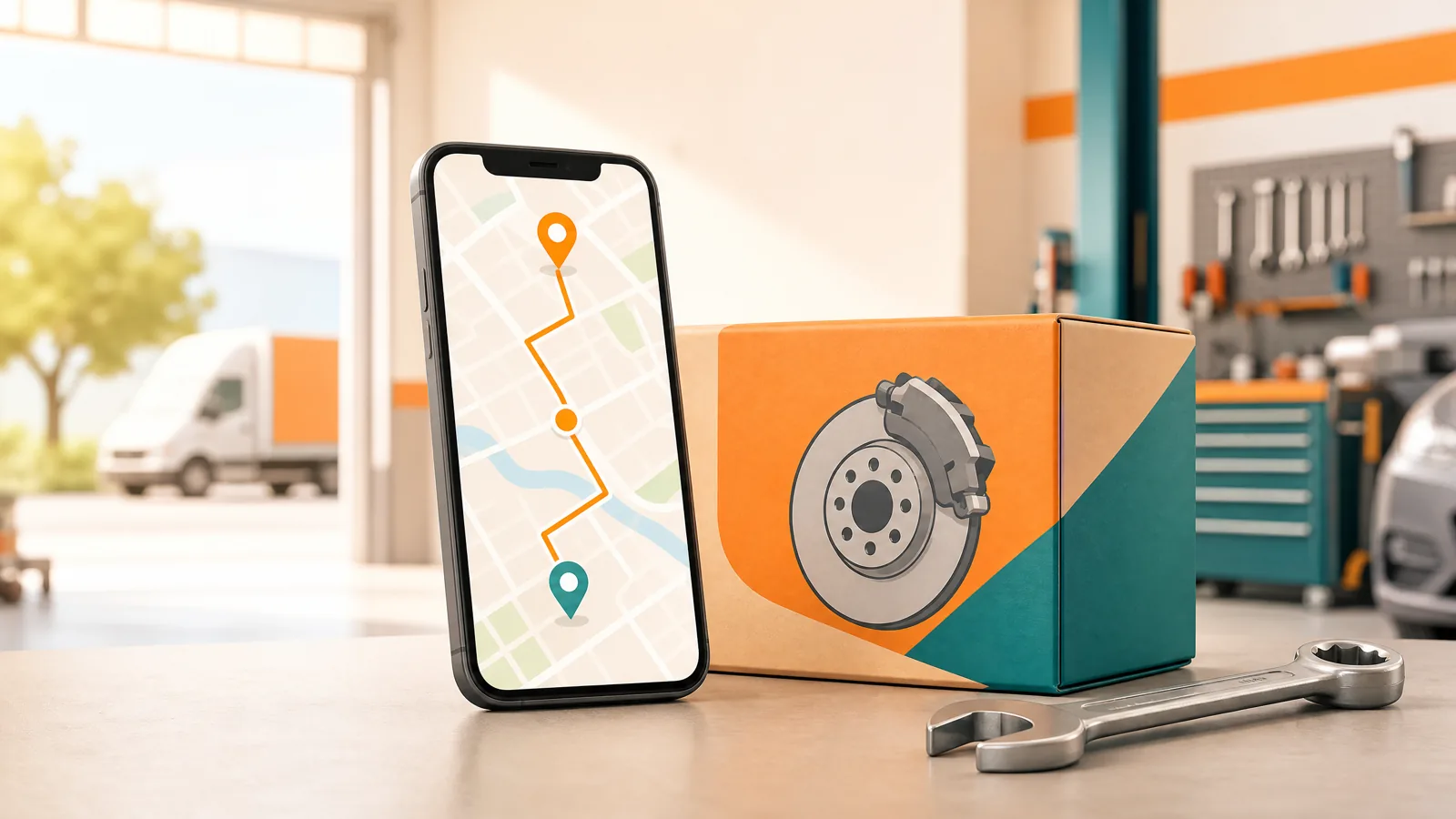
Proof of delivery and keeping shops informed
Two things protect a parts operation from its most expensive failure modes. Proof of delivery — a photo or signature at the counter — confirms the right part reached the right shop and settles "we never got that part" or "that is not what we ordered" without a credit-and-argue cycle. And a live tracking link with a real ETA, plus an automatic "on the way" message, is what stops the shop phoning your counter every ten minutes and lets them plan the bay around the part’s arrival. Both together turn "where is my part?" calls and delivery disputes from a daily tax into a rare exception — and cut your cost per drop by keeping drivers driving instead of fielding calls.
How Routella fits auto parts delivery
Routella covers this whole workflow in one platform. Orders from your store — Shopify, WooCommerce, Wix and more, plus manual entry and an API — land in one dispatch view with addresses geocoded on import, so a phone order and an online order sit on the same board. You batch each run into a round, Routella builds the shortest route for each driver, and when a hotshot lands you add the stop to the nearest active round and re-optimize in seconds. Running several trucks, you assign in one tap or auto-assign by zone so the map stays covered for the next rush.
Drivers get their stops on their phone through a secure link with no app to install and no login, in optimized order with turn-by-turn navigation and one-tap completion, and the driver page works offline through dead zones. Each stop captures photo or signature proof of delivery, every shop gets a live tracking page with a real ETA plus WhatsApp/SMS/email updates, and Routella can collect cash on delivery from walk-in customers while trade accounts stay on their monthly terms. When a driver marks a drop delivered, the order is written back as fulfilled automatically. For the wider category, see our delivery software comparison.
The bottom line
Auto parts delivery is a speed problem run many times a day: keep scheduled runs dense and on-cadence, slot rush orders onto the nearest driver instead of a fresh trip, quote a live ETA the shop can trust, and prove every drop so disputes settle themselves. Get orders onto one board, optimize each run, give drivers a mobile workflow, and keep shops tracked, and in-house parts delivery becomes the thing that wins accounts instead of a cost you tolerate. If you want one tool that does all of it, see how Routella works or start on the free plan — no credit card required.
Frequently asked questions
What is the best auto parts delivery software?
For a store running its own drivers, the right tool covers the whole workflow — fast repeated route optimization, hotshot rush-order insertion, multi-driver dispatch, a mobile driver app, proof of delivery, and live tracking shops can see — not just the route math. Routella is a strong all-in-one that does all of that, imports orders from Shopify, WooCommerce, Wix and more, and has a free plan with no credit card. Shipday, OptimoRoute, and Onfleet are other options worth shortlisting.
How do auto parts stores handle hotshot or rush deliveries?
The efficient move is not to send a fresh trip from the store for every rush order — it is to add the hotshot to the route of whichever driver is already nearest and re-sequence their remaining stops. That turns a rush into a short detour for one driver. It needs software that shows where each driver is against their stops and can re-optimize a route in seconds, so the counter can quote a real ETA off the live plan.
Do I need special software for auto parts delivery, or will any route planner do?
Parts delivery has demands a general route planner often misses: several scheduled runs a day rather than one, rush orders that have to slot into live routes, tight ETAs shops actually track, two-way stops for core and warranty returns, and a mix of account and cash-on-delivery billing. Software built for repeated daily dispatch and mid-run changes — not a once-a-morning route — is what keeps a parts counter competitive.
How do I track core and warranty returns on a delivery run?
Model the return as part of the same stop: the driver drops the new part and collects the old core or warranty return before leaving. In Routella you can add a note or task to a stop so the driver knows to pick the core up, and the proof-of-delivery capture records the handover — so returns come back on the truck instead of being forgotten and written off.
Can auto repair shops track their parts delivery?
Yes. With Routella every delivery gets a live tracking page with a real ETA, plus automatic "on the way" updates by WhatsApp, SMS, or email. That lets the shop plan the bay around when the part lands and stops the counter phoning to ask where the driver is — and a fast, visible ETA is often what wins the account over a slower supplier.
How do parts stores collect payment on delivery?
Most parts deliveries go to trade accounts billed monthly, but walk-in and cash customers pay at the door. Routella handles both: trade orders stay on their account terms, and where you need it the driver can collect cash on delivery and have it recorded against the order, so the day reconciles cleanly instead of by guesswork.
Run your own deliveries with Routella
Route optimization, a driver app, proof of delivery, and live customer tracking — in one platform. Free plan, no credit card.