Delivery Software for Florists (2026 Guide)
How florists deliver fresh arrangements on time: route planning, same-day time windows, photo proof of delivery, and customer notifications.
Florist delivery is one of the least forgiving jobs in last-mile logistics. The product wilts, the deadline is often a wedding or a funeral, and a late or wrong delivery does not just cost a sale — it ruins someone's day. A florist needs software that batches a morning of orders into tight routes, holds same-day and timed deliveries to the minute, and proves the bouquet arrived in good condition with a photo. This guide shows how to build that workflow with your own driver and a tool like Routella.
Routella is delivery dispatch and route-planning software for shops that deliver with their own driver or van — not a courier marketplace. You keep the customer relationship, you keep the margin, and you control exactly how each arrangement reaches the door.
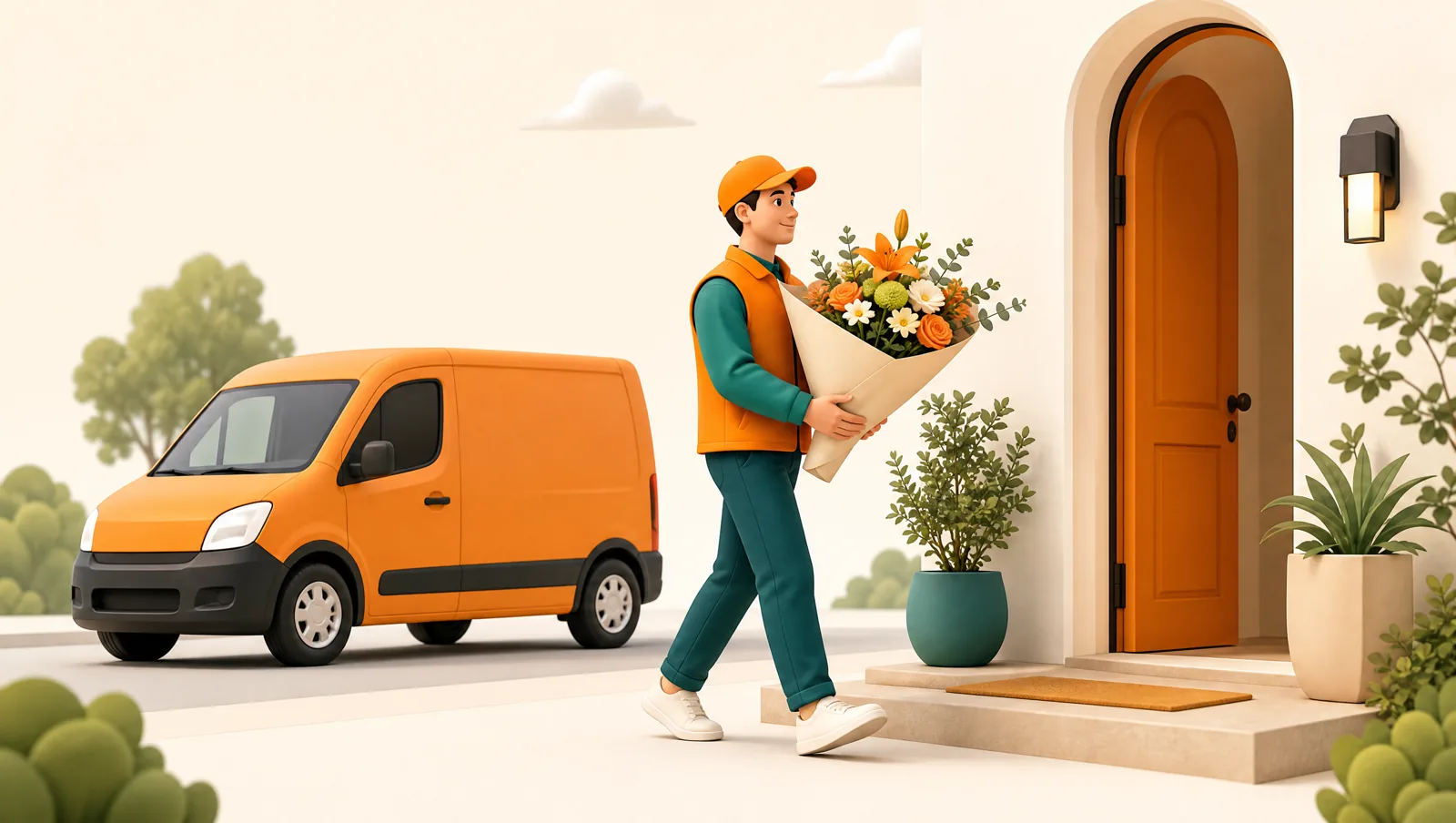
Why is flower delivery harder than normal delivery?
Three pressures stack on top of each other. The product is perishable, so a bouquet left in a hot van for three extra hours arrives wilted. The orders are time-bound — birthdays, anniversaries, sympathy arrangements, and event setups all have a window that cannot slip. And the purchase is emotional, so the recipient and the buyer both judge the whole experience by the moment of arrival. A normal parcel can be a day late with a shrug; a Valentine's bouquet cannot.
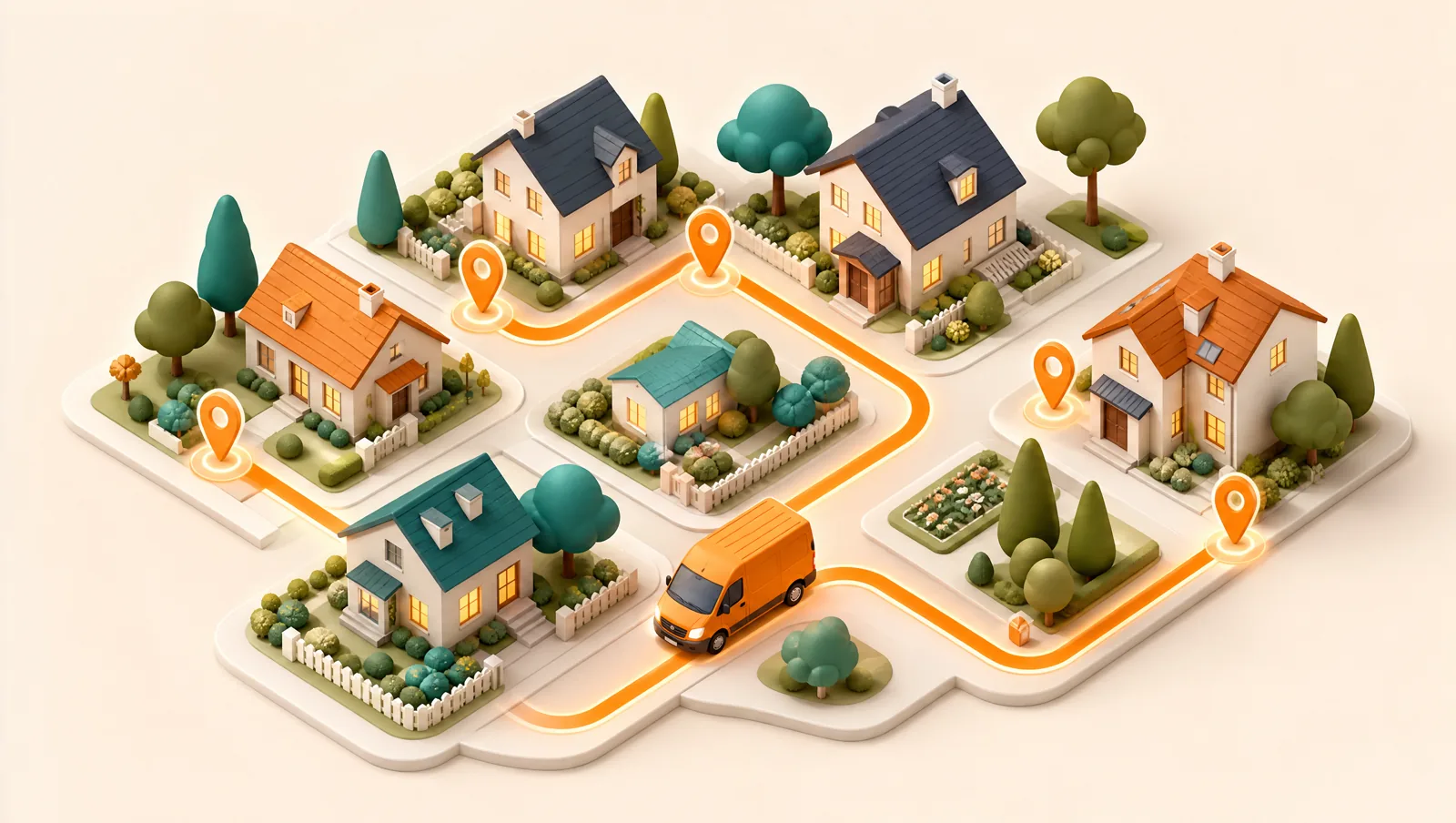
How do you plan a morning of flower deliveries?
The goal is to turn a stack of orders into a small number of efficient routes that respect each delivery's time window. The workflow looks like this:
- Pull every order into one board. Web orders, phone orders, and walk-in gift orders all need to live in the same dispatch view.
- Group stops by area and time window. Morning funeral arrangements go in one round; afternoon birthday gifts in another.
- Optimize the stop order. Let the software resequence each round into the shortest, fastest path instead of guessing on a map.
- Assign the route to your driver's phone with turn-by-turn navigation, so they are not squinting at a printed list.
- Notify each recipient or buyer with a live tracking link as the driver gets close.
Routella pulls orders automatically from Shopify, WooCommerce, Wix, Squarespace and 9 other platforms, and lets you type in phone orders by hand — so a shop taking same-day orders over the phone and a website's online orders run from one board. For the route step itself, see our guide to optimizing multi-stop routes.
How do you handle same-day and timed deliveries?
Most flower orders are same-day, and many carry a hard time window — a wedding venue that needs arrangements by 2pm, or a hospital that only accepts deliveries during visiting hours. Routella supports time windows on stops so a route respects "deliver between 1–3pm," and the optional Smart Routing add-on ($5/month, with 250 stops included on Growth and 1,000 on Pro) factors live traffic and those windows in through the Google Routes API. That means the sequence the driver gets is one that can actually be met, not just the shortest distance on a clear road.
For the broader playbook on tight local turnarounds, see same-day local delivery.
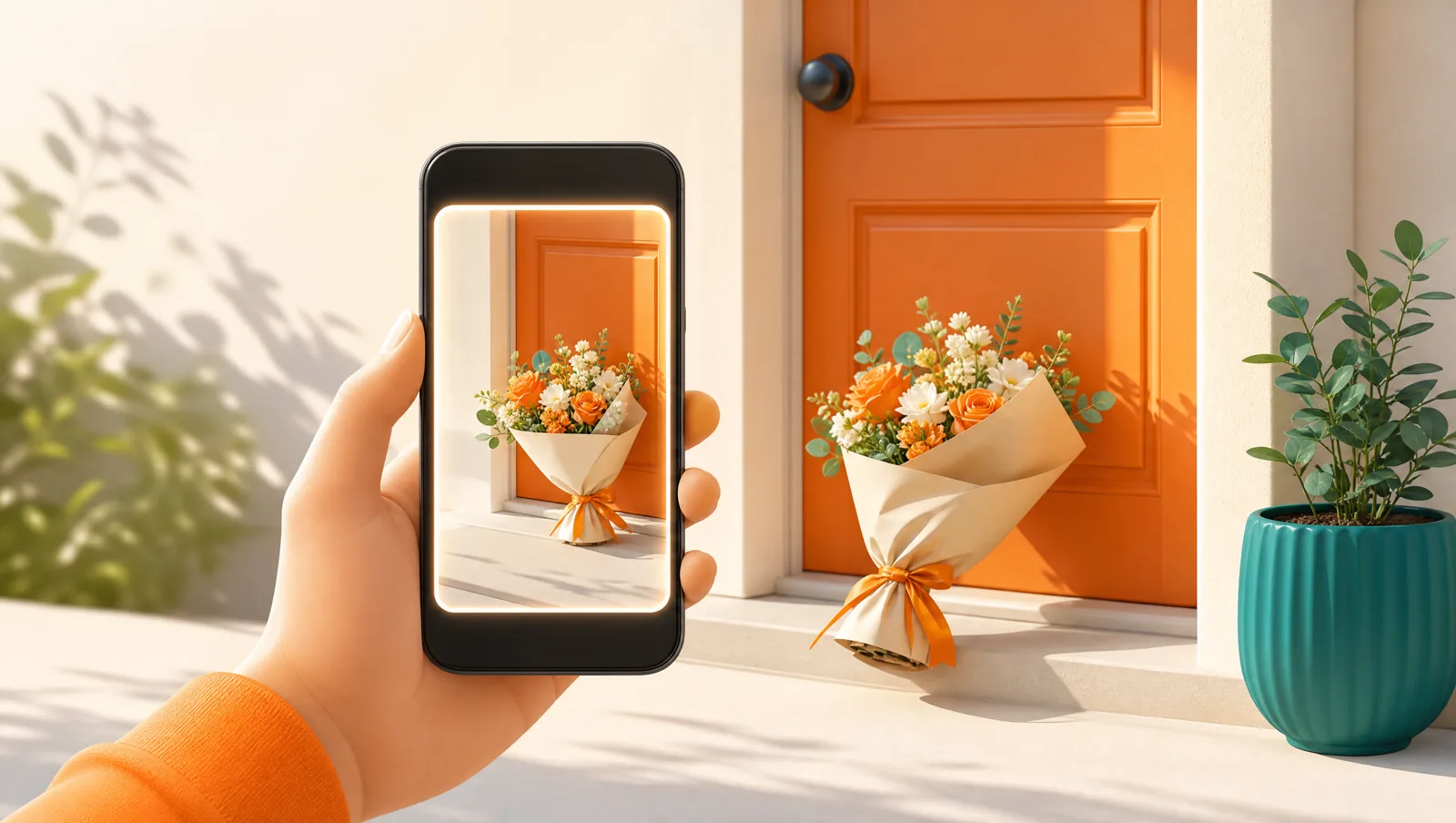
How do you prove a bouquet arrived in good condition?
Flowers generate a specific kind of dispute: "they were damaged" or "nobody was home so where are they?" A photo at the doorstep answers both. Routella's driver app captures proof of delivery — a photo, a signature, or a barcode scan — at each stop, timestamped and attached to the order. For a gift sent to a recipient the buyer never sees, that doorstep photo is often the only confirmation the sender gets that their arrangement looked right. Our proof-of-delivery guide covers the formats and when to use each.
How do you keep the buyer informed without phone tag?
Flower buyers are anxious — they are sending a gift they will never see arrive. Automated messages calm that. Routella can send an order confirmation, an "out for delivery" message, and a live tracking link with a real-time ETA over WhatsApp, SMS, or email. The tracking page renders in 195 languages with full right-to-left support, which matters for shops serving diverse cities. This is the highest-impact thing a florist can do to cut "where is my order?" calls on a busy delivery day — and our notifications guide shows how to tune the messages.
What does this cost a small flower shop?
You can start free. Routella's free plan covers 1 driver, 50 orders a month, and 5 rounds a month with no card — enough for a small shop to run real same-day deliveries and feel the difference before paying. As volume grows, the Growth plan at $29/month covers 5 drivers and 1,000 orders a month, and Pro at $79/month adds unlimited drivers and orders with WhatsApp included — useful for shops that scale up dramatically on floral holidays. Paid plans offer a 14-day trial for eligible new customers (card required).
For the bigger picture of moving deliveries in-house, see delivery management software, and to understand the math, see delivery cost per drop.
What should a florist do first?
- Connect your store (or set up manual order entry) so every order lands in one place.
- Build your morning and afternoon rounds, grouping by time window.
- Turn on optimized routing so the stop order is calculated, not guessed.
- Switch on photo proof of delivery for every stop.
- Enable the "out for delivery" message with a tracking link.
Do those five things and a flower shop turns its riskiest task — getting a perishable gift to the right door on time — into a repeatable, provable routine.
How do florists survive peak floral holidays?
Valentine's Day and Mother's Day are the two days that can make or break a flower shop's reputation. The volume is enormous, the time windows are unforgiving, and a single missed delivery becomes a public review. The shops that come through clean do three things. They pre-batch the next day's routes the evening before, grouping by neighborhood and time window so the morning is execution, not planning. They add temporary drivers — easy on the Pro plan, which allows unlimited drivers — and assign each one a clean route on their own phone. And they lean on automated notifications, because the phone lines that day are saturated; a tracking link answers the question before the customer can dial. Treating peak days as a planning problem solved the night before, rather than a scramble on the morning, is the difference between a great holiday and a flood of refunds. Those same three moves — plan ahead, add temporary drivers, and lean on automated notifications — carry over to any seasonal surge; our guide to preparing a delivery operation for peak season covers the full playbook.
When the day is over, the analytics view shows how many stops each driver completed and where time was lost, so next year's plan starts from real numbers instead of memory.
Frequently asked questions
Does Routella provide drivers for flower delivery?
No. Routella is software for florists who deliver with their own driver or van. It plans the routes, runs the driver app, captures proof of delivery, and notifies customers — but it does not supply couriers. You keep your customer relationship and your margin.
Can it handle same-day flower orders with specific time windows?
Yes. You can set a time window on each stop, such as deliver between 1pm and 3pm, and the optional Smart Routing add-on factors live traffic and those windows into the route so the sequence is actually achievable.
How does a florist prove a bouquet was delivered?
The driver captures proof of delivery at each stop — a doorstep photo, a signature, or a barcode scan — which is timestamped and attached to the order. For gifts the buyer never sees in person, that photo confirms the arrangement arrived in good condition.
Run your own deliveries with Routella
Route optimization, a driver app, proof of delivery, and live customer tracking — in one platform. Free plan, no credit card.