How to Cut "Where Is My Order?" Support Tickets
WISMO tickets are the most common and most preventable support load in delivery. A practical playbook to cut "where is my order?" contacts at the source.
"Where is my order?" — known in support circles as WISMO — is the most common and most preventable support contact in any delivery operation. The customer is rarely angry; they are uncertain, and uncertainty is something you can design away. Every WISMO ticket is a question your system failed to answer before the customer had to ask it. This playbook covers exactly how to cut those contacts at the source so your team can spend its time on the problems that actually need a human.
The mistake most businesses make is treating WISMO as a staffing problem — hire more support, answer faster. The real fix is upstream: give customers the information they would have asked for, at the moment they would have asked, automatically.

Why do customers send "where is my order?" tickets?
Almost every WISMO contact traces back to one of three gaps:
- No expectation was set. The customer never got a clear delivery window, so any wait feels like a problem.
- No way to self-serve. The customer wants to check status but has no link to do it, so the only path is to contact you.
- The expectation was set and then silently broken. They were told "today" and it is now late, with no update. This produces the angriest version of the ticket.
Notice that none of these are about delivery speed. A customer who knows their order arrives at 4pm and can watch it on a map waits happily; a customer with a faster delivery and no information panics. WISMO is an information problem, not a logistics one.
What is the single biggest lever to reduce WISMO?
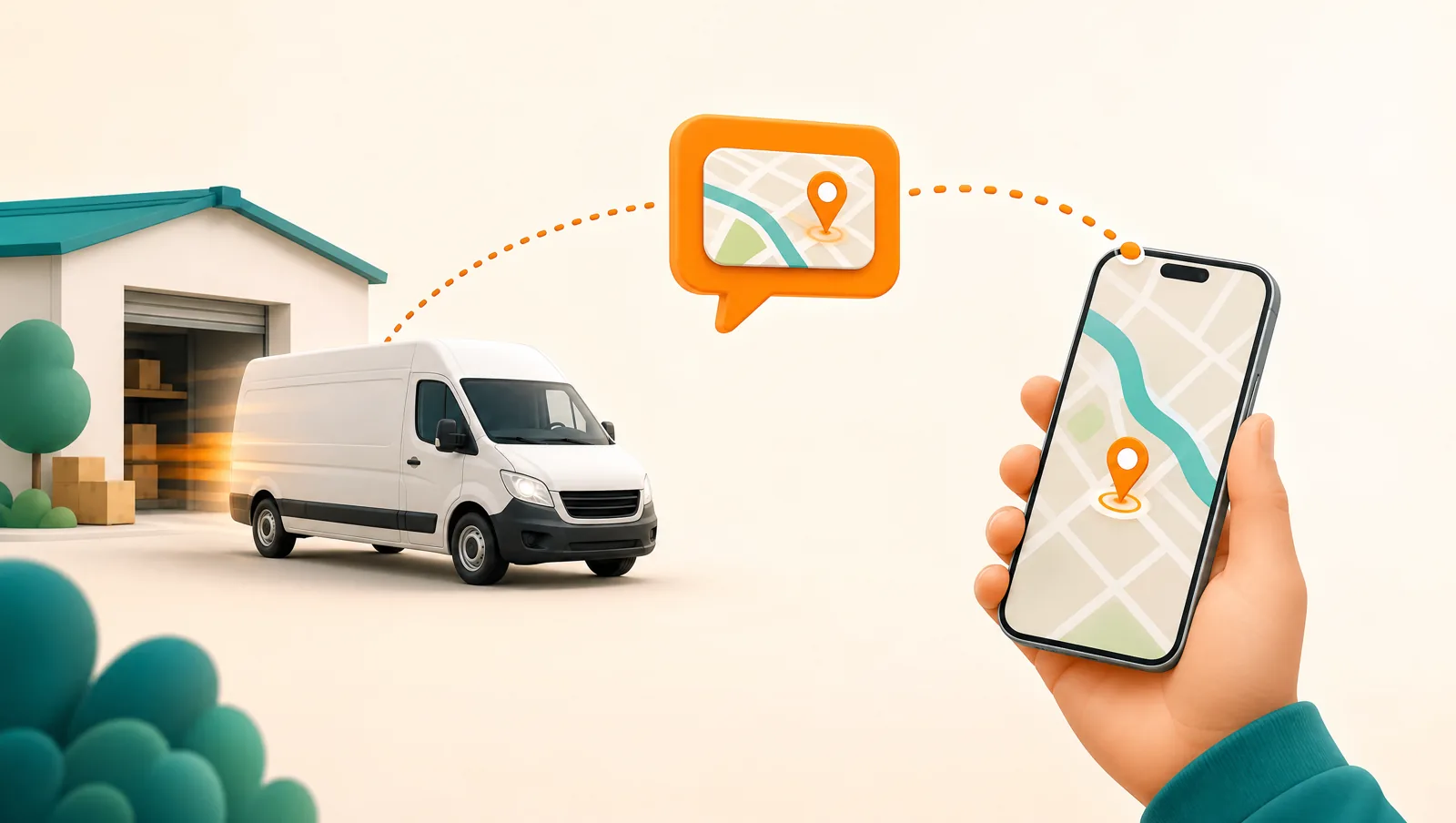
A live tracking link, sent proactively the moment the order goes out for delivery. It hits all three gaps at once: it confirms the order is moving, it gives the customer a way to check themselves, and — if it shows a recalculating ETA — it reveals delays honestly instead of hiding them. A customer who can open a map and watch their driver almost never opens a support ticket. Our live tracking and ETA guide covers how to make that link useful.
The word "proactively" is doing the work here. A tracking link the customer has to dig for in an account portal does not reduce WISMO; a tracking link that arrives in a text the instant the driver starts the route does. The customer should never have to go looking — the information comes to them, in the channel they already read, at the moment it becomes relevant.
It is worth measuring this. Tag your support contacts by reason for a couple of weeks, count the share that are pure status questions, and you will usually find WISMO is the single largest bucket. That number is also your opportunity: it is the volume that a good tracking link and a few well-timed messages can take off your team's plate without hiring anyone. Watch too for the spikes: the moment an order hits a delivery exception, a proactive message about the delay heads off the flood of "where is it?" tickets that otherwise follows.
How does a proactive notification flow cut tickets?
Pair the tracking link with a short, well-timed set of notifications and you intercept the question at every point it would naturally arise:
- Order confirmed kills the "did it go through?" contact and sets the delivery window.
- Out for delivery, with the tracking link, kills the "is it coming today?" contact — the largest single bucket.
- Arriving kills the "I need to be home, when exactly?" contact.
- Delivered, with proof, kills the "did it actually arrive?" contact and pre-empts disputes.
Each message is aimed at a question the customer would otherwise send you. For the channel and wording details, see our guide to customer delivery notifications, and grab ready-made delivery notification templates to send at each stage. The point is that a handful of automatic messages can absorb the overwhelming majority of WISMO volume before it ever reaches a queue.
How do you handle the late delivery without a ticket?
The hardest WISMO ticket is the late-and-silent one. The fix is not to never be late — that is impossible — but to never be silent. When a route is genuinely running behind, a tracking page with a live ETA shows the slip as it happens, so the customer absorbs the delay as something visible rather than something hidden. That single change converts a furious "you said today!" contact into a calm "I can see it is running behind."
Many late deliveries are also avoidable upstream. A failed first attempt becomes a re-delivery, a re-delivery becomes a delay, and the delay becomes a ticket — so reducing failures reduces WISMO indirectly too. Our guide on how to reduce failed deliveries covers that side of the equation.
What about the tickets you cannot prevent?
Some contacts are legitimate — a genuinely lost package, a wrong address, a customer who needs to change the drop. The goal is not zero tickets; it is removing the noise so your team can handle the real ones well. Two things help:
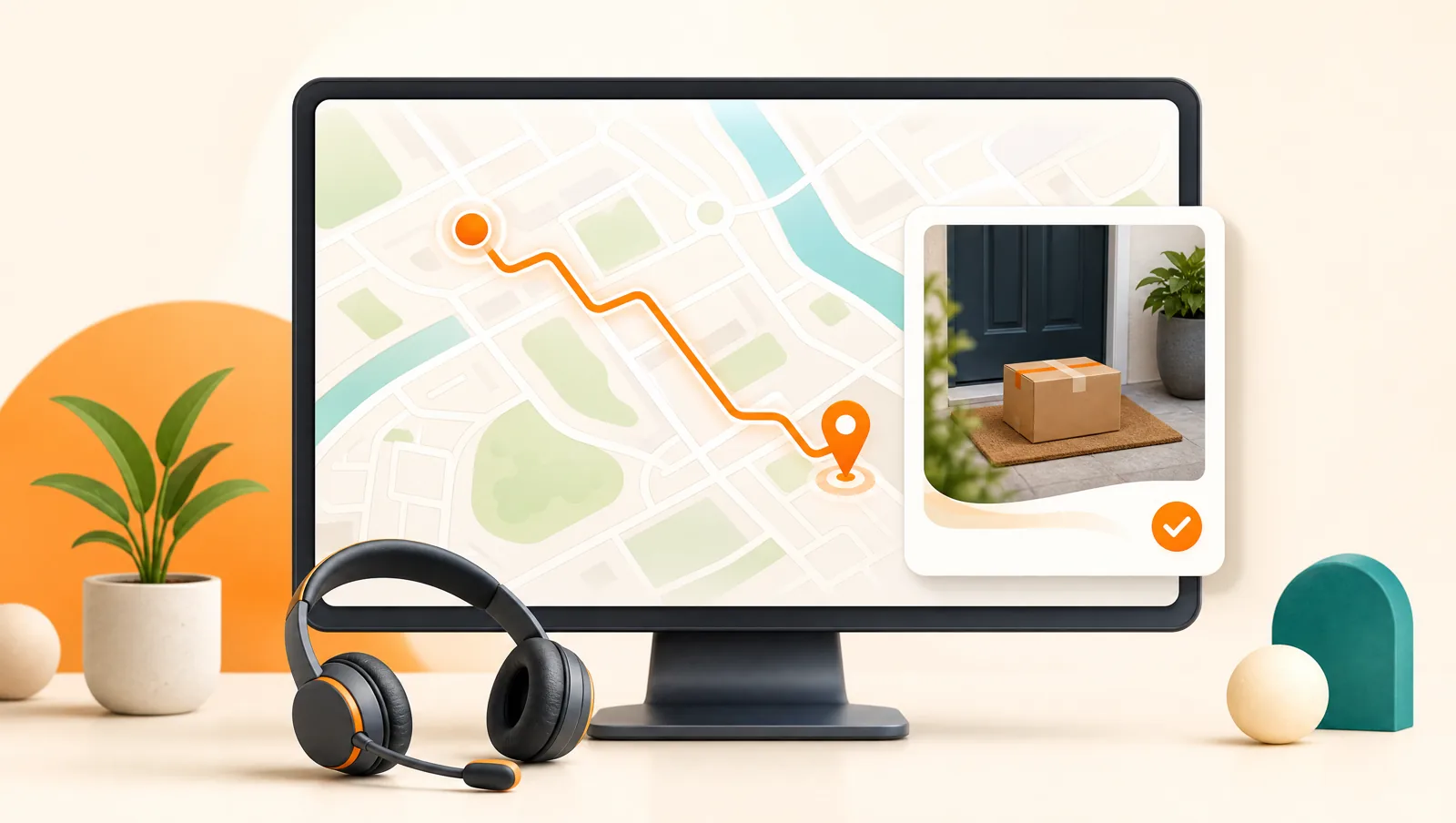
- Give support the same view drivers have. When an agent can see the live route, the driver's position, and the proof of delivery, they resolve a real WISMO contact in one reply instead of going back and forth.
- Attach proof of delivery to every completed order. A photo or signature at the door turns "it never arrived" into a thirty-second resolution. See the proof of delivery guide.
It also helps to make the legitimate path easy. If a customer needs to change a drop-off detail or flag a missed delivery, the message you already sent them is the natural place to do it — a reply to the out-for-delivery text reaches you faster than a customer hunting for a support address. The fewer steps between a real problem and the person who can fix it, the less that problem festers into a frustrated, repeated contact.
How do I put this in place for my own deliveries?
If you run your own drivers, you want the whole flow to fire off real delivery events without a person managing it. Routella does exactly that: orders import from your store or get entered by hand, the route is optimized so ETAs stay honest, the driver runs it from the mobile app, and customers automatically get the confirmation, the out-for-delivery message with a live tracking link, and the delivered receipt with proof. The WISMO question gets answered before it is asked.
You can start on the free plan — no card — to run real deliveries and send real tracking links, then add WhatsApp on Pro when you want it as a channel. To build the same flow into your own stack instead, the developer docs have the API.
Cutting WISMO is not about answering faster. It is about answering before the question is asked. Set a clear expectation, hand over a live tracking link the moment the order moves, show delays honestly, and attach proof at the door — and the inbox goes quiet on its own.
Frequently asked questions
What does WISMO mean?
WISMO stands for "where is my order?" — the most common type of delivery support contact. It refers to customers reaching out to ask about the status or location of an order they are waiting on. Most WISMO contacts are driven by uncertainty rather than a real problem, which is why they are largely preventable.
What is the fastest way to reduce WISMO tickets?
Send a live tracking link proactively the moment the order goes out for delivery. It confirms the order is moving, lets the customer check status themselves, and — if it shows a recalculating ETA — reveals delays honestly. A customer who can watch their driver on a map rarely opens a ticket.
How do I handle a late delivery without getting a complaint?
Never be silent. You cannot prevent every delay, but a live tracking page with an updating ETA lets the customer see the order running behind as it happens. That turns a furious "you said today" contact into a calm "I can see it is late," and it sets honest expectations instead of breaking them quietly.
Run your own deliveries with Routella
Route optimization, a driver app, proof of delivery, and live customer tracking — in one platform. Free plan, no credit card.