Best Delivery Options for Small Businesses: 5 Models Compared
Compare five delivery options for small businesses by speed, area, item, cost, and control, then use a practical checklist to choose the right mix.
The best delivery options for small businesses depend on the order in front of you. A sealed parcel that can arrive in three days, a birthday cake needed across town this afternoon, and ten local orders ready for one planned route should not be forced through the same delivery model.
Start with five facts: distance, urgency, item and vehicle fit, order pattern, and the control you need at the handoff. Those facts tell you whether to use a parcel carrier, a local courier, an independent-driver marketplace, your own drivers, customer collection, or a mix. Once you know the model, use our courier service checklist to compare individual providers.
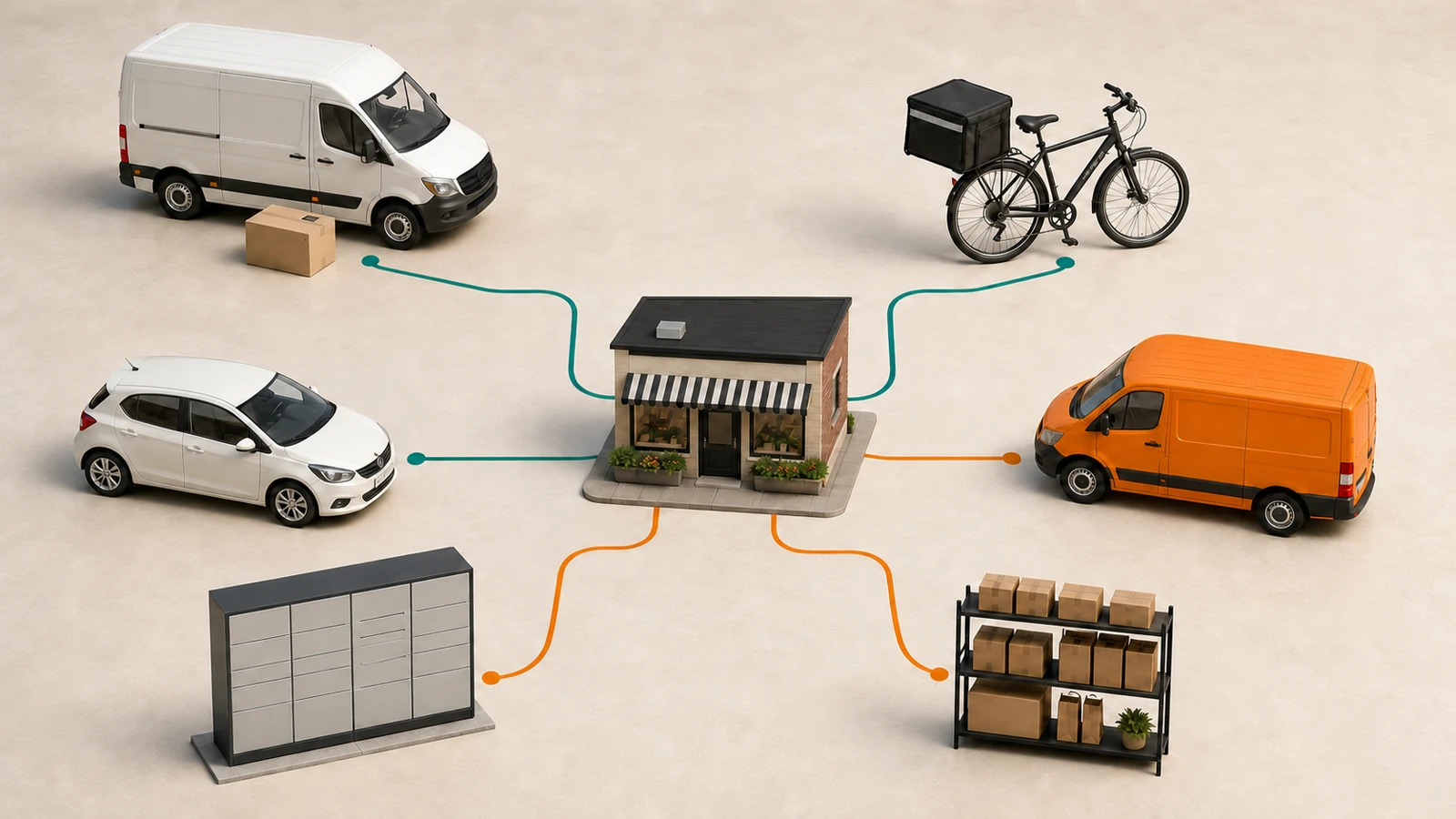
- Parcel carrier: best for sealed, standard-size goods that can move through a national network on a normal timetable.
- Local courier or driver marketplace: best for point-to-point, same-day, unusual, or overflow work where the real addresses and item matter.
- Your own drivers: best when local volume is steady enough to keep a team productive and the handoff is part of your brand.
- Collection or lockers: best when the customer can complete the last step and convenience matters more than door-to-door service.
What are the best delivery options for a small business?
There is no single winner for every order. The useful comparison is between delivery models, because each one is built around a different promise. This table gives you the starting point before you look at company names or quotes.
| Delivery option | Best fit | How cost usually behaves | Main trade-off |
|---|---|---|---|
| Parcel carrier | Standard parcels, national or international reach, and delivery measured in days | Per parcel, affected by size, weight, speed, destination, and account volume | Less control over the exact driver, route, and doorstep timing |
| Local courier company | Direct local or regional jobs, urgent items, and scheduled point-to-point work | Usually per job or route, affected by distance, timing, vehicle, and handling | Coverage, capacity, booking process, and exception rules vary by company |
| Independent-driver marketplace | Flexible local capacity, one-off work, peaks, overflow, and changing demand | Based on the exact delivery and marketplace terms rather than paid idle time | Eligibility and driver availability must be confirmed for each operation |
| Your own drivers plus delivery software | Steady local volume, repeat routes, branded service, and close operating control | Wages or contractor cost, vehicles, insurance, management, and software continue between drops | You carry staffing, vehicle, compliance, routing, and idle-capacity work |
| Customer collection or locker | Customers who value flexibility and can complete the last part of the journey | Lower door-to-door work, with possible site, locker, handling, or staff costs | The customer travels, so it cannot replace home delivery for every order |
A fulfilment partner can sit before these choices by storing, picking, and packing orders, but a delivery model is still needed for the final journey. Likewise, delivery software is not a driver supply service: it helps you plan and run work for drivers you already manage. Keeping those jobs separate prevents a tool purchase from being mistaken for delivery capacity.
Start with the order, not the provider
Provider lists are tempting because they feel like a shortcut. They often make the first decision too early. Before opening quote forms, write down one representative order and answer the same five questions for every option.
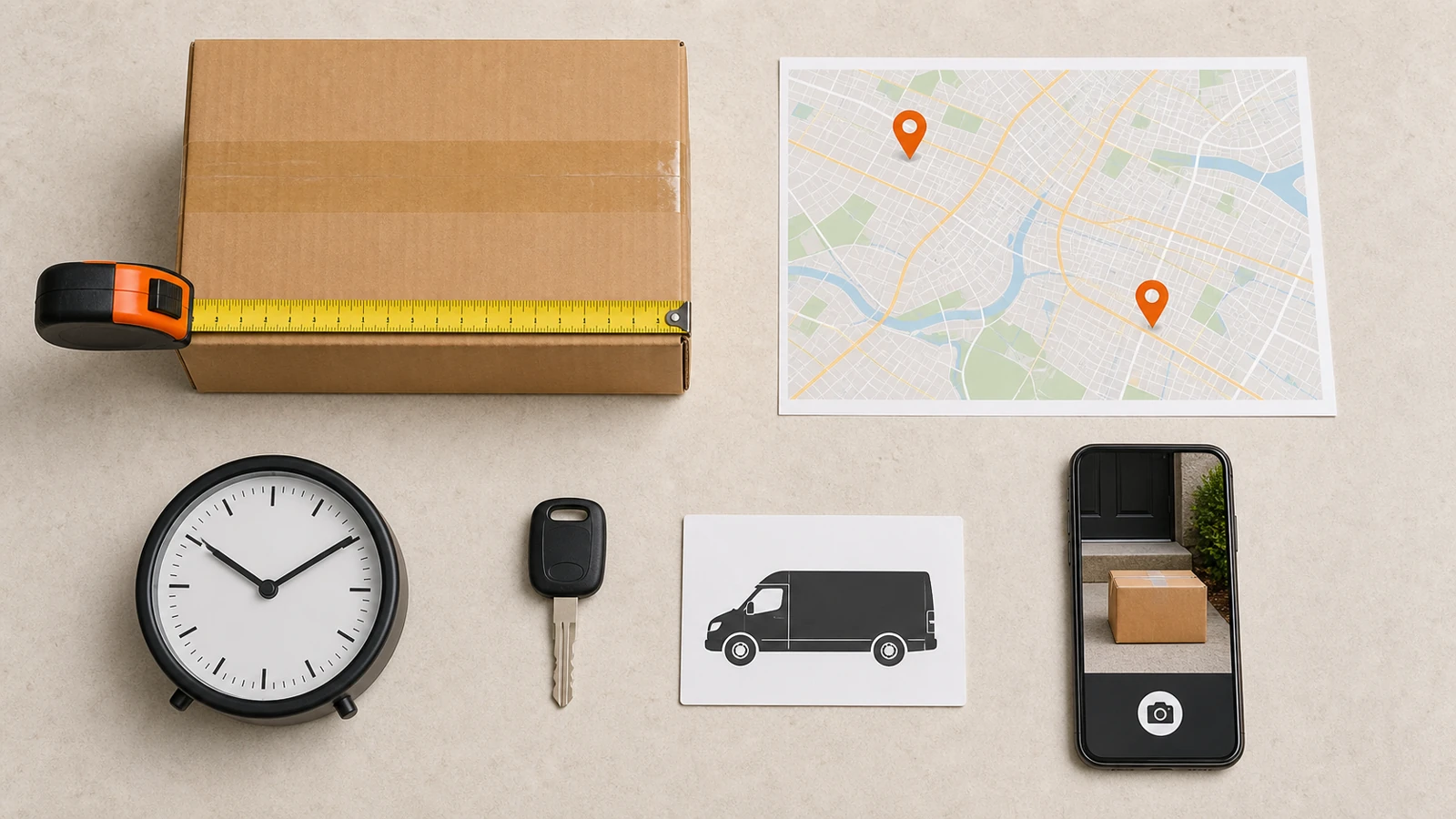
- Distance: is this a local point-to-point job, a national parcel, or a cross-border shipment?
- Urgency: does the customer need a specific hour, the same day, the next day, or simply a reliable date?
- Item and vehicle: will a sealed parcel travel safely through a network, or does it need a car, cargo van, two people, temperature care, upright handling, or a direct handoff?
- Demand shape: are orders steady and dense, or do they arrive in uneven peaks with quiet time between them?
- Control and proof: do you need a branded handoff, live progress, a photo, a signature, a return, or a clear record when delivery fails?
What does each delivery option really cost?
The visible quote is only one part of delivery cost. Parcel carriers usually price the shipment. Local couriers and marketplaces price a specific job or route under their own terms. An in-house team creates ongoing costs whether every hour is full or not. Collection moves more of the final journey to the customer but can still require staff time, storage space, and a clear pickup process.
Compare the full cost for the same completed outcome. Include packaging, collection time, waiting, loading, tolls, vehicle fit, failed attempts, returns, redelivery, customer support, claims, and the time your team spends fixing exceptions. If you run your own fleet, calculate the real delivery cost per drop, including idle time and vehicle overhead, rather than comparing a courier quote only with an hourly wage.
Avoid building a plan around a price copied from an article or advertisement. Coverage, service levels, parcel limits, fuel costs, demand, and account terms change. Ask for the amount and exception rules that apply to your actual order, then record the final amount after completion so the next decision uses your own evidence.
What can rule a delivery option out immediately?
Price matters only after an option can complete the exact job. Rule out any path that cannot confirm both addresses, accept the item, provide the needed vehicle or handling, meet the real time window, and complete the required handoff. A cheap quote for the wrong service is not a saving; it is a delayed decision that may leave your team solving the order twice.
- Coverage: check the exact pickup and every drop-off. A city name, postcode area, national claim, or mileage radius may not settle the real route.
- Item rules: disclose size, weight, quantity, value, fragility, temperature needs, batteries, liquids, age restrictions, and any regulated or prohibited contents before booking.
- Vehicle and labour: confirm whether the work needs a bicycle, car, cargo van, box truck, lift equipment, stairs, assembly, or more than one person.
- Timing: separate a guaranteed window from an estimate, and ask what happens when pickup is not ready or the recipient is unavailable.
- Handoff and proof: decide whether safe place, named recipient, photo, signature, code, identity check, or a return is required and actually supported.
- Failure path: know who contacts the customer, who holds the item, what gets recorded, and what cost or claim process applies if completion fails.
When is a hybrid delivery setup the better answer?
Many small businesses do not need one permanent delivery answer. A hybrid setup can keep ordinary work predictable while giving the business another path for peaks and unusual orders. The key is to decide the rule before the busy moment, so staff do not improvise with a customer waiting.
| Order pattern | Possible model | Reason |
|---|---|---|
| Sealed parcels due in two to three days | Parcel carrier | Standard goods and timing fit a network built for parcel volume |
| Dense local orders every Tuesday and Friday | Own driver and planned route | Predictable volume can keep a route and driver productive |
| Urgent local order outside the normal route | Local courier or independent-driver marketplace | Flexible point-to-point capacity can handle overflow without rebuilding the whole day |
| Customer wants control over pickup time | Collection or locker | The customer completes the last step when that is convenient and suitable |
This example is not a promise that every model is available for every item or location. It shows the decision logic. Your actual mix should follow your addresses, goods, demand, customer promise, legal duties, and the terms of each provider. Our in-house versus outsourced delivery guide goes deeper on the control and fixed-cost trade-off.
How do you test a delivery option before promising it?
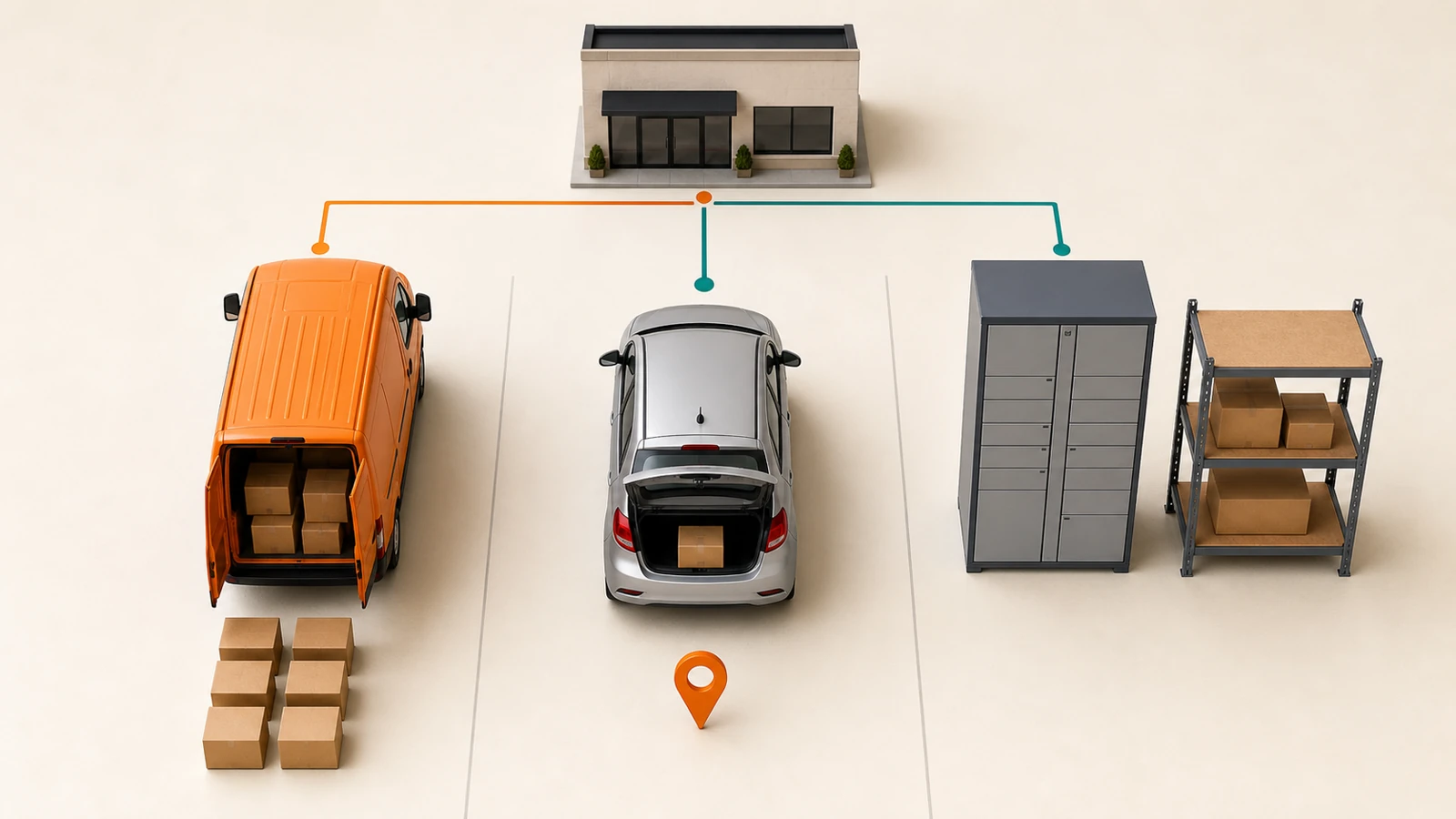
Test the workflow with ordinary live orders before putting a bold delivery promise on your website. A perfect test with your own employee waiting at both ends will not reveal what a normal customer experiences. Choose a small set that represents the work you expect: a normal parcel, a local handoff, an edge-of-area address, and any item that needs special handling.
For high-value, fragile, regulated, or time-sensitive goods, the test may need extra checks that this general guide cannot decide for you. At minimum, agree what counts as completion and read the proof of delivery checklist before choosing a photo, signature, code, or other handoff record.
Where do Routella Partners and Routella core fit?
Routella Partners is the flexible-capacity path. It is a marketplace that connects a local business with an independent driver. Public signup and paid marketplace access are available to eligible participants in supported countries, but every exact participant, route, item, vehicle, identity, payment, Stripe, tax, invoice, and local legal check still has to pass. Driver availability varies, and Routella is not the merchant’s or driver’s employer.
Routella core is the own-fleet path. It helps a business plan routes, dispatch work, give drivers a browser link, collect proof, and keep customers updated when the business already manages the drivers doing the deliveries. It does not supply a driver. If you use both models, keep the orders and promises clear so staff know which workflow owns each delivery.
The bottom line
The best delivery option is the one that completes the real customer promise with a cost and failure plan your business can support. Use parcel carriers for suitable network shipments, local providers or marketplaces for flexible point-to-point work, your own team for steady controlled routes, and collection where the customer can complete the final step. A hybrid is often sensible. If you need flexible local driver capacity in a supported country, start Routella Partners business setup and check the exact fit before you promise the delivery.
Frequently asked questions
What is the cheapest delivery option for a small business?
There is no universal cheapest option. Standard parcel shipping may suit sealed, non-urgent goods, while dense local volume can make an in-house route efficient and uneven urgent demand can suit pay-per-job local capacity. Compare the full completed cost, including packaging, waiting, failed attempts, returns, support time, vehicles, and idle capacity.
Should a small business use a courier or its own driver?
A courier or driver marketplace often fits low, uneven, urgent, or overflow demand. Your own driver can fit steady, dense local volume where you need close control over the handoff. Many businesses use both, with clear rules for which orders go through each model.
What is the difference between a parcel carrier and a local courier?
A parcel carrier moves labelled packages through a wider network, usually on standard service levels measured in days. A local courier usually handles a direct local or regional movement with timing, vehicle, item, and handoff agreed for that job. Exact services vary, so confirm the real addresses and item before booking.
Can a small business combine more than one delivery option?
Yes. A business might use a parcel carrier for standard shipments, its own driver for planned dense routes, local courier or marketplace capacity for urgent overflow, and customer collection for suitable orders. Define the rule and fallback before staff need to choose under pressure.
What is Routella Partners?
Routella Partners is a marketplace that connects local businesses with independent drivers. Public signup and paid marketplace access are available to eligible participants in supported countries, but every exact operation must still pass its participant, route, item, vehicle, identity, payment, Stripe, tax, invoice, and local legal checks. Routella is not the merchant’s or driver’s employer, and driver availability is not guaranteed.
Need flexible local delivery without building a full fleet?
Start Routella Partners setup in a supported country and check the exact fit for your delivery. Every participant, route, item, vehicle, payment, and local rule still has to pass; driver availability varies.