In-House vs Outsourced Delivery: The Cost & Control Decision (2026)
Run your own drivers or outsource to a courier, gig platform, or 3PL? An honest cost-and-control framework, the order-volume crossover, and the hybrid model.
Every business that delivers locally hits the same fork in the road: keep it in-house with your own drivers, or hand it off — to a courier company, a gig platform like Uber Direct or DoorDash Drive, or a full 3PL. It’s one of the highest-stakes operational decisions you’ll make, because it sets your cost per order, your customer experience, and how much of the delivery you actually control for years. And the honest answer is that there is no universal winner: the right model depends on your order volume, how tightly your stops cluster, your margins, and how much the delivery itself is part of your brand.
This guide gives you a straight framework instead of a sales pitch. We’ll define the real options, show where each one wins, work out the order-volume crossover where outsourcing starts to get cheaper, and explain why so many growing operations land on a hybrid of both. Routella supports the in-house side with route planning and dispatch; Routella Partners gives eligible businesses in supported countries a path to request help from independent drivers when they do not want to build a delivery team. The goal here is to help you make the right call for each delivery.
- In-house wins when you have dense, steady local volume, healthy margins, and delivery is part of your brand — you keep the margin and the customer relationship.
- Outsourcing wins when volume is low, spiky, or spread thin — you convert fixed driver and vehicle costs into a pay-per-order variable cost.
- The crossover where a courier/3PL commonly gets cheaper sits somewhere around a few hundred to ~500 orders a month — but it swings hard on your local labor, density, and negotiated rates.
- Most growing fleets go hybrid: own drivers for the dense, high-value core; outsourced capacity for overflow, edges, and peaks.
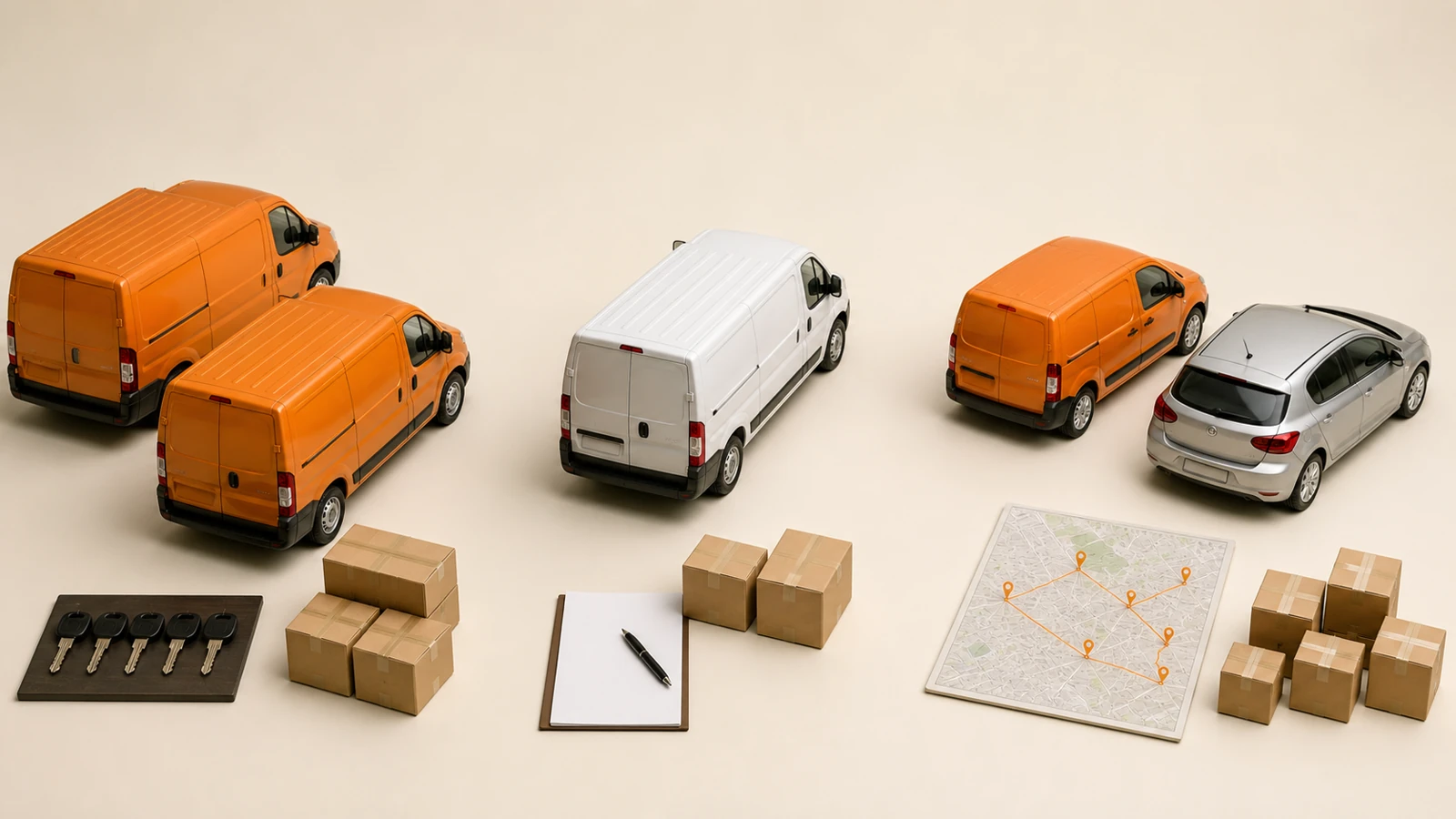
What are your actual options?
“Outsourcing delivery” isn’t one thing. Before you can compare costs, it helps to separate the four models people lump together:
- In-house drivers — employees or regular contractors, in your vehicles or theirs, running routes you plan. Highest control, highest fixed cost, best margin at volume.
- A courier / local delivery company — a dedicated regional operator you contract with. You keep some control (SLAs, branding on request) and pay per delivery or per route, but you’re one client among many.
- Gig / crowdsourced platforms — Uber Direct, DoorDash Drive, Roadie and similar. Near-instant elastic capacity with zero fixed cost, but the least control over who shows up and how the handoff goes, plus a per-order fee that stings at volume.
- A full 3PL — you outsource warehousing and the last mile. This is really a fulfillment decision, not just a delivery one, and it makes most sense once storage and pick-and-pack are also more than you want to run.
When does running your own drivers win?
In-house delivery is at its best when three things are true. First, density — you have enough orders in a compact area to keep a driver’s route full, so the fixed cost of that driver and van spreads across many stops. Second, margin — the value of each order can absorb the labor without a courier’s markup on top. Third, experience matters — for florists, food, pharmacy, and specialty retail, the delivery is the last impression of the brand, and you don’t want a stranger with no stake in it making that impression.
When those hold, in-house is usually cheaper per drop and better for the customer, because you keep both the margin a marketplace or courier would take and the relationship a gig driver would never build. The catch is that it only works if you actually run it efficiently — and that comes down to software, not vans. Planning routes by hand, no proof of delivery, and no live tracking will erase the cost advantage fast. If you’re weighing the setup, our guide to running your own delivery fleet without marketplace fees covers the people, vehicles, and workflow in detail, and how to start a local delivery business covers the earlier groundwork.
When does outsourcing win?
Outsourcing earns its keep in the mirror-image situations. If your orders are sparse or spread across a wide area, an in-house driver spends the day half-empty — and single-tenant fleets typically run at only 50–70% utilization because they can’t densify routes across multiple clients the way a courier network does. If your volume is spiky — a few big days a week, or a brutal seasonal peak — you’d be paying for fixed capacity you use a fraction of the time. And if delivery is a cost center rather than a brand moment, the control you give up may simply not be worth the overhead.
Couriers and gig platforms also bring real structural advantages you can’t easily replicate: they secure carrier and fuel rates 15–40% below retail, they amortize routing tech and insurance across their whole book of business, and they turn your delivery into a clean per-order line item with no payroll, maintenance, or idle-time risk attached. For a business still finding its volume, that variable cost is often the smarter bet — right up until the point where you’re paying that per-order fee often enough that a driver of your own would be cheaper.
How many orders before outsourcing is cheaper?
This is the question everyone actually wants answered, so here’s the honest version: the crossover commonly falls somewhere between a couple hundred and about 500 orders a month, but the range is wide because it depends entirely on your inputs. Below roughly 200–300 local orders a month, a courier or gig platform is usually cheaper — you avoid the fixed cost of a driver you can’t keep busy. Once you’re reliably clearing several hundred dense local orders a month, an efficiently-run in-house driver typically undercuts the per-order fees, and the gap widens as you add density.
Don’t take the industry number and run, though. Compute your crossover with your real inputs: your local driver wage, your vehicle cost, how many stops you can genuinely fit per route (density is the whole game), and the exact per-order price a courier or gig platform quotes you. The single most useful number to know before you decide is your cost per drop — once you know what an in-house stop actually costs you, comparing it to a courier quote becomes arithmetic instead of a guess.
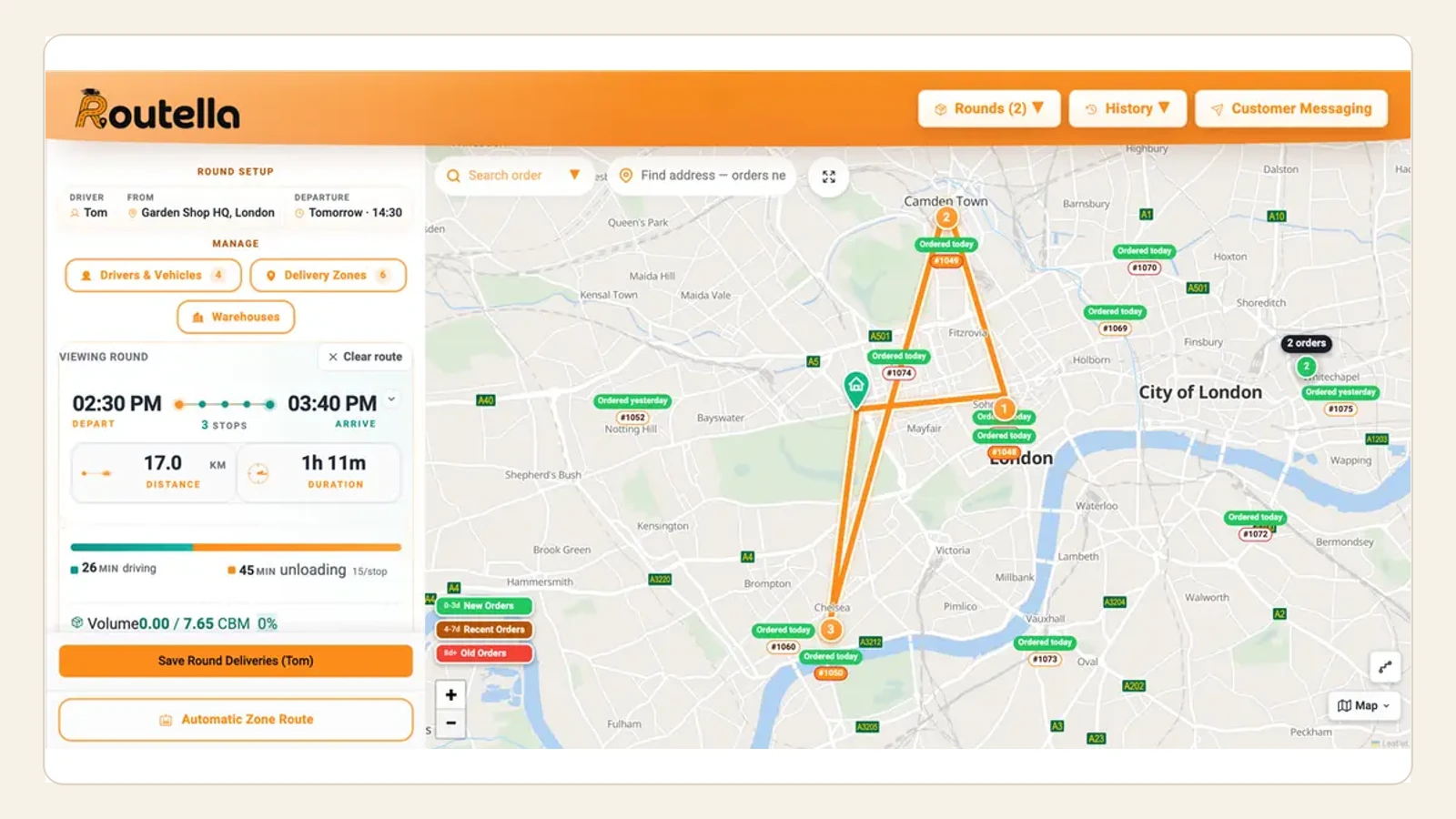
The hybrid model: why you don’t have to choose
For a growing number of operations the real answer is “both.” A hybrid model runs your own drivers for the dense, high-value core of your delivery area — where you have the density to make in-house cheap and where the customer experience matters most — and pushes the rest to outsourced capacity: the far-flung single stops that would wreck a route, the overflow on your busiest days, and the seasonal peak you’d never staff for year-round.
Done well, hybrid gives you the margin and control of in-house on the orders that reward it, without paying for idle drivers on the orders that don’t. The prerequisite is that your own side of the operation is tight — you can only decide “this order is worth keeping in-house” if you can see your routes, density, and cost per stop clearly. That’s exactly the layer a delivery platform provides: run your in-house drivers on optimized routes with tracking and proof of delivery, and let the courier handle what’s left. If you’re already juggling several drivers, dispatching multiple drivers efficiently and optimizing multi-stop routes are where the in-house economics are won or lost.
A note on gig platforms specifically
Gig and crowdsourced delivery deserves its own caveat, because it’s the easiest to start and the easiest to over-rely on. The elastic, zero-fixed-cost capacity is genuinely useful for overflow and same-day promises. But you trade away control: you don’t choose the driver, the handoff quality varies, and your brand rides on someone with no stake in it. There’s also a worker-classification and reliability question that has followed the model for years — driver availability tightens exactly when you need it most, on the busiest days. Treat gig capacity as a valve for spikes and edges, not as the backbone of a delivery experience you care about.
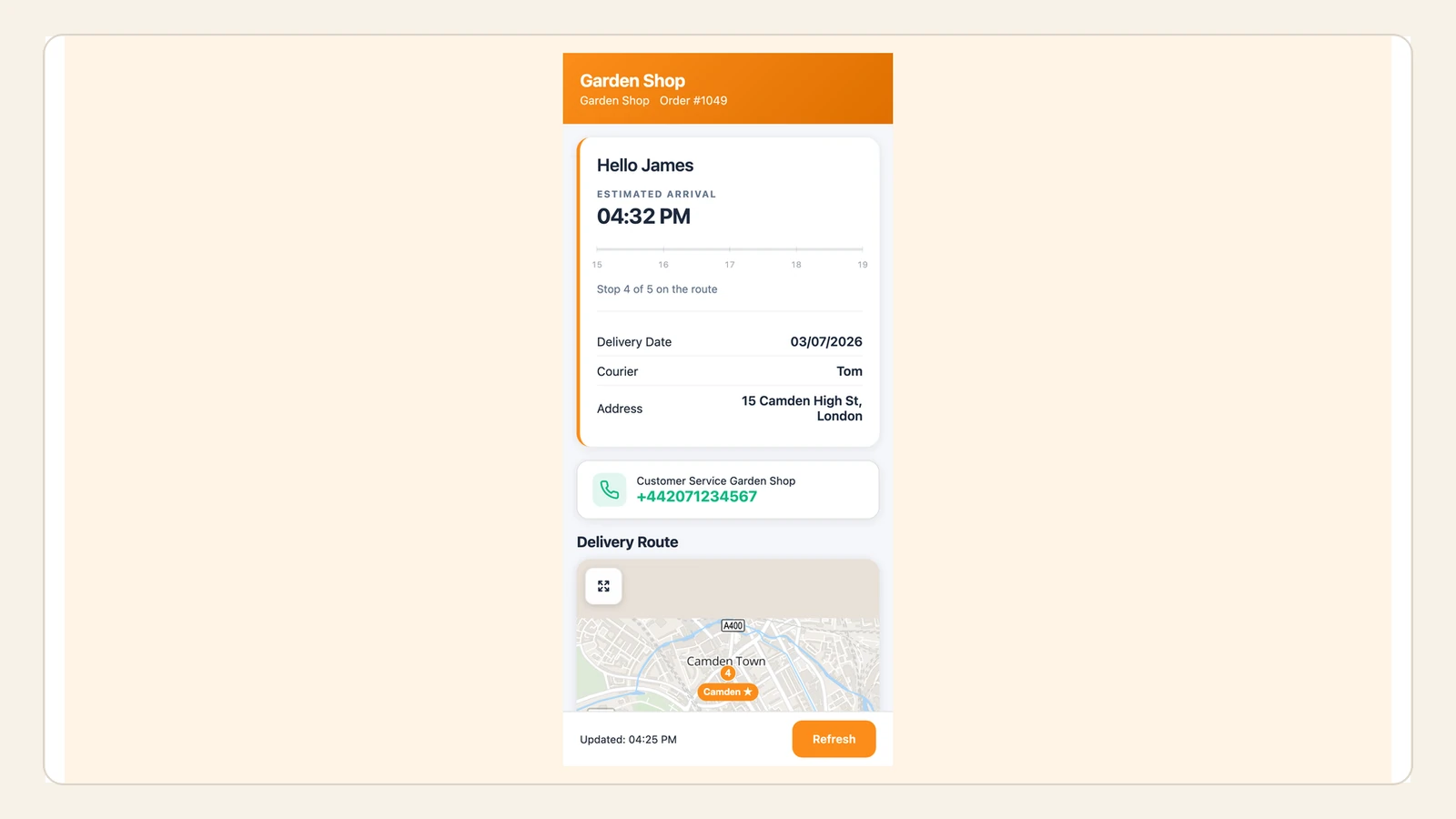
How to actually decide
Skip the gut call and work through it in order:
The bottom line
In-house versus outsourced delivery isn’t a values question — it’s an arithmetic one you should redo as you grow. Outsource when your volume is too low, too spiky, or too spread out to keep a driver busy. Bring it in-house when you have the density and margin to beat the per-order fee, and when the delivery is part of what customers buy from you. And for many operations in between, run both: own drivers for the core, flexible outside capacity for the edges. Whichever way you lean, start by measuring your cost per drop. To run your own team efficiently, see how Routella works or start on the free plan. If you need local driver help in a supported country, start Routella Partners business setup; eligibility, exact coverage, and driver availability still have to be confirmed.
Frequently asked questions
Is it cheaper to run my own drivers or outsource delivery?
It depends mostly on volume and density. Below roughly 200–300 local orders a month, a courier or gig platform is usually cheaper because you avoid paying for a driver you can’t keep busy. Once you reliably clear several hundred dense local orders a month, an efficiently-run in-house driver typically beats the per-order fees, and the advantage grows as your routes get denser. Compare on fully-loaded costs — in-house cost per stop is often 30–50% higher than the naive “pay ÷ stops” figure, and courier quotes hide surcharges.
At how many orders should I switch from in-house to a 3PL or courier?
There’s no universal number, but the crossover commonly sits somewhere between a couple hundred and about 500 orders a month. The exact point swings on your local labor cost, how many stops you can fit per route, and the rates you can negotiate. The reliable way to find yours is to calculate your real in-house cost per drop and compare it to an all-in courier quote — don’t rely on the industry average.
What is a hybrid delivery model?
A hybrid model runs your own drivers for the dense, high-value core of your delivery area — where in-house is cheapest and the customer experience matters most — and outsources the rest: far-flung single stops, overflow on busy days, and seasonal peaks. It gives you the margin and control of in-house on the orders that reward it without paying for idle drivers on the orders that don’t. Most growing local-delivery operations end up here.
What are the hidden costs of running delivery in-house?
The ones operators most often miss: driver idle time and under-full routes, dispatch and admin overhead, vehicle maintenance and insurance, and the software stack (routing, driver app, proof of delivery, customer tracking) that customers now expect as standard. Together these push the true cost per stop well above the obvious “driver wage divided by stops” number — commonly 20%+ higher — which is why in-house can look cheaper than it really is until you load in every cost.
Should I use gig platforms like Uber Direct or DoorDash Drive for my deliveries?
They’re excellent as a flexible valve — for same-day promises, overflow on your busiest days, and the sparse edge-of-area orders that would wreck an in-house route. They’re a weaker choice as the backbone of a delivery experience you care about, because you don’t control who shows up or how the handoff goes, and driver availability tightens on exactly the busy days you most need it. Use gig capacity for spikes and edges, and keep the deliveries that represent your brand in-house.
Can one delivery platform support both in-house drivers and outsourced delivery?
Routella runs the in-house side of the operation — route optimization, a driver app, proof of delivery, live customer tracking, and notifications. Routella Partners gives eligible businesses in supported countries a separate marketplace path for requesting an independent driver when they need flexible help. Every exact participant, route, item, vehicle, payment, and local rule still has to pass, and driver availability is not guaranteed.
Need local delivery without building a delivery team?
Businesses in supported countries can start Routella Partners setup and check the exact fit for their deliveries. Eligibility and driver availability vary.