How to Start a Local Delivery Business in 2026 (Step by Step)
A practical, step-by-step guide to starting a local delivery business in 2026: pick a niche, sort the legal basics, hire drivers, and set up the software.
Local delivery is one of the few businesses you can still start lean, close to home, and grow on repeat customers rather than ad spend. Demand is real: same-day and next-day delivery is one of the fastest-growing corners of logistics, and most of it happens within a few miles of the shops fulfilling it. But it is also a margin business — won or lost on routing, stop density, labor discipline, and customer communication. Get those wrong and you can stay busy all day and still lose money. This guide walks through how to start a local delivery business in 2026 the practical way: what to decide first, the legal and cost basics, how to hire drivers, and the software backbone that keeps a small operation profitable.
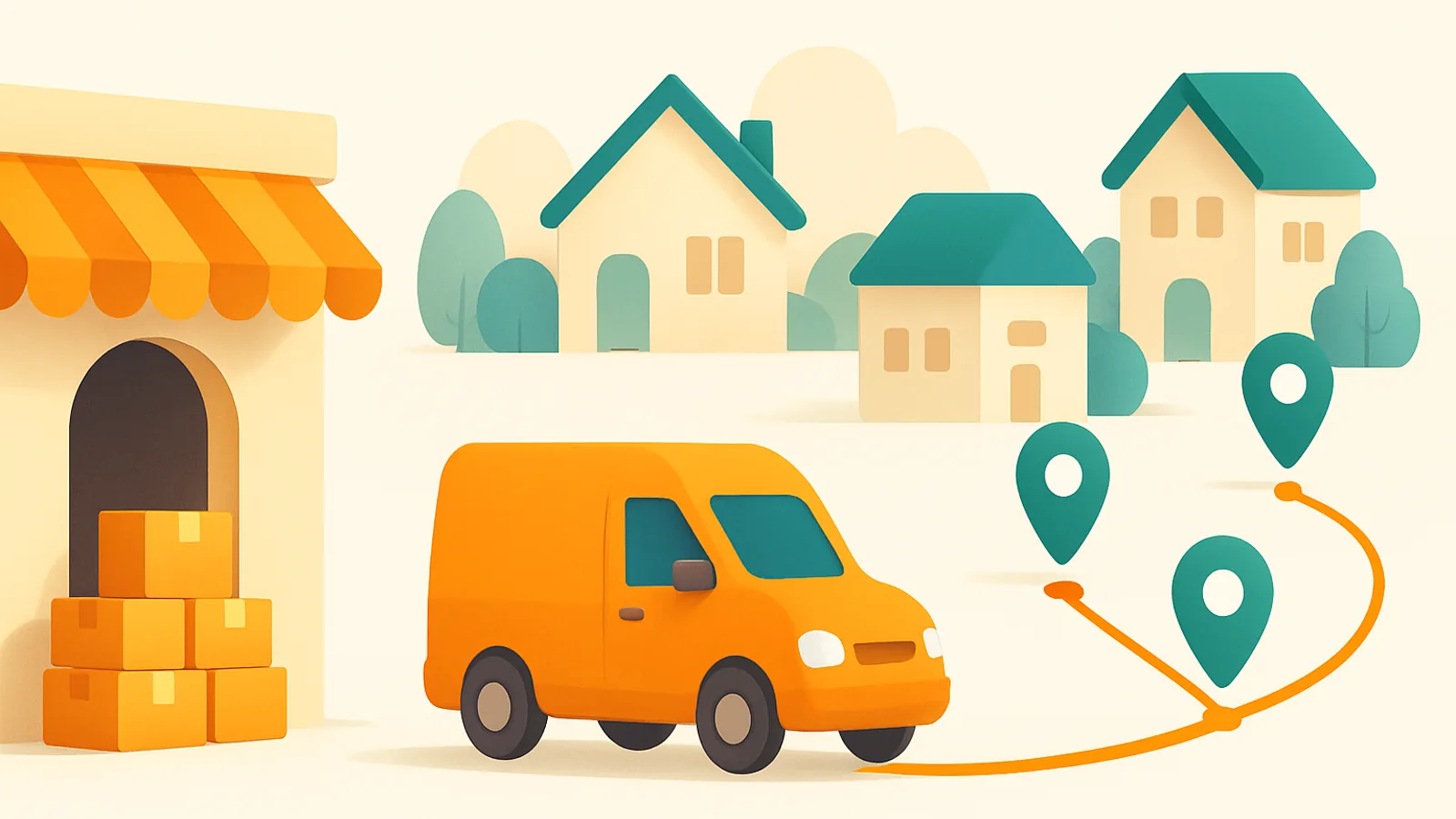
First, decide which delivery business you are actually starting
The phrase “local delivery business” covers two quite different models, and almost every decision after this one depends on which you pick. Be honest about which you are building before you spend a dollar.
- Delivering your own products. You already sell something — a florist, bakery, restaurant, grocer, pharmacy, or online store — and you want to run deliveries yourself instead of paying a marketplace 15–30% of every order. Your “customers” are your buyers, and delivery is a feature that protects your margin and your brand.
- Delivering for other businesses (a local courier). You own no product; you sell the delivery itself, carrying orders for local shops that do not want to run their own drivers. Your customers are those businesses, and your product is reliability, speed, and clean proof of delivery.
A shop adding in-house delivery can start almost immediately with one driver and existing orders. A local courier needs to win business clients first, price each job to cover a stop that might be miles from the last, and prove reliability before anyone trusts them with a same-day promise. This guide covers both, and flags where they diverge. If you fall firmly in the first camp, our deeper guide to running your own delivery fleet without marketplace fees is the natural next read.
Is a local delivery business worth starting in 2026?
Yes, if you have — or can build — density. Local delivery economics live and die on how many stops you can group into one efficient route. A driver doing 4 scattered drops across a whole city is a money-loser; the same driver doing 15 stops in two neighbourhoods is profitable. Before you commit, ask three questions: Is there steady demand in a compact area you can serve? Can you reliably fill a driver’s route most days? And can you charge enough per delivery to cover labor, fuel, and the inevitable failed attempt? If the answers are yes, the market is on your side.
How to start a local delivery business, step by step
What software do you actually need to start?
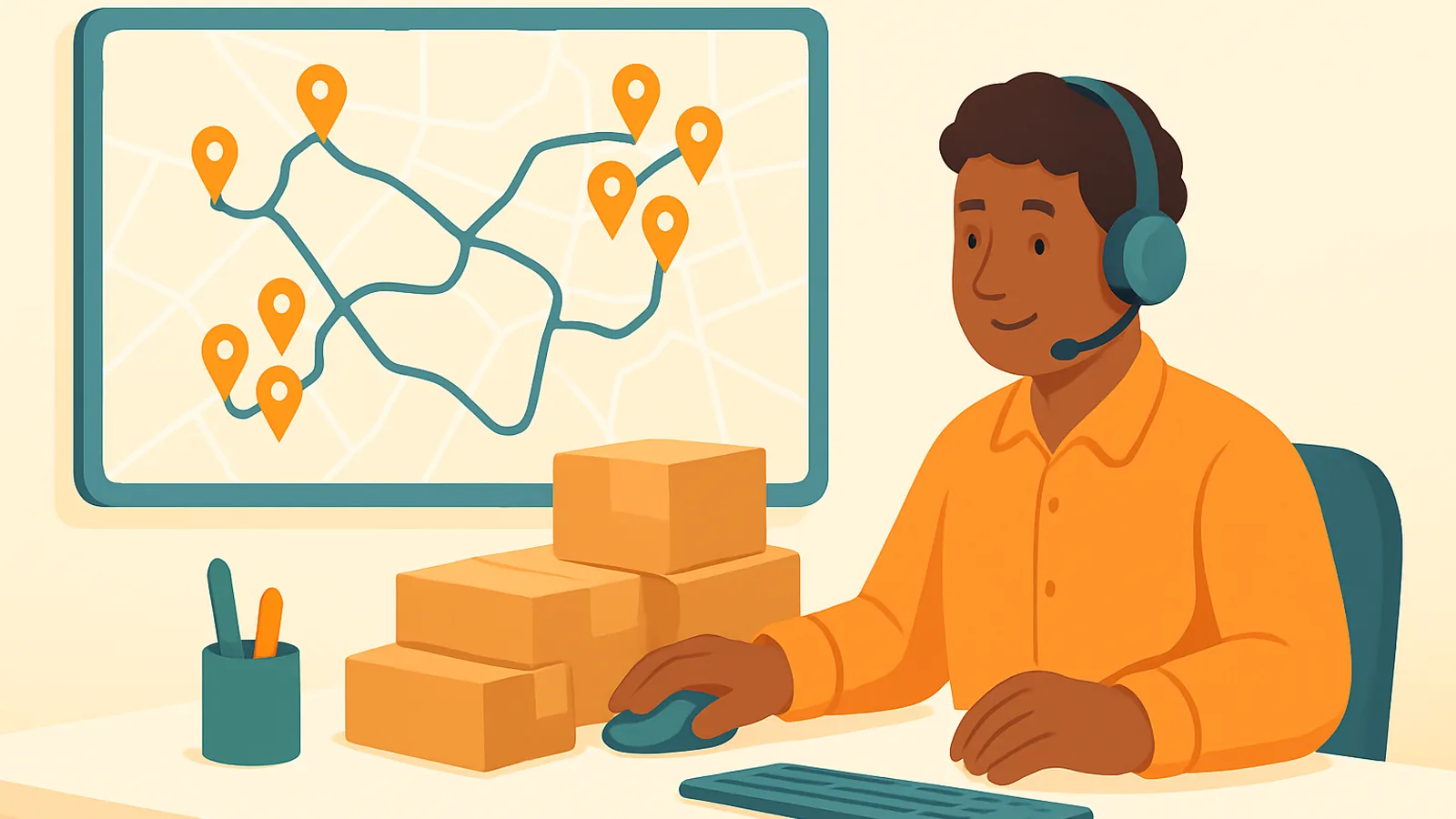
You do not need an enterprise logistics suite to run two drivers, and buying one too early is a classic first-year money pit. What you do need is four things that work together:
- Orders in one place. Whether they arrive from your online store or a phone call, every delivery lands in a single dispatch view — no re-typing between apps.
- Route optimization. Software that reorders 10, 30, or 100 stops into the shortest, fastest sequence in seconds — work that takes a dispatcher an hour by hand and still comes out worse.
- A driver workflow with proof of delivery. Each driver gets their stops, navigation, and one-tap capture of a photo or signature at the door.
- Customer tracking and notifications. An automatic “on the way” message and a live tracking link with an ETA — the single highest-impact thing you can do for delivery satisfaction, and the fastest way to cut “where is my order?” calls.
Routella covers all four in one platform, which is why it suits a business starting from zero. Orders flow in automatically from Shopify, WooCommerce, Wix and 10 more platforms — or you add them by hand from a Manual Store, so a florist taking phone orders and an online shop run from the same board. It optimizes multi-stop routes, gives every driver a workflow with proof of delivery, and sends customers automatic updates over WhatsApp, SMS and email with a live tracking page in 195 languages. Crucially for a new operation, drivers install no app — they open a web link on their phone — so onboarding a seasonal or casual driver takes minutes, and there is a genuinely free plan (1 driver, 50 orders and 5 rounds a month, no credit card) to run real deliveries before you pay anything.
How much does it cost to start a local delivery business?
Less than most people expect, if you start lean. The heavy costs — vehicles and labor — scale with volume, so you take them on as revenue grows rather than up front. If you already have a vehicle, or start with drivers using theirs, a local delivery service can launch for a few thousand dollars, most of it going to registration, commercial insurance, and initial marketing rather than hardware. The one cost people forget is insurance; the one they overspend on is software.
- Business registration and permits — modest and one-time, but region-dependent; budget for local courier licensing where it applies.
- Commercial insurance — auto and general liability; the non-negotiable line most first-timers underprice.
- Vehicle — start with what you have, lease, or a driver’s own vehicle plus a mileage stipend rather than buying a van on day one.
- Software — start on a free plan and only pay when volume justifies it; you do not need enterprise software to run two drivers.
- Marketing — a simple website, a local directory listing or two, and outreach to nearby shops beats a big ad budget early on.
The pattern is clear: keep fixed costs near zero at launch, let route density prove the model, and take on vehicle and labor cost only as full routes justify it. A route planner that saves each driver 30–60 minutes a day and fits one extra stop into every route pays for itself almost immediately — which is exactly why the software backbone, not the van, is where a lean start earns its keep.
Common mistakes that sink new delivery businesses
- Chasing coverage over density. Promising to deliver anywhere spreads your driver thin and destroys margin. Own a compact area first.
- Planning routes by hand. It feels free, but it is the most expensive habit a small fleet has — in driver time, fuel, and missed time windows.
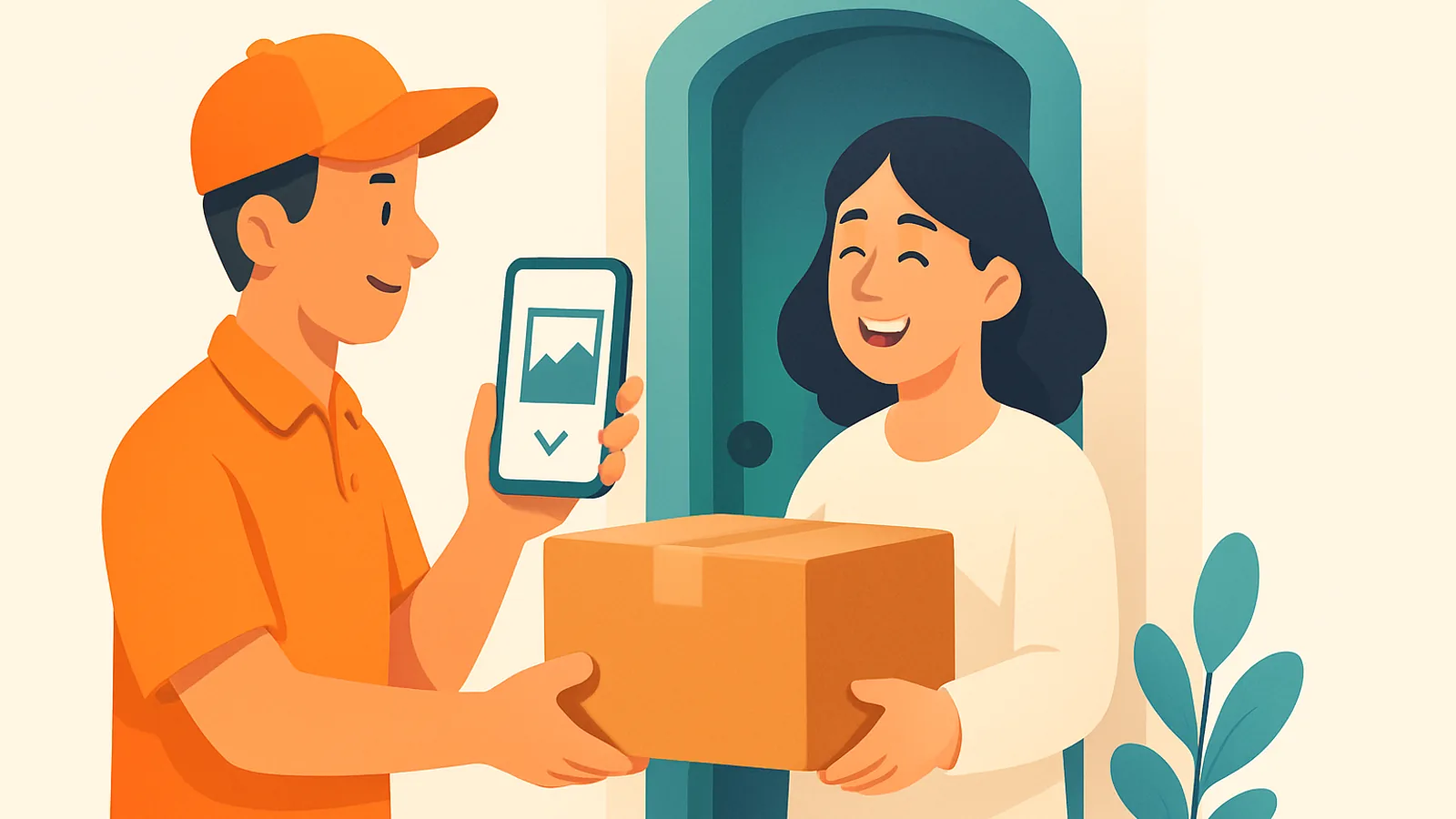
- No proof of delivery. Without a photo or signature at each stop, every “it never arrived” dispute is your word against the customer’s.
- Silent deliveries. No tracking link means support calls and bad reviews even when the delivery itself went fine — customers judge the experience, not just the parcel.
- Underpricing insurance and the failed attempt. Both are real costs; leave them out of your per-drop math and a “profitable” route quietly loses money.
- Buying enterprise software too early. Start on a free or low tier you can grow out of, not a logistics suite built for a hundred drivers.
The bottom line
Starting a local delivery business in 2026 is mostly an information problem wearing a logistics costume. Pick a narrow niche in a compact area, sort the legal and insurance basics, start lean on vehicles and drivers, and put a real software backbone underneath it: orders in one place, optimized routes, a driver workflow with proof of delivery, and automatic customer tracking. Solve those and delivery becomes a durable, referral-fed local business rather than a busy-but-broke grind. If you want one tool that covers the whole delivery day — routing, driver workflow, proof of delivery, and WhatsApp/SMS/email tracking — you can see how Routella works or start on the free plan with no credit card and run your first real route today. From there, dig into offering same-day local delivery, optimizing multi-stop routes, and — if you collect payment at the door — managing cash on delivery.
Frequently asked questions
How much does it cost to start a local delivery business?
Less than most people expect if you start lean. Vehicles and labor are the big costs and scale with volume, so you take them on as revenue grows. If you already have a vehicle — or start with drivers using their own plus a mileage stipend — you can launch for a few thousand dollars, mostly business registration, commercial insurance, and initial marketing. Software can start free: Routella has a free-forever plan (1 driver, 50 orders and 5 rounds per month, no credit card), so you do not need to spend on tools to run your first deliveries.
Do I need special licenses or insurance to start a delivery service?
Almost always insurance, and often permits. Commercial auto and general liability insurance are essential the moment you carry goods for pay — personal auto policies typically exclude commercial delivery. Courier licensing requirements vary by region and state, so check your local rules before your first paid run. Registering the business and getting an EIN or local equivalent is the standard first step.
What software do I need to run a local delivery business?
Four capabilities working together: a way to get every order into one dispatch view, route optimization to sequence stops efficiently, a driver workflow with navigation and proof of delivery, and automatic customer notifications with live tracking. Routella covers all four in one platform — with orders imported from Shopify, WooCommerce, Wix and more (or added manually), a no-install driver link, and WhatsApp/SMS/email tracking — and has a free plan to start.
Is a local delivery business profitable?
It can be, and the deciding factor is stop density. A driver making a handful of scattered drops loses money; the same driver making 8–15 stops grouped into an efficient route is profitable. Profitability comes from route optimization, disciplined labor, pricing that covers a lone stop plus the occasional failed attempt, and low fixed costs at launch — not from the vehicle itself.
Should I deliver my own products or start a courier service for other businesses?
Decide this first, because it shapes every other choice. If you already sell something (a shop, restaurant, florist, pharmacy, or online store), delivering your own products lets you start immediately with existing orders and protect your margin against marketplace fees. Starting a courier for other businesses means selling the delivery itself — you must win business clients, price each job to cover distance, and prove reliability before anyone trusts you with a same-day promise. Both work; a shop adding in-house delivery is the faster, lower-risk start.
Run your own deliveries with Routella
Route optimization, a driver app, proof of delivery, and live customer tracking — in one platform. Free plan, no credit card.