How to Prepare Your Delivery Operation for Peak Season (2026)
A practical peak-season playbook for in-house delivery fleets: when to start, how to add drivers and capacity, and how to protect the customer experience.
Peak season is the stretch from roughly mid-November to mid-January when order volume climbs faster than any other point in the year — Black Friday, the holiday gift rush, and the returns wave that follows it. For a business that delivers with its own drivers, it is both the most profitable and the most fragile time of the calendar: the same weeks that can make your quarter are the weeks a single missed route, a broken-down van, or a flood of “where is my order?” messages can quietly undo. This guide is a practical playbook for getting a small in-house fleet ready — not a national carrier the size of UPS, but a shop, florist, pharmacy, grocer, restaurant, or online store running its own local deliveries.
The single most important idea comes first: peak season is won in September, not December. By the time volume actually spikes, every lever that matters — drivers, vehicles, routes, delivery cutoffs, customer messaging — is either already in place or it isn’t, and there is no time left to fix it. Late summer through early autumn is the window to act, which is exactly why you’re reading this now. Everything below is ordered by when to do it, from months out down to the final week.
- 3–6 months out (now): forecast volume from last year, book vehicle maintenance, and decide your delivery cutoff dates.
- 60–90 days out: recruit and onboard extra drivers before you need them — hiring under pressure gets you worse drivers, late.
- 2–4 weeks out: run a full dry run at higher volume, lock your routes and time windows, and pre-write every customer message.
- During peak: watch route density and delivery exceptions daily, and protect the customer experience over squeezing in one more stop.
When should you start preparing for peak season?
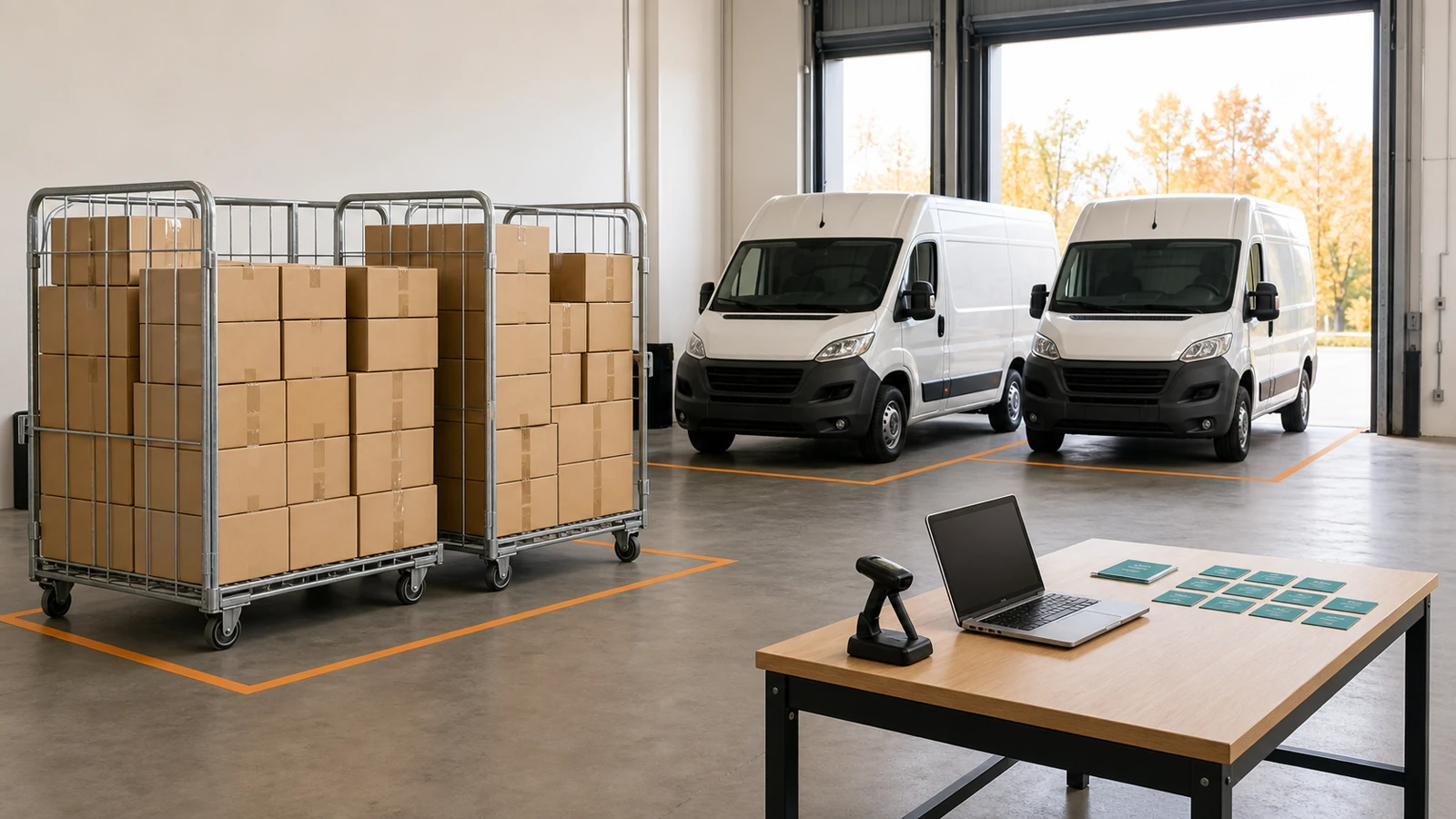
The standard logistics advice is to evaluate your delivery capacity three to six months before peak, and to begin hiring seasonal drivers 60–90 days out. That timeline exists for a reason: capacity, vehicles, and trained drivers all have lead times you can’t compress in December. Booking a van service, running a recruitment round, and getting a new driver comfortable with your routes each takes weeks, and they have to happen in parallel, not one after another.
If it’s already autumn and you’ve done none of this, don’t panic — just start today with the two highest-leverage items, drivers and routing, and work down the checklist below. A late start on the essentials beats a perfect plan you begin in November.
How much extra volume should you actually plan for?
Start with your own numbers, not an industry average. Pull last year’s daily order counts for November through January and find your busiest single day — that peak day, not your monthly average, is what your operation has to survive. If you don’t have clean historical data, fixing that is job one this year: even a simple export of daily order counts gives you something to plan against next season.
Then stress-test honestly. If your busiest normal day is 40 drops and last December peaked at 110, you’re planning for roughly 3× — more drivers, more vehicle-hours, and tighter routes — not a 10% top-up. The rule of thumb: plan for the peak day, staff for the peak week, and the average days take care of themselves. Knowing your cost per drop before the surge also tells you how much you can spend on extra capacity while staying profitable.
Where peak season actually breaks (and how to prevent it)
Almost every peak-season failure traces back to one of six pressure points. Knowing them in advance is most of the battle:
- You run out of driver capacity. The most common failure — and the least forgivable, because it’s foreseeable. Hire and train early so a sick day or a volume spike doesn’t strand a whole route.
- A vehicle fails at the worst possible time. A breakdown on 12 December costs far more than the same breakdown in April. Bring maintenance forward now, and have a backup vehicle plan.
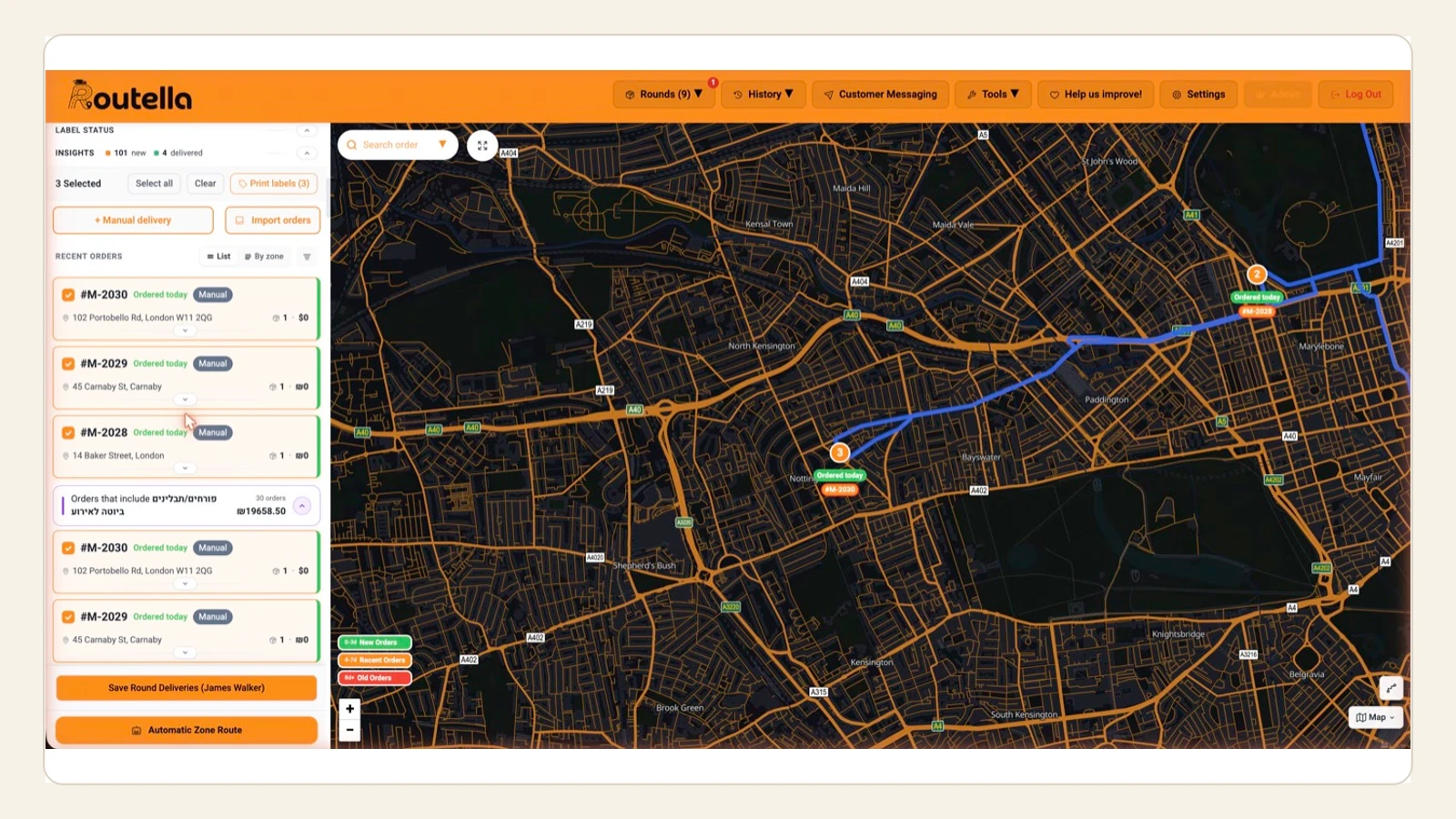
- Routes that were fine at 40 stops fall apart at 100. Manual sequencing collapses under volume — the human eye simply can’t order 100 stops well. This is where a real route planner stops being optional.
- The support inbox floods with WISMO. Every extra order is another “where is my order?” contact unless you get ahead of it. Proactive updates are the only thing that scales — here’s how to cut those tickets.
- You make delivery promises you can’t keep. Over-promising at checkout in December is how you earn one-star reviews. Publish honest cutoff dates and realistic windows instead.
- Failed deliveries pile up. Nobody home, wrong address, missed window — at 3× volume the reattempts alone can sink a day. Get ahead of it with a plan for failed deliveries.
The peak-season readiness checklist
Work through these in order. The early items have the longest lead times, so they’re the ones that quietly determine whether the busy weeks feel controlled or chaotic.
How to add drivers without adding software cost
The hidden tax of seasonal scaling is that most routing and delivery tools charge per driver, so every temporary hire raises your software bill just as your margins are tightest. Routella is a flat team price instead — $0 on the free plan, $29/month on Growth, $79/month on Pro — and you add drivers for free, so bringing on five seasonal drivers costs nothing extra in software.
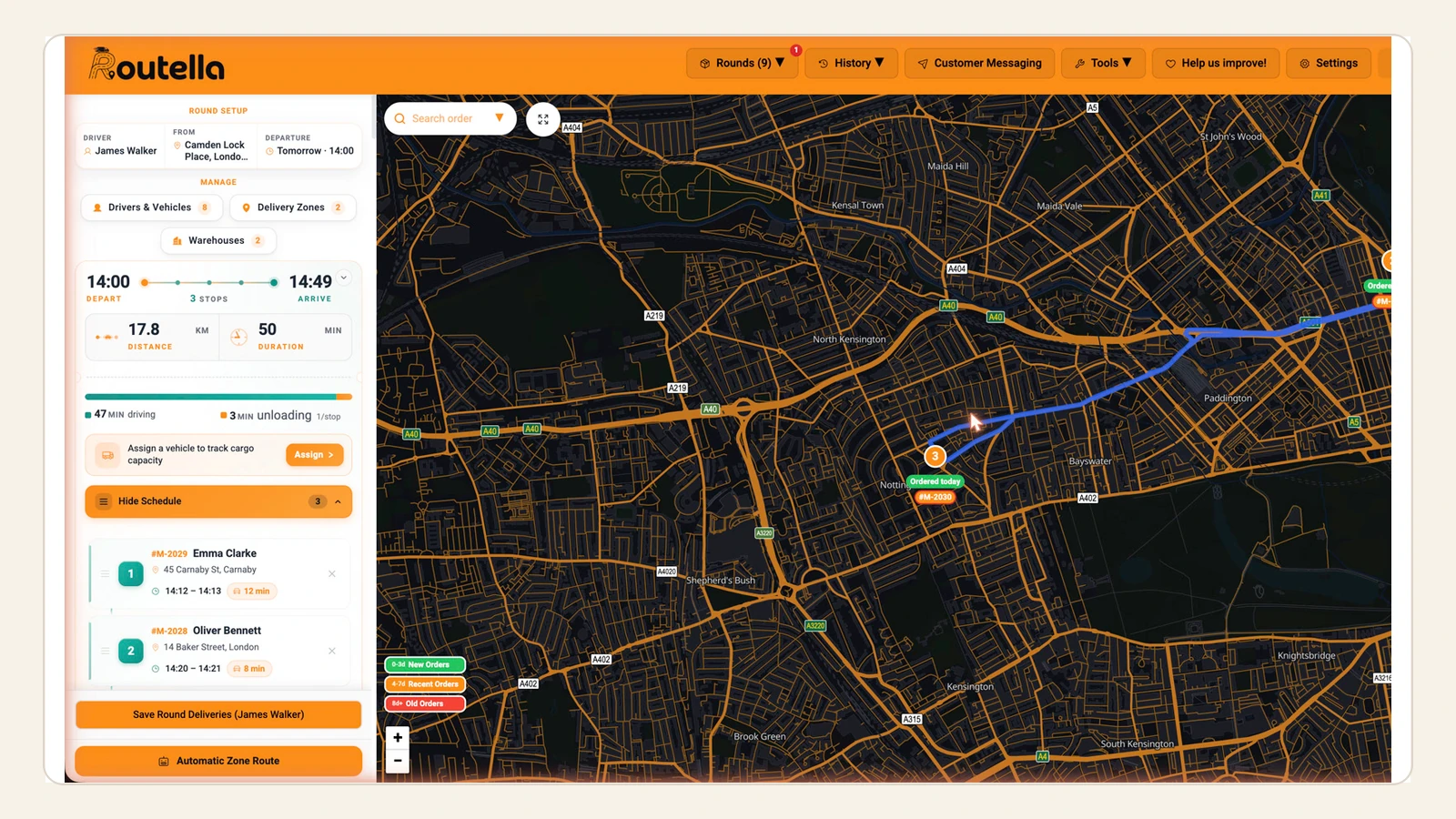
Onboarding speed matters just as much in peak. Because drivers install no app — they open a web link on their phone with their stops, navigation, and one-tap proof of delivery — you can get a new seasonal driver running a route in minutes, not days. That’s the difference between a hire who’s productive on day one and one who’s still learning the tool when the rush hits.
How to protect the customer experience when volume spikes
The operational goal in peak is to keep every delivery feeling as calm as an average Tuesday, even when your dispatch board is three times as full. Three things do the heavy lifting: honest cutoff dates and delivery windows so you never promise what you can’t deliver; automatic notifications over WhatsApp, SMS, and email with a live tracking page (in 195 languages) so customers watch the van instead of calling you; and clean proof of delivery so the inevitable “it never arrived” message is settled in seconds. Get those right and the peak-season experience becomes a reason customers come back in the new year rather than a reason they don’t.
The bottom line
Peak season rewards preparation and punishes improvisation. Forecast from last year, prep vehicles and hire drivers early, tighten your routes, set honest cutoffs, and automate the customer messaging — do those before the surge and the busy weeks become the most profitable of your year instead of the most stressful. Routella brings the operational pieces into one place — route optimization, a driver app with no install, proof of delivery, live tracking, and automated notifications — with a free plan (1 driver, 50 orders and 5 rounds a month, no credit card) so you can get your operation ready and run real deliveries before you pay anything. See how it works, then build your peak-season plan this month while there’s still time.
Frequently asked questions
When should I start preparing for peak season delivery?
Start 3–6 months before peak (which runs roughly mid-November to mid-January), and begin hiring any seasonal drivers 60–90 days out. Capacity, vehicle maintenance, and driver training all have lead times you can’t compress in December, so the real work happens in late summer and early autumn. If you’re starting late, prioritise drivers and route optimization first.
How many extra drivers do I need for the holidays?
Base it on your own history, not an average. Find your busiest single day from last November–January and compare it to a normal day — if your normal peak is 40 drops and last December hit 110, plan for roughly 3× capacity, not a small top-up. Plan for the peak day and staff for the peak week. Hire and train early so a sick day doesn’t strand a route.
When should I stop taking orders for delivery before Christmas?
Work backwards from your real capacity rather than copying a competitor’s date. Decide how many orders you can reliably clear per day at peak, then set the last order date that still leaves room to deliver on time — and publish it clearly at checkout. An honest cutoff protects your reviews and your drivers far more than an optimistic one that you miss.
How do I handle more orders during peak without hiring more dispatchers?
Automate the two jobs that scale worst by hand: route sequencing and customer updates. Route optimization software turns an hour of manual planning into seconds and packs more stops into each route, while automated “out for delivery” notifications with live tracking answer the “where is my order?” question before customers call. Together they let a small dispatch team absorb a much larger order load.
How do I keep customers happy when delivery volume spikes?
Set expectations you can meet (honest cutoff dates and realistic delivery windows), keep customers informed automatically (an out-for-delivery message, a live tracking link, and an ETA), and capture proof of delivery at every stop so disputes are settled instantly. Proactive communication is what makes a busy peak still feel premium to the customer.
Can I add seasonal drivers without paying more for software?
With Routella, yes. It’s a flat team price rather than per-driver, so adding seasonal drivers costs nothing extra in software. Drivers also install no app — they open a web link with their stops, navigation, and proof-of-delivery capture — so you can onboard a new seasonal driver and have them running a route in minutes.
Run your own deliveries with Routella
Route optimization, a driver app, proof of delivery, and live customer tracking — in one platform. Free plan, no credit card.