How to Choose a Courier Service for Your Small Business
A practical checklist for choosing local courier help: coverage, driver fit, price, tracking, proof of delivery, scheduling, and a safe first trial.
A customer places an order, expects it today, and your team has no driver free. That is the moment many owners search for a courier service for a small business — and discover that the phrase can mean several very different things. A parcel carrier, a local courier company, an on-demand delivery platform, and an independent-driver marketplace can all move an item, but the setup, control, and fit are not the same.
The right choice is not simply the lowest quote. It is the service that can take your actual item from your actual pickup address to your customer, at the time you promised, with a clear price and enough tracking to answer what happened. This guide gives you a practical way to compare the options before you trust one with a live order.
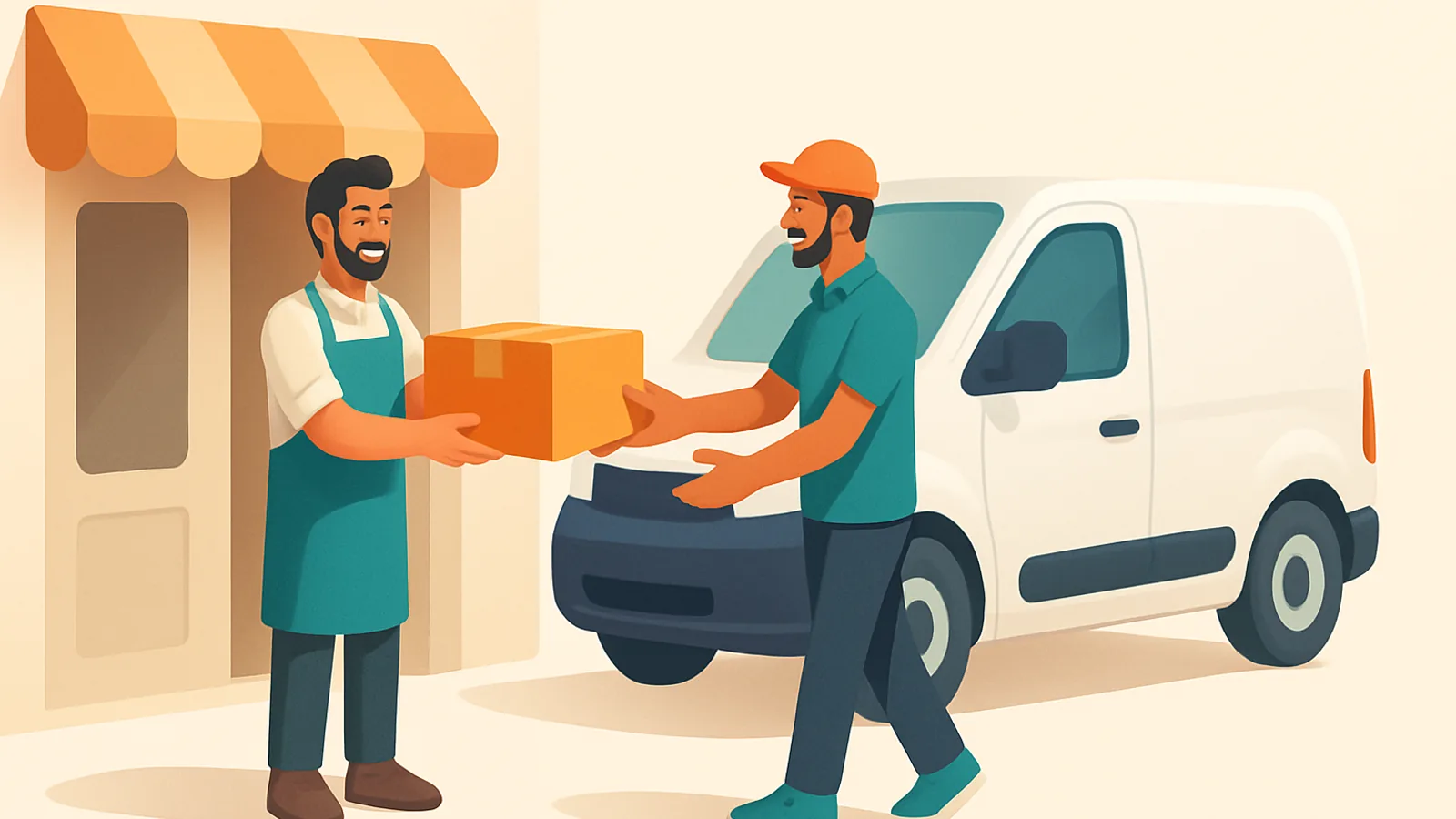
- Exact coverage: confirm the pickup and drop-off addresses, not only a city name or mileage radius.
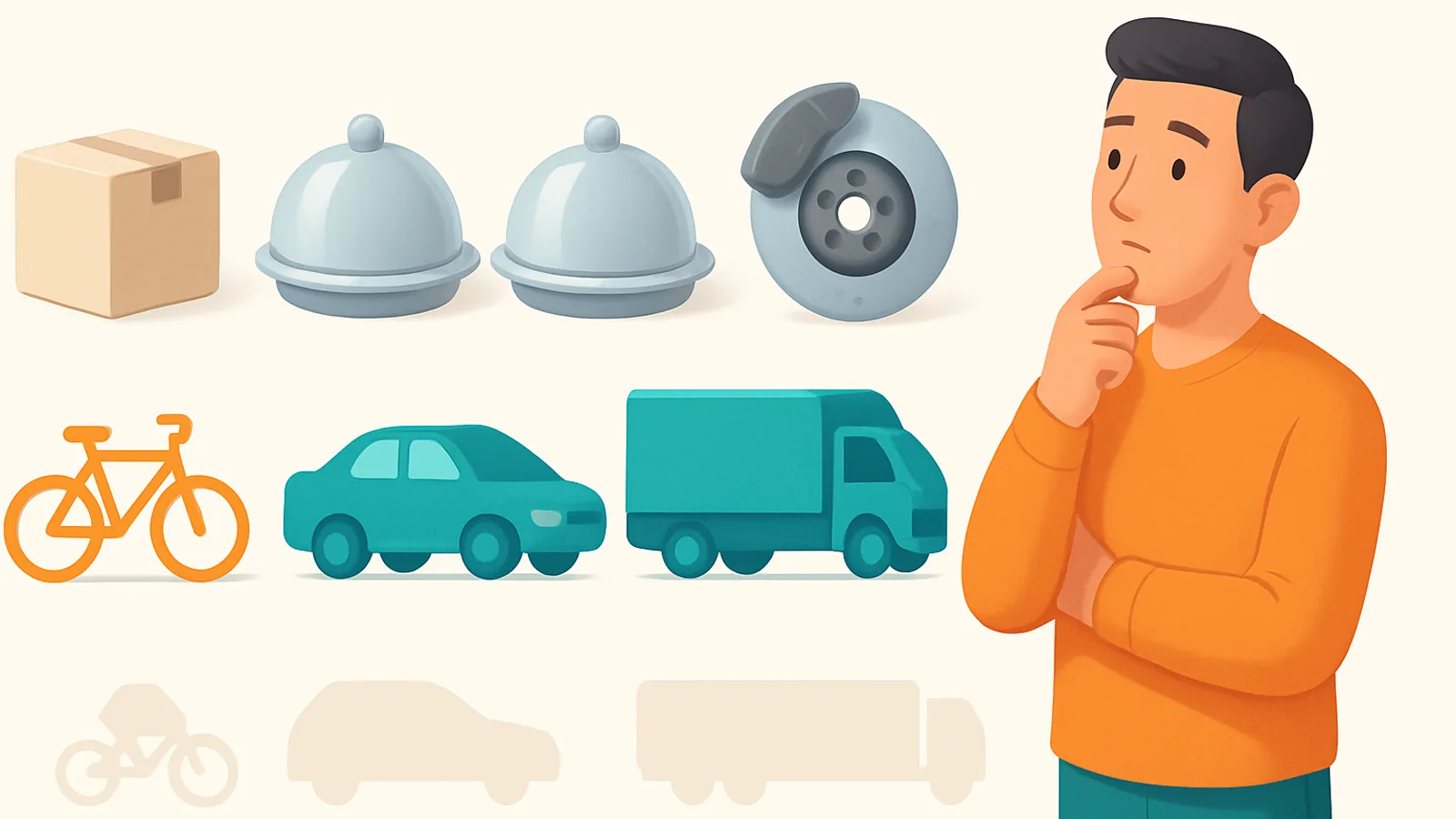
- Item and vehicle fit: a document, hot catering order, auto part, and sofa do not need the same driver or vehicle.
- Total price before pickup: understand waiting, cancellation, return, and redelivery rules before something goes wrong.
- Proof and tracking: decide what your team and customer need to see during and after the delivery.
What kind of courier service does your business need?
Begin with the delivery pattern, not a provider list. If you send sealed parcels across states, a national parcel carrier may be the natural fit. If you need a part moved across town this afternoon, a local same-day courier is closer to the problem. If demand changes by the hour and you do not want to employ a delivery team, an on-demand network or marketplace can give you flexible local capacity. If you already manage drivers, delivery route planning software may solve the real problem without outsourcing the work at all.
- One-off urgent delivery: prioritize confirmed pickup timing, the right vehicle, and a clear all-in price.
- Several deliveries in one area: ask whether the service can group stops or price a route, not only quote each stop separately.
- Recurring business route: ask about scheduled availability, the same pickup instructions each time, and how changes are handled.
- Overflow from your own fleet: look for a service you can use only when your routes are full, without moving every delivery away from your team.
Does the service really cover your pickup and customer?
“We serve your city” is only a starting point. A city label does not prove that the specific pickup, stop, and drop-off are inside the working area. Bridges, tolls, local boundaries, airport zones, long-distance edges, and the item itself can change whether a delivery is accepted. Enter or send the real addresses before promising a customer a delivery time.
Can the courier handle the item and handoff?
A courier who is perfect for an envelope may be wrong for a large appliance, a catering tray that must stay level, or an auto part that needs a van. Describe the item honestly: quantity, dimensions, weight, fragility, temperature needs, stairs, loading help, and whether a signature or identity check matters. If the item needs two people or special handling, say that before a driver accepts it.
Also define the handoff. Who will be ready at pickup? Is there a loading dock, apartment gate, parking restriction, or contact person? At drop-off, can the item be left safely, or must someone receive it? Clear handoff instructions reduce waiting and failed attempts more reliably than a vague “urgent” note.
What should you know about price before booking?
Ask for the amount you can actually approve, not only a starting rate. The useful questions are simple: Is the price fixed before pickup? Can a driver make a different offer? What happens if the pickup is not ready, the customer is unavailable, the address changes, or the item must return? When can you cancel, and what part of the agreed amount may still be due?
Do not compare providers from a headline rate alone. Compare the same delivery with the same addresses, timing, item, vehicle, and handoff requirements. If you are also considering your own drivers, calculate the fully loaded cost per drop rather than comparing a courier quote only with a driver’s hourly wage.
What tracking and proof should you expect?
Tracking should answer the questions your team and customer will actually ask: Has a driver accepted? Was the item picked up? Is it on the way? Was it delivered? A useful customer page or message turns those answers into something the recipient can see without calling your shop.
Proof of delivery closes the loop. Depending on the item, that may be a photo, signature, barcode, or a recorded handoff. Decide what counts as completion before the driver leaves. Our proof of delivery guide explains what each type proves, while the live tracking guide covers the customer side.

How should you test a courier before relying on it?
Run one ordinary, low-risk delivery through the entire flow. Use a real pickup, a real recipient, and normal instructions — not a perfect test address with your own employee waiting at both ends. Watch how long acceptance takes, whether the pickup instructions reach the driver, what the customer sees, and how proof appears after completion.
When should you keep deliveries in-house instead?
Flexible courier help is strongest when volume is low, uneven, urgent, or outside your normal route. Your own drivers can be stronger when you have steady, dense local orders and the handoff is a core part of your brand. Many businesses use both: their own team for predictable routes and outside help for overflow, one-off urgent jobs, or the edge of the service area.
The choice can change as the business grows. Our in-house versus outsourced delivery guide gives you the cost-and-control framework. The important part is to compare the models honestly and keep the customer promise the same whichever driver carries the order.
The bottom line
Choose a courier service by the delivery you need completed, not by the biggest claim on a homepage. Confirm exact address coverage, item and vehicle fit, timing, total price, tracking, proof, and the rules for a failed handoff. Then test one real order before you build the promise into checkout. If your business is in a supported country and you want flexible local driver help, start Routella Partners business setup and check the exact fit for your delivery. Routella is a marketplace, and eligibility and driver availability vary.
Frequently asked questions
What should a small business look for in a courier service?
Confirm the exact pickup and drop-off coverage, item and vehicle fit, pickup timing, total price and exception rules, live status, proof of delivery, and support when a handoff fails. Test one ordinary real delivery before using the service for important customer promises.
Is a local courier the same as a parcel carrier?
Not usually. Parcel carriers are built mainly for labeled packages moving through a network. Local couriers and on-demand delivery services focus on point-to-point or same-day work inside a local area. The right choice depends on the item, distance, timing, and handoff.
How much does a courier service for a small business cost?
There is no honest universal price. It can change with distance, urgency, vehicle, item size, waiting time, stops, and return or redelivery rules. Compare the same real delivery and ask for the total amount and exception rules before pickup.
Should a small business use couriers or hire its own drivers?
Courier help often fits low, uneven, urgent, or overflow demand because it avoids a fixed delivery team. Your own drivers can fit steady, dense routes where control and brand experience matter. Many businesses use a hybrid: their own drivers for predictable routes and outside capacity for peaks and edge cases.
What is Routella Partners?
Routella Partners is a marketplace that connects local businesses with independent drivers. Public signup is available in supported countries, but every exact participant, route, item, vehicle, payment, and local legal check must still pass. Routella is not the merchant’s or driver’s employer, and delivery opportunities and driver availability are not guaranteed.
Need local delivery without building a delivery team?
Start Routella Partners setup in a supported country and check the exact fit for your delivery. Every participant, route, item, vehicle, payment, and local rule still has to pass; driver availability varies.