WooCommerce Local Delivery & Route Planning (2026)
Run local delivery from a WooCommerce store: what WooCommerce does and does not do, plus how to import orders, plan optimized routes, and track drivers.
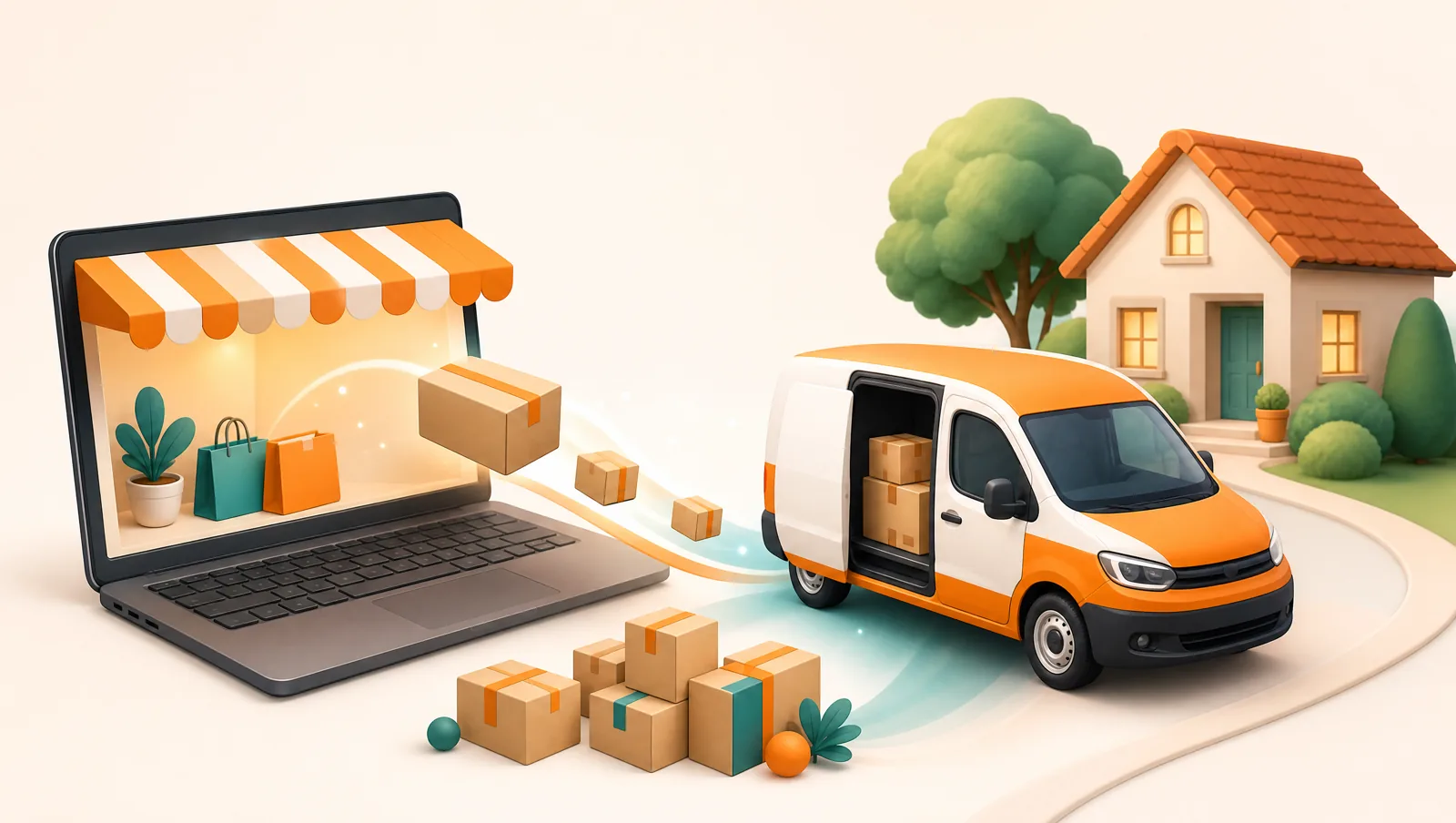
WooCommerce is excellent at selling a local-delivery order, but it stops at the checkout button. It can set a delivery fee, restrict delivery by postcode, and even offer a date or time slot with the right plugin — but it has no concept of a route, a driver, or a tracking link. The day-to-day question every WooCommerce store with its own drivers runs into is the same: I have ten paid orders for today, now what? This guide answers exactly that.
We will cover what WooCommerce handles natively, where the gap is, and how to plug that gap so paid orders flow straight into optimized routes, onto a driver's phone, and back to your store as fulfilled — without retyping a single address. If you sell on more than one platform, the same workflow applies to Shopify and Wix stores.
What does WooCommerce local delivery actually do?
Out of the box, WooCommerce ships with a "Local pickup" option and flat-rate shipping. "Local delivery" used to be a built-in method but is now handled through Shipping Zones plus a plugin or a small amount of configuration. With the free Local Pickup Plus or a paid plugin like Local Delivery Drivers for WooCommerce, you can usually add the parts WooCommerce alone is missing:
- Delivery fees by distance, cart total, or flat rate.
- Delivery radius or postcode rules so only nearby customers see the option — it helps to first set up delivery zones that match where your drivers actually go.
- Date and time-slot selection at checkout (plugin-dependent).
That covers everything up to the moment money changes hands. What WooCommerce does not do is operational: it will not sequence stops into an efficient route, it will not give a driver turn-by-turn navigation, it will not capture proof of delivery, and it will not send the customer a live tracking link. Those are dispatch problems, and dispatch lives outside the store.
Why is planning routes by hand the most expensive habit?
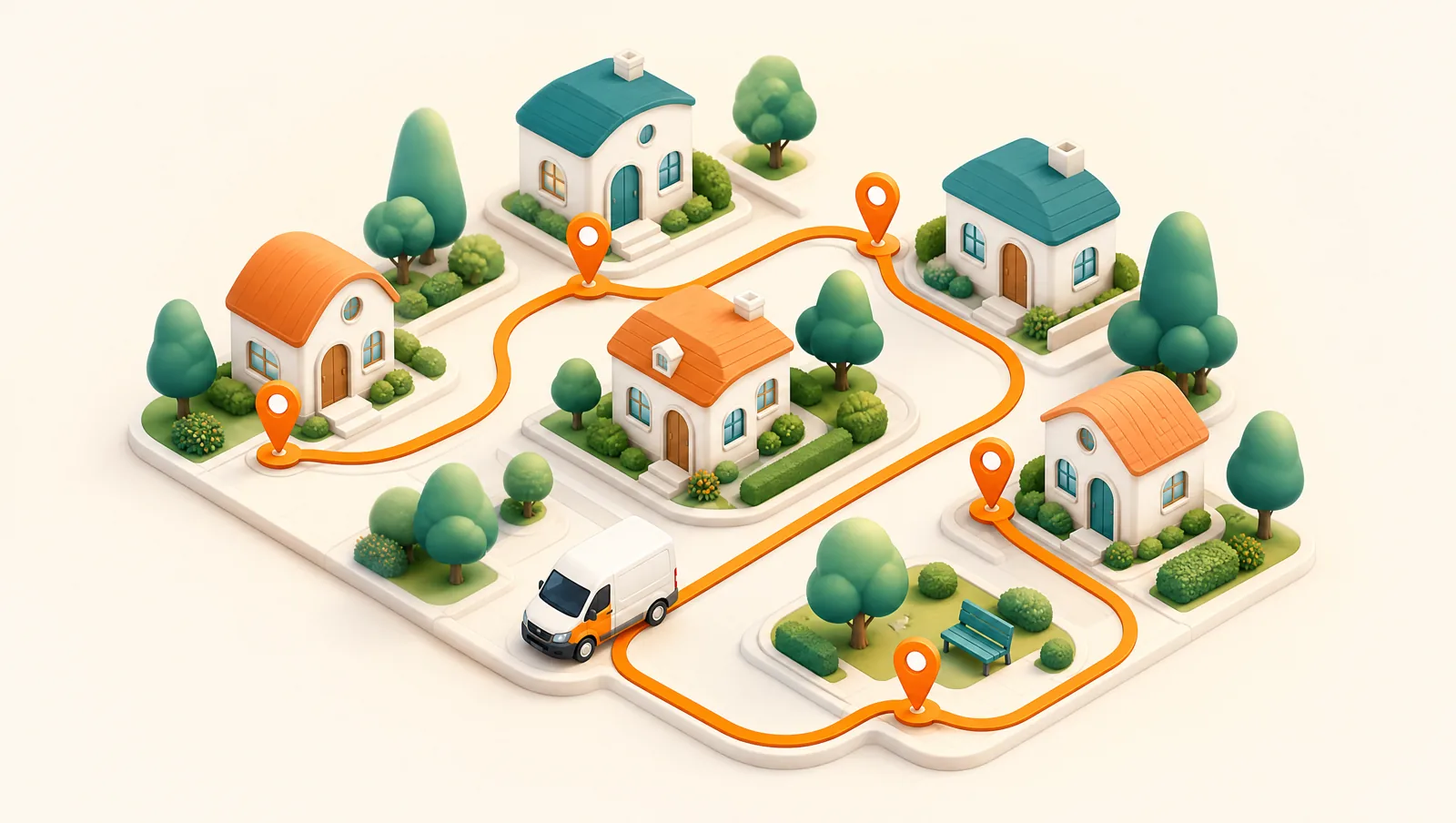
Hand-ordering a dozen stops on a map takes a dispatcher 30 to 60 minutes per route, and the result is still worse than software because no human reliably solves a twelve-stop traveling-salesman problem in their head. Every extra mile is fuel and time; every poorly placed stop pushes the whole day later. Multiply that by every delivery day and the cost of "free" manual planning is enormous. Optimized routing is the single biggest lever on cost per drop — see our guide to optimizing multi-stop routes for the mechanics.
How do you turn WooCommerce orders into delivery routes?
The fix is to connect WooCommerce to a dispatch and routing tool so orders import automatically and fulfillment writes back. With Routella the flow looks like this:
- Connect your store. Routella pulls WooCommerce orders in automatically using your store's REST API keys. Phone or walk-in orders can be typed in manually so everything lands in one dispatch view.
- Batch today's orders into rounds. Group the deliveries you want a driver to do into a round.
- Optimize the sequence. Routella reorders each round into the shortest, fastest path. The optional Smart Routing add-on uses the Google Routes API for live traffic and delivery time windows — a flat $5/month, with 250 stops included on Growth and 1,000 on Pro.
- Dispatch to a driver. The driver gets their stops on the mobile app with turn-by-turn navigation that works offline when signal drops.
- Capture proof and write back. The driver captures a signature, photo, or barcode at each stop, and Routella marks the matching WooCommerce order as fulfilled.
That last step matters more than it sounds. If your store is not marked fulfilled automatically, you double-handle every order and risk telling a customer their parcel is on the way when it already arrived. Read more on proof of delivery and why it settles disputes.
How do you keep WooCommerce customers informed during delivery?
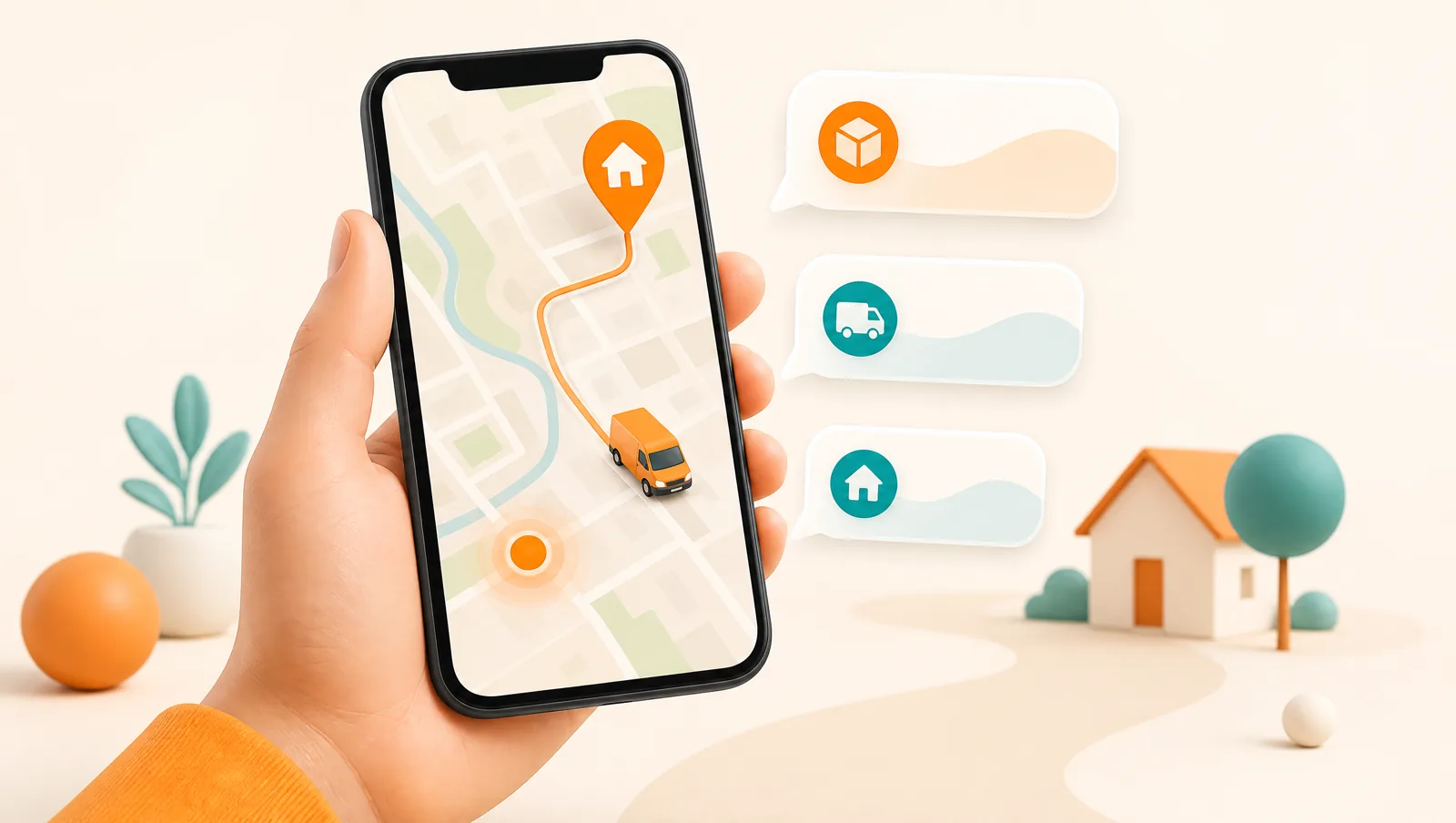
WooCommerce sends an "order complete" email and nothing more. Delivery customers want to know when, and the silence between purchase and arrival is what generates support tickets. Automated notifications close that gap: an order confirmation, an "out for delivery" message, and a live tracking link showing the driver's real-time location and ETA. Routella sends these over WhatsApp, SMS, and email, and the tracking page renders in 195 languages with right-to-left support. This is the highest-impact thing you can do to cut "where is my order?" tickets.
What about cash on delivery?
Plenty of WooCommerce stores still offer cash on delivery, and that creates its own reconciliation headache: which driver collected how much, and does it match the orders? Routella tracks COD collection per stop and produces a settlement view so the money your drivers bring back matches the orders they delivered. If COD is a big part of your business, see our cash on delivery management guide.
Does it scale as your WooCommerce store grows?
A delivery setup is only useful if it survives growth. The early days are easy — one driver, a handful of orders — but volume is where manual habits break. The plan that works at twenty orders a week has to work at two hundred without a second dispatcher. That means three things should scale cleanly: order import, driver count, and route quality.
On import, Routella reads new WooCommerce orders automatically through your store's API, so an extra hundred orders is not an extra hour of copy-paste. On drivers, you start with one and add more as routes fill up — see our guide to delivery driver management for how to structure pay and assignment as the team grows. On route quality, Smart Routing keeps each route tight even as stop counts climb, which is exactly when hand-planning stops being viable. The point is to choose a setup you will not outgrow in three months.
The bottom line
WooCommerce is the right place to sell and price a local delivery. It is the wrong place to run one. Pair it with a dispatch and routing layer that imports orders automatically, optimizes the route, gives drivers a real mobile workflow, and keeps customers informed — and you keep WooCommerce's flexibility without the manual chaos. Routella has a free plan (1 driver, 50 orders a month) so you can run real WooCommerce deliveries before paying anything, then $29 a month as you grow.
Frequently asked questions
Does WooCommerce have built-in route planning?
No. WooCommerce can charge a delivery fee, restrict delivery by postcode, and with a plugin offer time slots, but it has no route optimization, driver app, proof of delivery, or live tracking. Those are dispatch features that live outside the store.
How do WooCommerce orders get into a route planner?
Connect your store with its REST API keys and the route planner imports paid orders automatically. With Routella you batch those orders into rounds, optimize the sequence, dispatch to a driver, and the delivered order is written back to WooCommerce as fulfilled.
Can customers track a WooCommerce delivery in real time?
Not with WooCommerce alone, which only sends order emails. A dispatch tool like Routella sends an out-for-delivery message with a live tracking link showing the driver location and ETA over WhatsApp, SMS, or email in 195 languages.
Run your own deliveries with Routella
Route optimization, a driver app, proof of delivery, and live customer tracking — in one platform. Free plan, no credit card.